On July 18, 1983, Nobel Prize-winning economist Theodore W. Schultz made a decision that served as a bellwether for one of the biggest scandals in the United Nations’ history. Schultz resigned from the committee on the United Nations Fund for Population Activities (UNFPA), mortified by the selections of Indira Gandhi of India and Qian Xinzhong of China to be the first winners of its new Population Award.
The award is given “in recognition of outstanding contributions to population and reproductive health issues and solutions,” according to the UN.
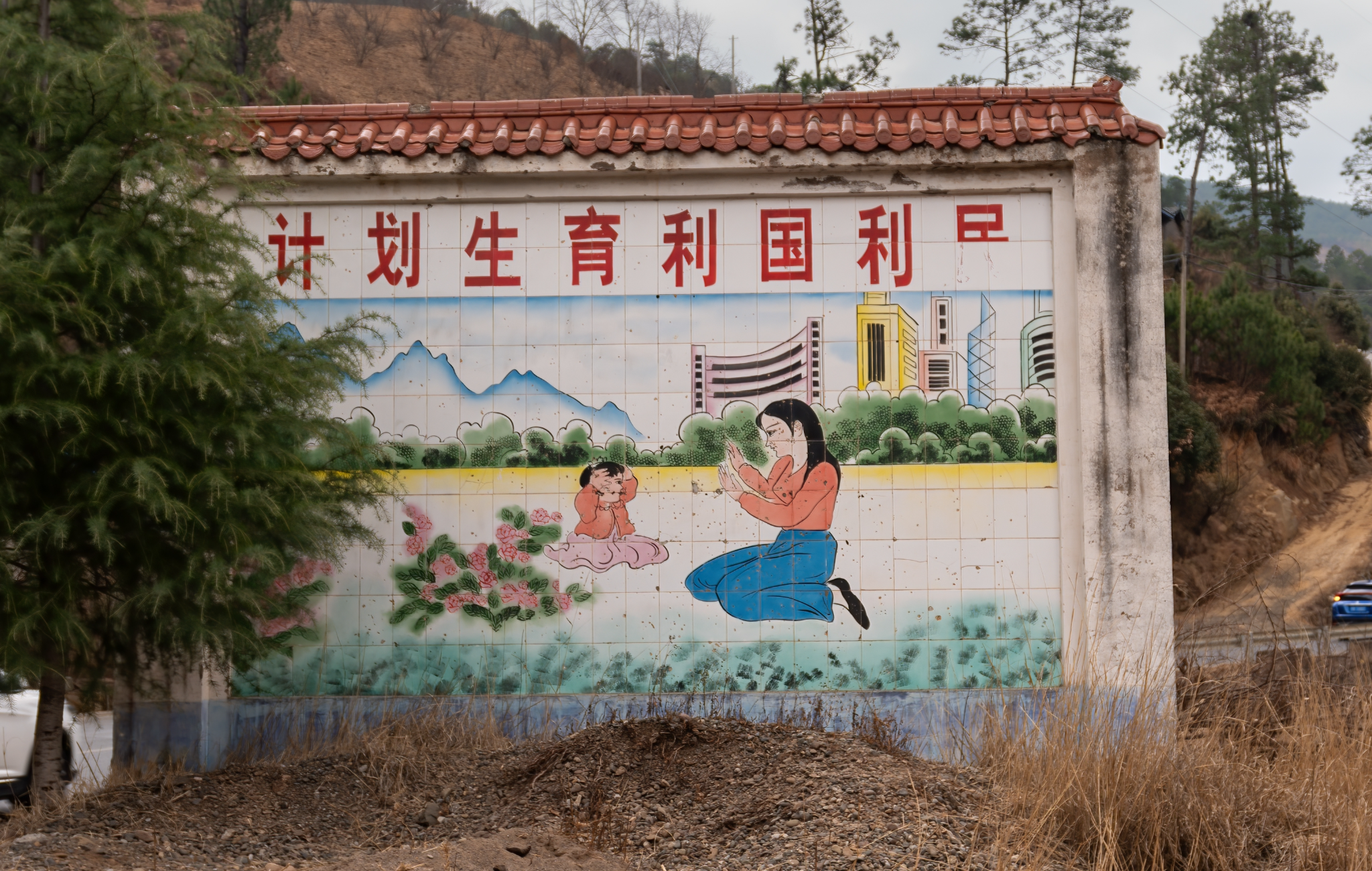
Schultz’s reasoning for his resignation was straightforward. China was notorious for its implementation of the one-child policy, wherein the government created economic and social pressure as well as outright coercion to lower population growth. Both nations went as far as forced abortions and sterilizations of women.
Schultz’s disgust was palpable. He wrote clearly: the award selection process was “a travesty completely at variance with the good faith with which I accepted your invitation [to the committee].”
So began one of the more controversial alliances in UN history. To see how far the UN’s relationship with the one-child policy goes, we’ll need to examine the history of the policy itself.
Population Hysteria and the One-child Policy
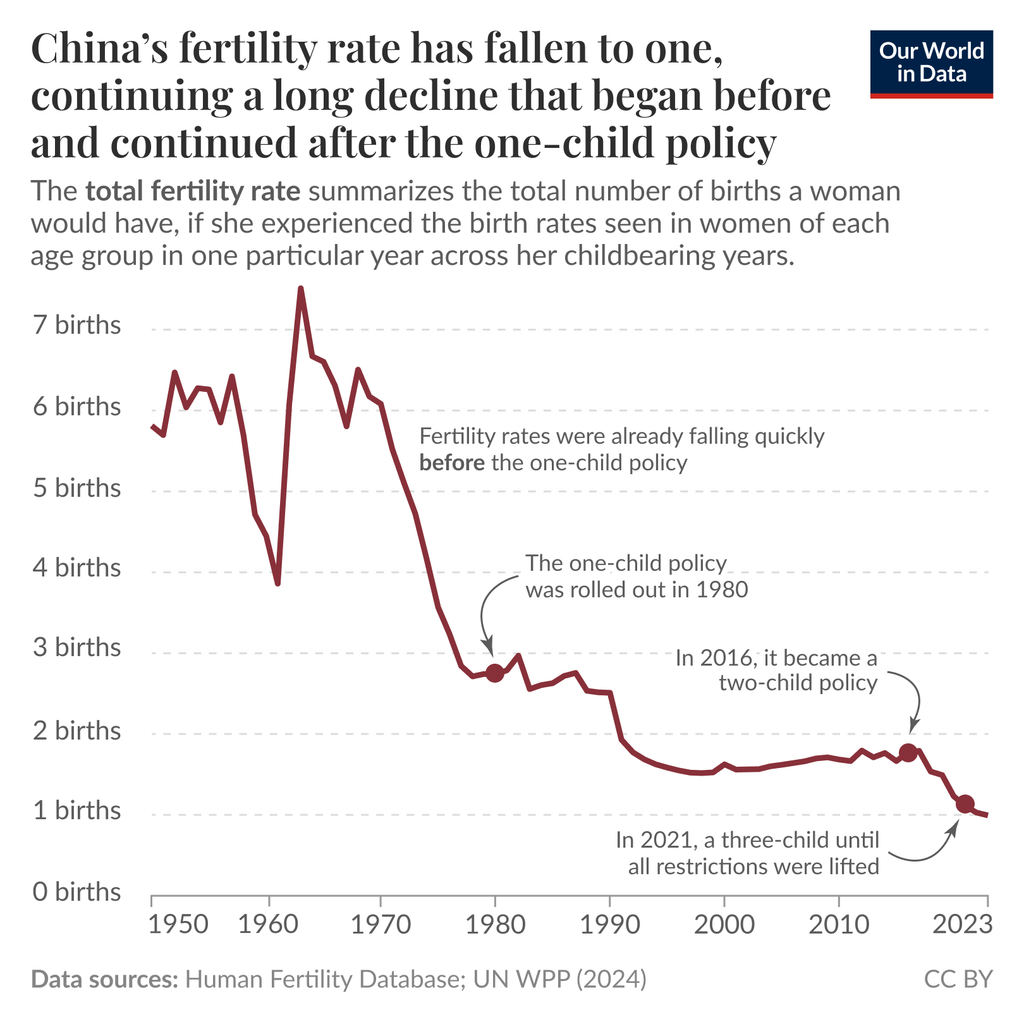
Though the one-child policy officially started in 1979, the seeds for the policy were planted much sooner. As chronicled by historian and political scientist Tyrene White, Chairman Mao Zedong was initially optimistic about population growth in China, but by the mid-1950s he had shifted. Mao likened freedom to have children to anarchism, saying:
[We] need planned births. I think humanity is most inept at managing itself. It has plans for industrial production, the production of textiles, the production of household goods, the production of steel; [but] it does not have plans for the production of humans. This is anarchism, no government, no organization, no rules …there’ll be nothing to eat.
This pivot toward centralized control of population appears at approximately the same time these sentiments gained popularity in the West. In 1954, businessman and anti-population activist Hugh Moore published his pamphlet The Population Bomb, which would go on to inspire ecologist and supporter of coercive birth control Paul Ehrlich, in the title of his influential 1968 book.
While Mao’s initial support for population control seems to stem from his communist central planning philosophies (a tendency predicted by economist Ludwig von Mises in his book Socialism), influence from the West was a factor.
By 1978, Mao had been dead for two years, but his desire for central population planning lived on in Song Jian, a Chinese missile scientist. Song’s background in military science predisposed him to the possibility of scientific approaches to planning the population, and in 1978, he was given the tools to do so. As anthropologist Susan Greenhalgh chronicles, “on a visit to Helsinki, Finland to attend the Seventh Triennial World Congress of the International Federation of Automatic Control, Song encountered a radically new (to China), cybernetic-based natural science of population and its control that was tied to the well-known work of the Club of Rome.”
The model he encountered was the anti-population think tank Club of Rome’s “World 3” model. This model, which went on to be critiqued extensively, came home with Song to China and became the groundwork for the one-child policy.
How the UN Fueled Coercion in China
So Western anti-population panic clearly leaked into China, but what about the UN? How much influence did it have? Well, to begin, we should make clear that the United Nations denies ever explicitly encouraging coercive population control in China.
It also seems clear that the UNFPA’s actions knowingly enabled, provided support for, and encouraged China’s population policy apparatus at the exact time when it was known to be coercing women throughout its country.
As documented by researcher Steven Mosher, the UNFPA approved the provision of $50 million (nearly a quarter of a billion dollars adjusted for inflation) to China for population planning activities in 1980. This was the year immediately after China launched the one-child policy.
According to US Congressional testimony, that grant was used for “various population-related activities, including the 1982 census, demographic training, and family planning. UNFPA assistance in family planning included support for the establishment of a population information center and a training center for family planning workers.”
The UNFPA denies that these funds were intended for coercive population control, but regardless of intent, it’s obvious how external funds to support census taking, demographic training, and family planning centers and workers would have been used in implementing the one-child policy.
Chelsea Follett, research fellow at the Cato Institute, notes:
[the grant] stipulated that the money was in part to fund training for 70,000 family planning workers and an extensive campaign promoting smaller family sizes. The Chinese state-run association responsible for implementing the one-child policy became an IPPF [International Planned Parenthood Federation] member in 1983… even when not ostensibly funding coercion, [financial support] freed resources to support the one-child policy … UNFPA grants went to training and equipping the people who would go on to carry out coerced procedures. The UNFPA also paid for many of the computers used to calculate birth quotas.
UNFPA apologists may be tempted to say that they did not know at this point these activities were happening, but this provides no absolution. The same Congressional record shows general knowledge of coercive sterilization came to light in 1983 and a UNFPA investigation was launched. Despite this, UNFPA provided another $50 million in assistance from 1985 to 1989.
Not only this, but, as previously mentioned, the UNFPA awarded China the population award after this all came to light. Does giving a population policy award and nearly a quarter of a billion dollars (in today’s dollars) to a country known to engage in coercive sterilization and forced abortions of its own citizens constitute supporting these policies? I know my answer.
Despite reports of coercion in major news outlets, Schultz’s resignation, and reports by the US State Department’s Country Report on Human Rights Practices, many in the UNFPA continued to deny coercion. Moser documents UNFPA head Nafis Sadik denied coercion in China related to the one-child policy as late as 1989. In 1991, per Moser:
[Sadik] added that ‘the UNFPA is going to employ some of [China’s family planning experts] to work in other countries and popularize China’s experiences in population growth control and family planning.
In response to this negligence, the US withheld its usual funding from the UNFPA from 1985 to 1993. The previously linked Congressional testimony was part of the ongoing case in this decision-making.
Despite all of this information, from my research, the United Nations has never issued an apology or acknowledgment of wrongdoing of any kind for either the funding or the award provided in support of this horror in China.
Doing Bad with Aid
How could this happen? A compelling answer on why humanitarian aid fails is provided by economist Chris Coyne in his book Doing Bad by Doing Good: Why Humanitarian Action Fails. Coyne chronicles cases where humanitarian aid from government agencies and international organizations, including USAID and UNFPA seem to fail to provide real improvement systematically.
There are many pieces of Coyne’s argument, but I’ll focus on two. First, the impetus behind population policies in the twentieth century was, at least in part, development. Not only did anti-population groups think their policies would help countries avoid problems, they believed the countries who managed their population problems would grow richer. However, as Coyne points out, governments and international planning organizations suffer from a knowledge problem as regards making countries rich. That is, without the knowledge generated by market prices and profits about which goods and services are, on net, beneficial, planners have no means to discover if their use of scarce resources is generating net positive results for society.
This lack of knowledge leads to the incentive problem. If governments and governmental organizations like the UN do not have the knowledge to improve social welfare, they’ll have to make their decisions based on some other information.
If maximizing social welfare is not an achievable goal, individuals in these organizations will substitute their own personal goals. There is no guarantee that officials’ incentives will align with citizens’ interests. If politicians in China benefit from having more power and control, it’s reasonable to expect successful politicians will be the ones who best utilize UNFPA contributions in a way that grants them more power and control.
While the UNFPA may not have originally intended to fuel the one-child policy, the evidence suggests it did. In this case its population-control efforts seem to add to Coyne’s already long list of development mission failures.
Share This Article

Post on Facebook

Post on X

Print Article

Email Article