In October, the Trump administration announced policies aimed at making homeownership more affordable for more American families.
First, the US Treasury Department announced proposed regulations to restrict large institutional investors who currently own at least 350 single-family homes from purchasing additional units (with many exceptions) effective January 7, 2027. The regulations would implement Section 1001 of the 21st Century ROAD to Housing Act, which codifies key requirements of President Trump’s Executive Order 14376, Stopping Wall Street From Competing with Main Street Homebuyers, issued early this year.
Separately, Trump released another executive order, Decreasing Housing Costs For the American People, directing federal authorities to decrease mortgage-related costs and recommend new standards for home permitting.
The announcements followed troubling housing data. According to Reuters, the National Association of Home Builders/Wells Fargo Housing Market Index dropped three points to 29 in October, the lowest level since 2012. Worse yet, Freddie Mac recently reported an average 30-year mortgage rate of 7.11 percent. One year ago, the average rate was 6.24 percent.
Washington is clearly trying to make homeownership more accessible. Considering the latest reports, one can understand the impulse to do so.
Will these measures make a discernible difference to first-time homebuyers and refinancers? Perhaps.
But there’s a bigger question. How much of America’s housing affordability crisis can be addressed without actually confronting the monetary conditions that helped create it in the first place?
Act I: Cheap Credit and Constricting Supply Drove Prices Sky High
The government’s response to COVID-19 created distortions in virtually every sector of the economy. One of the key drivers of these distortions was the Fed’s policy of near-zero interest rates and the purchase of mortgage-backed securities.
As a result of these actions, mortgage rates fell to historic lows, increasing demand for housing. This increase in demand was exacerbated by the many restraints keeping supply from matching demand, such as restrictive zoning laws, slow-moving permitting processes, and rising costs.
The result was foreseeable: a sudden increase in demand, coupled with an inability for supply to keep pace, led to enormous appreciation in housing prices. According to the Federal Housing Finance Agency (FHFA), home prices appreciated 33.4 percent over the five years ending in the second quarter of 2026.
Act II: Increased Rates Leave Homeowners Trapped
Extraordinary monetary and fiscal responses by the US government during the pandemic years led to a surge in inflation. The US Government Accountability Office reports that the federal government provided $4.6 trillion “to help the nation respond to and recover from the COVID-19 pandemic.”
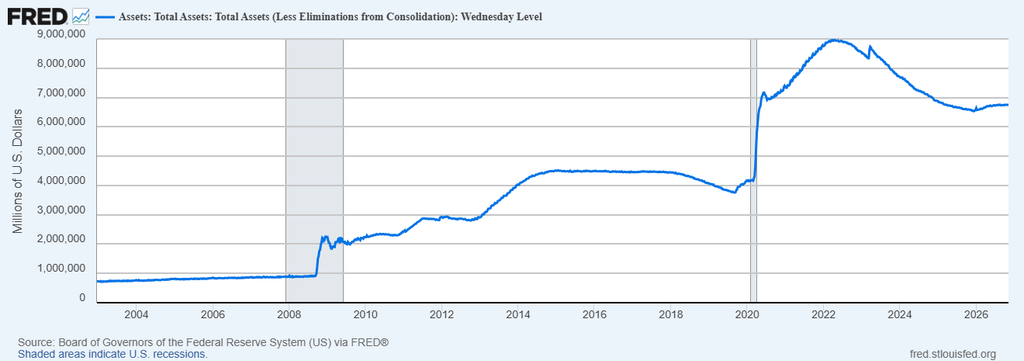
The Federal Reserve’s balance sheet peaked at $8.97 trillion in April 2022. For reference, pre-pandemic levels were near $4 trillion in early 2020.
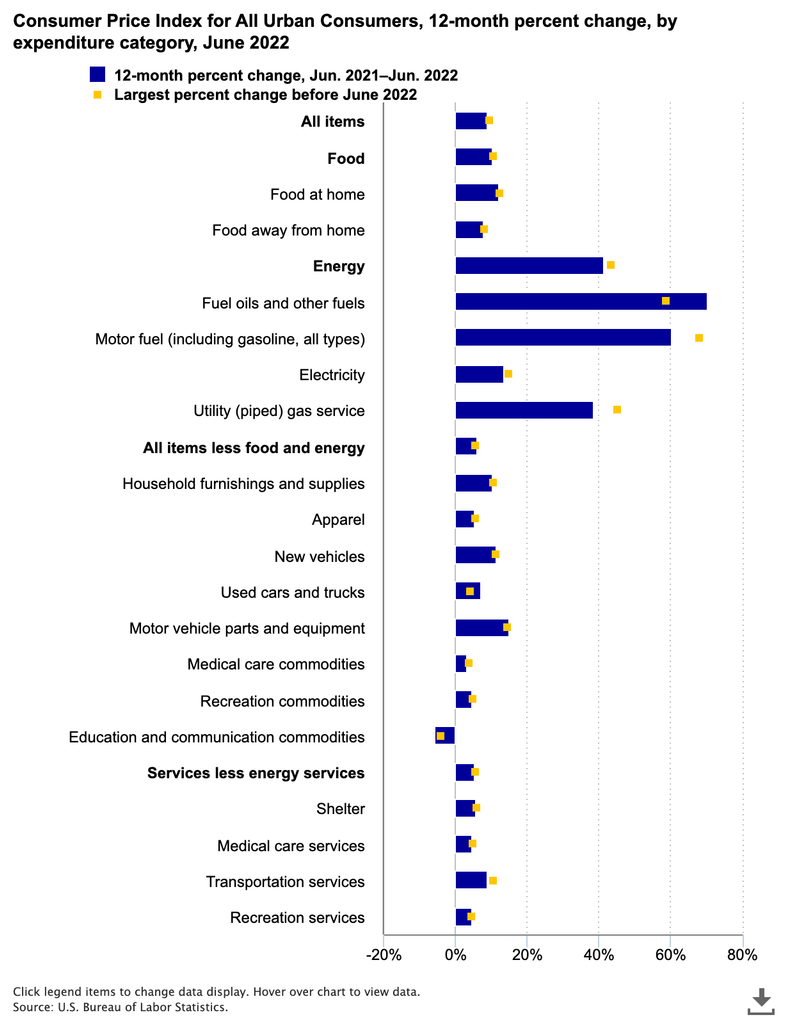
According to a Bureau of Labor Statistics publication, over the 12 months between June 2021 and June 2022, the Consumer Price Index increased 9.1 percent, the largest increase in 40 years.
The monetary tightening that followed pushed borrowing costs higher.
This created a sticky effect for homeowners locked into 30-year mortgages at historically low rates. Homeowners who bought or refinanced homes around 2020, paying an interest rate near or below 3 percent, are not eager to sell their home to purchase another one at double the interest rate.
A $500,000 loan at 7.11 percent over 30 years will cost roughly $450,000 more in interest than the same loan at 3 percent.
This is shown in Federal Reserve data. In a November 2024 report, researchers found that mortgage rate “lock-in,” which is defined as the decline in moves due to the rising gap between market rates and homeowners’ fixed rates, explains 44 percent of the drop in mortgage borrower mobility from 2021 to 2022.
Act III: Recent Government Actions Bail Water But Do Not Fix the Problem
The current administration deserves credit for attempting to curtail the ever-increasing costs associated with homeownership. Reducing unnecessary fees keeps money in borrowers’ pockets. Expediting permitting processes can genuinely increase the housing supply. Restricting large institutional buyers of single-family homes from purchasing additional homes would benefit some prospective buyers, though the impact would be disparate across housing markets state to state.
But these reforms, while worthwhile, will not unwind circumstances created by many years of cheap credit. The underlying problem will continue to exist until the housing supply actually expands.
Future homebuyers are faced with price appreciation that has priced many out of the market. These are the consequences of Fed credit expansion and subsequent monetary tightening; a structural problem cannot be fully unwound by policies tweaked at the margin.
Share This Article

Post on Facebook

Post on X

Print Article

Email Article