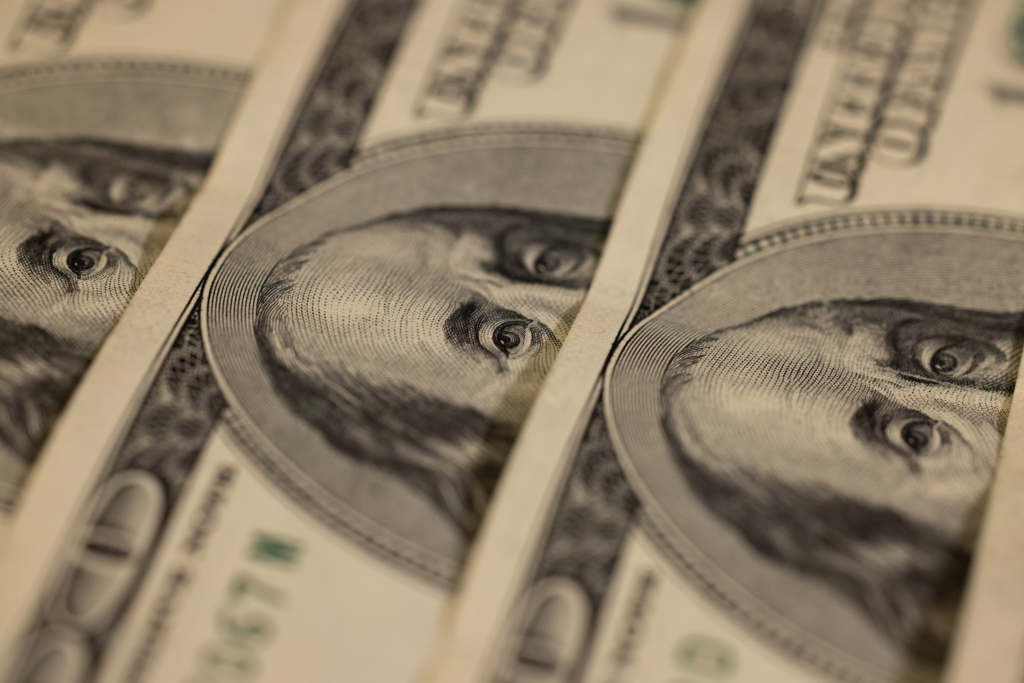

When governments try to ban the free exchange of goods and services, markets tend to make them look silly. And nowhere are governments more reliably flummoxed than the black market. Enter Harvard Professor Ken Rogoff. In his book “The Curse of Cash,” he argues that getting rid of criminals’ means of paying each other under the table (gradually phasing out denominations $20 and higher, actually) will significantly curtail trade in illegal goods and tax evasion.
The elimination of large bills would certainly inconvenience black marketeers. It might reduce trade at the margin, or help catch a few more criminals. But even if I were writing this before the age of computers, I don’t see drug dealers around the country saying, “Too bad there are no more $100 bills. Guess I’d better go back to college!” With $1.8 trillion at stake worldwide, criminals would find a way to pay each other, and then get that de facto currency into the wider market. Soon we would hear calls to ban gold and silver, and then seashells and packs of cigarettes.
The other problem is that it’s 2017, and now far easier for criminals to get around a ban on cash. Bitcoin and other cryptocurrencies, enabled by blockchain technology, allow for the digital equivalent of meeting up in person and exchanging cash. That’s because exchange happens without a central intermediary, the type of thing criminals seek to avoid. While it’s possible to trace bitcoins, it takes a lot of time and resources. And back to that $1.8 trillion: someone could become very rich by inventing a cryptocurrency that’s even harder to trace and finding clever ways to exchange it back into bitcoins.
That’s also the reason why banning cryptocurrencies would never work. They don’t need government support to function. If governments ban one, another will pop up, and if they ban the concept as a whole, they’ll instead spend all that time and money combatting increasingly clever ways to launder digital currency. We may not like what’s being traded in the black market, or the fact that cryptocurrencies have made some exchanges even easier, but it’s impossible to stomp out the idea. The crypto-cat is out of the bag.
Note: For discussion of several other issues relating to the book, I highly recommend the exchange between Rogoff and economist Jeff Hummel, summarized by Hummel at the Alt-M blog.
Share This Article

Post on Facebook

Post on X

Print Article

Email Article