
After months of waiting, we finally have it. Congress has passed its spending bill, which comes in at $2.3 trillion, and contains its latest Covid-19 relief bill, with a price tag of $900 billion. If that sounds exorbitant, wait until you hear its page count: 5,593.
Congress had no energy for a snappy acronym like those of the earlier CARES and HEROES Act, though it had energy for plenty else. The bill, titled the Consolidated Appropriations Act, 2021, was so full of pork that it literally had to be wheeled through the halls of Congress on a wagon.
According to the Senate Historical Office, it’s likely the longest bill ever passed by Congress. The previous record was a 1986 tax reform bill, which was just half as long as Monday’s spending bill at 2,847 pages.
Released at 2 p.m. on Monday, Congress largely voted for the legislation on pure faith. To read the entire thing would have taken days, though it was released just hours before Congress eventually passed it. Rep. Paul Gosar (R–Ariz.), one of the 53 members of the House of Representatives to vote no, lamented, “No member can honestly say they know exactly what they voted for this evening. That is reason alone to vote no.”
By bundling much-needed Covid-19 relief in with so many special interest programs, voting members of Congress effectively had their hands tied.
Covid-19 Relief Measures
The first relief checks began to arrive in Americans’ bank accounts back in April, and politicians have been clamoring for an update ever since. Senate Majority Leader Mitch McConnell (R–Ky.) called the measure “the bipartisan breakthrough the country has needed,” while House Speaker Nancy Pelosi (D–Calif.) and Senate Minority Leader Chuck Schumer (D–N.Y.) offered a more tepid assessment that it was “urgently needed” and promised to push for additional relief under the forthcoming Biden administration.
Individuals making up to $75,000 per year will receive a one-time payment of $600, while couples making up to $150,000 will get checks for $1,200. Each dependent will tack an additional $600 on to those initial payment amounts. “Mixed earners”––workers who earn money as employees and as contractors––will be eligible for an additional $100 per week, ironing out a kink that emerged in the March relief measure.
The bill broadened pandemic-era federal unemployment benefits, allowing jobless folks to collect an additional $300 per week for 11 weeks. It also expanded unemployment insurance eligibility, albeit for an unspecified amount of time. Without such a provision, 12 million people were set to lose their unemployment insurance the day after Christmas.
There are also provisions for $25 billion in rental assistance, $15 billion in aid to theaters and other live venues, $82 billion for schools, colleges, and universities, and $10 billion for child care providers. Funds totaling $30 billion were allocated to vaccination procurement and distribution efforts, while $22 billion was set aside for states’ testing, tracing, and mitigation programs.
The bulk of these measures can be found under Divisions M and N of the Monday legislation (the bill, it must be said, ranges from Division A to Division FF, as the full alphabet wasn’t sufficient to cover Congress’s exorbitance).
That’s all good and well, but there are plenty of pages that remain unaccounted for. So what else could this gargantuan spending bill possibly contain?
The Contents
Though one might expect a nation in the throes of the worst economic crisis since the Great Depression––an artificial downturn caused by government nonpharmaceutical interventions like lockdowns and business closures––to primarily set its sights on domestic relief, that would ignore Congress’s long track record of bundling special interest programs in with legislation that few legislators could vote down. With that in mind, here are a few of the provisions in Monday’s spending bill that have nothing to do with Covid-19 relief:
- $10 million for “gender programs” and $15 million for “democracy programs” in Pakistan
- $4 billion for vaccination programs in other countries
- $1 billion for Amtrak, a reliable money-loser (or, more a gift to railroad worker unions and rail equipment contractors)
- $1 billion for two new Smithsonian museums: the National Museum of the American Latino and the American Women’s History Museum
- An 64-page section devoted to “Horseracing Integrity and Safety,” establishing guidelines for anti-doping, medication, and racetrack safety programs
- The repeal of criminal punishments for permissionless usage of Smokey the Bear’s likeness
- The decriminalization of the usage of the Swiss coat of arms
- The repeal of criminal violations for transporting water hyacinths, a delightful (and highly invasive) flower from the Amazon Rainforest
- A section devoted to “Democracy in the Tibetan Exile Community,” which outlines the Dalai Lama’s preferred system of governance for the Tibetan people, delegates over $7 million to two pro-Tibet radio stations, and sets out guidance for the Dalai Lama’s reincarnation
- $700 million to Sudan
- $500 million for Jordanian defense spending
- $453 million to Ukraine
- $74.8 million for the “Caribbean Basin Security Initiative”
- $33 million for programs supporting democracy (“democracy”) in Venezuela
- $1.4 billion for President Donald Trump’s border wall
- Funds for a “Resource Study of the Springfield (Illinois) Race Riot,” which took place in 1908
- A provision to make illegal streaming a felony
- A call for the Food and Drug Administration (FDA) to produce a seafood consumption guide entitled, “Advice About Eating Fish”
This is only new, of course, in terms of the nature of the “stuffing.” Crisis-era bills have long held strange contents. For example, the Emergency Economic Stabilization Act of 2008 not only recapitalized large banks and securities firms (whether they needed it or not), but also repealed an excise tax on wooden arrows.
The Lesson
The urgency of the pandemic, continued (in some cases, worsening) economic strain, and the dynamics of a lame duck presidency––in addition to the ongoing hyper-politicization of the American public––suggested that this bill would pass without issue. Lobbyists, special interests, and the drafters of the bill knew this, and they stuffed the legislative behemoth accordingly.
This spending bill seemed to contain a gift for everyone except the American people. Many of the measures that were buried deep in the thousands of pages were congressional passion projects and the fulfillment of longtime quid pro quos that had no chance of passing if forced to stand on their own.
Downtrodden Americans have received nothing but breadcrumbs. An estimated 8 million people have fallen into poverty since June. Between March and September, over 160,000 small businesses closed, about 60 percent of them for good. And now, while congressional interests guide the spending agenda, Americans will continue to suffer at the hands of the government they fund.
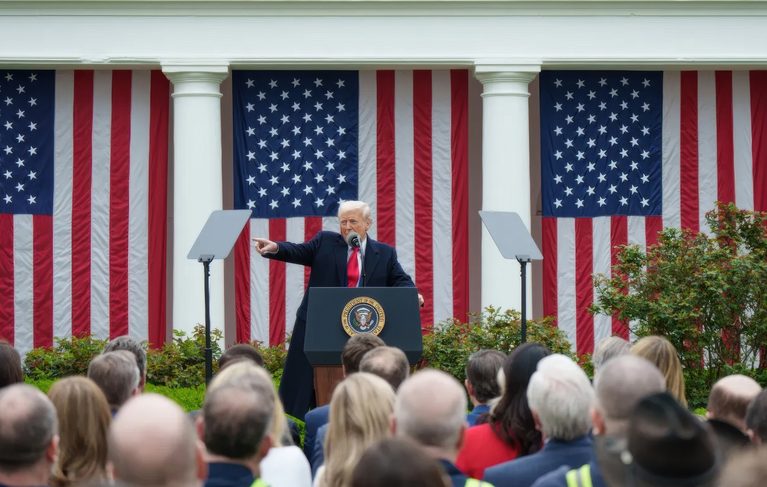
Yesterday, President Trump threw the bill’s future into question when he called for amendments to its provisions. He badgered Congress to raise relief checks from $600 to $2,000 for individuals (and from $1,200 to $4,000 for couples). He specifically criticized the spending bill funds intended to be sent as foreign aid, asking Congress to scrap the “wasteful and unnecessary items” found in the legislation. But one would rightfully expect that Trump, left to his exclusive choices, would have filled the bill with plenty of pork––just differently directed.
The swamp, as we are learning, is far from drained.
Share This Article

Post on Facebook

Post on X

Print Article

Email Article