
Amelia Janaskie

Research Associate
Amelia Janaskie is a Research Associate at the American Institute for Economic Research. She graduated from the College of Charleston Honors College in May 2020 with a B.S. in Economics and minor in English. During her time in college, she was a Market Process Scholar with the Center for Public Choice and Market Process.
-
•
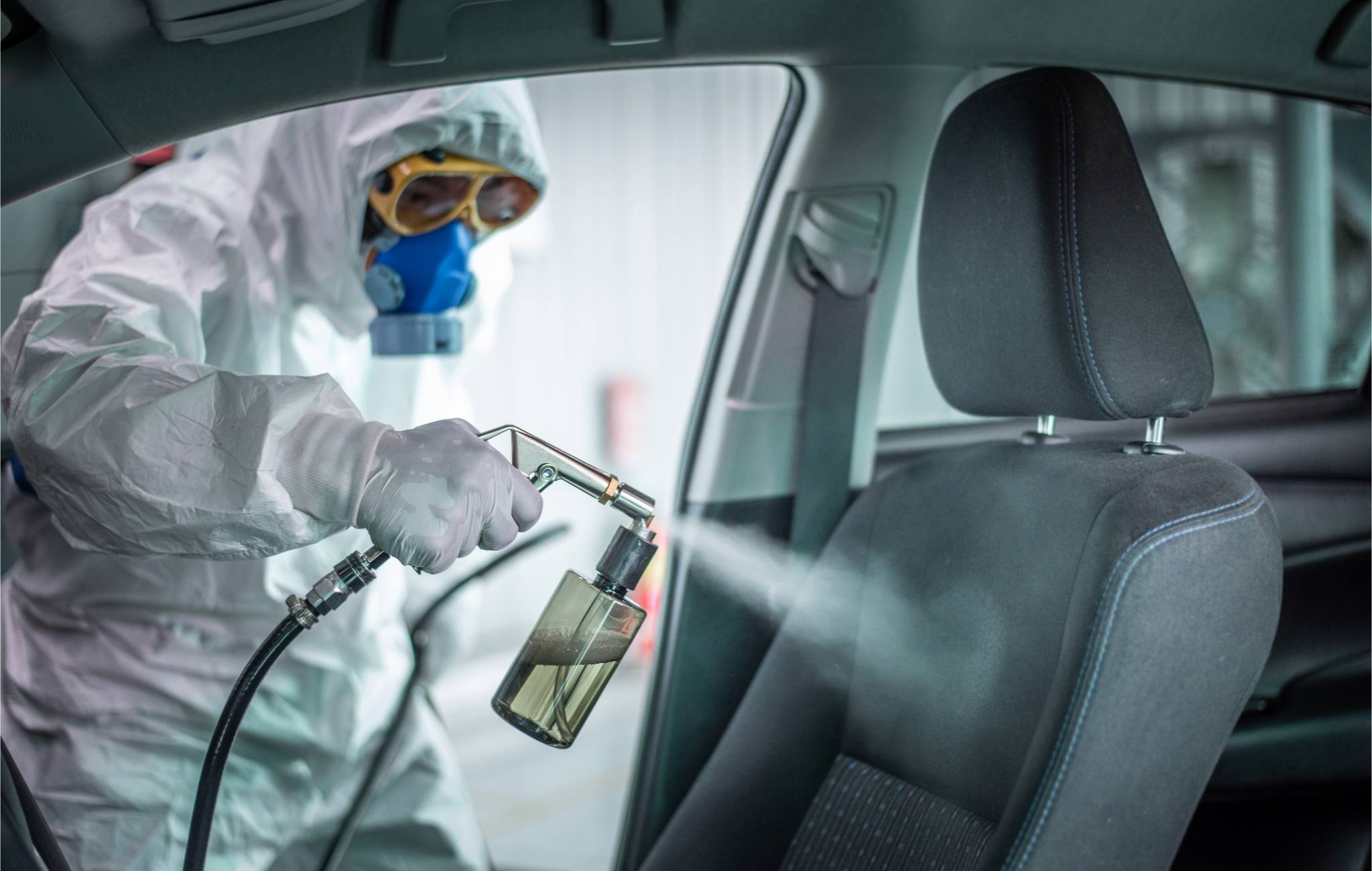
How Much Does Cleaning Everything Really Help?
“These issues all boil down to opportunity cost. The time and resources directed towards extra cleaning could be used for an alternative activity that would reap higher benefits for the business, especially in the midst of economic turmoil.” ~ Amelia Janaskie
-

•
Faces of Lockdowns (Part 2)
While data, statistics, historical allusions, and appeals to morality all demonstrate the disastrous nature of lockdowns, none show the devastation as vividly as personal stories from those suffering the most. In the second part of this series, we continue our interviews with working New Yorkers and found the situation to be just as suspected: businesses…
-

•
Faces of Lockdowns
Since March 2020, New York City has faced a constant back and forth of new and revised Covid-19 regulations. Although these policies initially appear helpful in Covid mitigation, they are not only ineffective but extremely harmful to people and their livelihoods. We spoke to a few working New Yorkers and found the situation to be…
-

•
What They Said about Lockdowns before 2020
“Significant present-day evidence continuously demonstrates that mass quarantine is both ineffectual at preventing disease spread as well as harmful to individuals. Learning the wrong lesson – assuming that mass quarantines are both good and effective – sets a dangerous precedent for future pandemics.” ~ Amelia Janaskie & Micha Gartz
-

•
The Teachers Unions are Keeping the Schools Closed
“At this point, confusion or debate over school openings is completely unfounded. We knew of the extremely low risk of Covid-19 for children in April.” ~ Amelia Janaskie
-

•
Covid, Lockdowns, & Long-Term Care: State Comparisons
“While nursing homes await the arrival of the vaccine within the next few weeks, the data still speaks to the importance of protecting the elderly in the meantime. The focused protection of nursing homes and promotion of low-risk individuals’ carrying out life as normal both lower the unintended consequences of the pandemic while still keeping…
-
•
Lockdowns Stunt Women’s Progress
“Over the past one hundred years, the country created a space where women could more easily work, attain higher education, open businesses, and be freer economic agents. Now, lockdown policies and their advocates are forcing a massive step backward in gender equality and women’s economic freedom.” ~ Amelia Janaskie
-

•
Irish Scientists and Doctors Inveigh Against Lockdowns
“The White Paper recommends four overarching strategies consistent with the 2019 WHO and Irish pandemic guidelines, including the removal of lockdowns and a focused protection of the vulnerable. Overall, this paper is an impressive study on lockdowns and presents a mountain of evidence that demonstrates lockdowns are not only ineffective but harmful to people and…
-

•
The Mystery of Taiwan
“According to the lockdown narrative, Taiwan did almost everything ‘wrong’ but generated what might in fact be the best results in terms of public health of any country in the world.” ~ Amelia Janaskie
-

•
The Devastating Economic Impact of Covid-19 Shutdowns
“U.S. states with brief or no lockdown measures (e.g. South Dakota and Nebraska) experienced the smallest degrees of economic damage. And predictably, in industries that are most sensitive to lockdown – small firms generally, where most job creation takes place; service industries, which now dominate the US economy; and more broadly any company with jobs…
-
•
How Much Does Cleaning Everything Really Help?
“These issues all boil down to opportunity cost. The time and resources directed towards extra cleaning could be used for an alternative activity that would reap higher benefits for the business, especially in the midst of economic turmoil.” ~ Amelia Janaskie
-
•
Faces of Lockdowns (Part 2)
While data, statistics, historical allusions, and appeals to morality all demonstrate the disastrous nature of lockdowns, none show the devastation as vividly as personal stories from those suffering the most. In the second part of this series, we continue our interviews with working New Yorkers and found the situation to be just as suspected: businesses…
-
•
Faces of Lockdowns
Since March 2020, New York City has faced a constant back and forth of new and revised Covid-19 regulations. Although these policies initially appear helpful in Covid mitigation, they are not only ineffective but extremely harmful to people and their livelihoods. We spoke to a few working New Yorkers and found the situation to be…
-
•
What They Said about Lockdowns before 2020
“Significant present-day evidence continuously demonstrates that mass quarantine is both ineffectual at preventing disease spread as well as harmful to individuals. Learning the wrong lesson – assuming that mass quarantines are both good and effective – sets a dangerous precedent for future pandemics.” ~ Amelia Janaskie & Micha Gartz
-
•
The Teachers Unions are Keeping the Schools Closed
“At this point, confusion or debate over school openings is completely unfounded. We knew of the extremely low risk of Covid-19 for children in April.” ~ Amelia Janaskie
-
•
Covid, Lockdowns, & Long-Term Care: State Comparisons
“While nursing homes await the arrival of the vaccine within the next few weeks, the data still speaks to the importance of protecting the elderly in the meantime. The focused protection of nursing homes and promotion of low-risk individuals’ carrying out life as normal both lower the unintended consequences of the pandemic while still keeping…
-
•
Lockdowns Stunt Women’s Progress
“Over the past one hundred years, the country created a space where women could more easily work, attain higher education, open businesses, and be freer economic agents. Now, lockdown policies and their advocates are forcing a massive step backward in gender equality and women’s economic freedom.” ~ Amelia Janaskie
-
•
Irish Scientists and Doctors Inveigh Against Lockdowns
“The White Paper recommends four overarching strategies consistent with the 2019 WHO and Irish pandemic guidelines, including the removal of lockdowns and a focused protection of the vulnerable. Overall, this paper is an impressive study on lockdowns and presents a mountain of evidence that demonstrates lockdowns are not only ineffective but harmful to people and…
-
•
The Mystery of Taiwan
“According to the lockdown narrative, Taiwan did almost everything ‘wrong’ but generated what might in fact be the best results in terms of public health of any country in the world.” ~ Amelia Janaskie
-
•
The Devastating Economic Impact of Covid-19 Shutdowns
“U.S. states with brief or no lockdown measures (e.g. South Dakota and Nebraska) experienced the smallest degrees of economic damage. And predictably, in industries that are most sensitive to lockdown – small firms generally, where most job creation takes place; service industries, which now dominate the US economy; and more broadly any company with jobs…