
Donald J. Boudreaux

Associate Senior Research Fellow
Donald J. Boudreaux is a Associate Senior Research Fellow with the American Institute for Economic Research and affiliated with the F.A. Hayek Program for Advanced Study in Philosophy, Politics, and Economics at the Mercatus Center at George Mason University; a Mercatus Center Board Member; and a professor of economics and former economics-department chair at George Mason University. He is the author of the books The Essential Hayek, Globalization, Hypocrites and Half-Wits, and his articles appear in such publications as the Wall Street Journal, New York Times, US News & World Report as well as numerous scholarly journals. He writes a blog called Cafe Hayek and a regular column on economics for the Pittsburgh Tribune-Review. Boudreaux earned a PhD in economics from Auburn University and a law degree from the University of Virginia.
-

•
How to Destroy the Value of Work and Property
Overstating how misinformed, unrealistic, and just plain wacky are the economics that underlie these proposals of Sens. Warren and Sanders is impossible. Also impossible to overstate is the amount of damage that enactment of these proposals would inflict on the American economy.
-

•
The Great Danger of the Stakeholder Mandate
While there are imperfections in today’s economy in general and its system of corporate governance in particular, these are nowhere as extensive and threatening as Sen. Warren thinks them to be. And these imperfections are certainly not so serious as to justify any militant and wholesale restructuring of corporate law of the sort that Sen.…
-

•
What Is Mercantilism?
I do not deny that countless other modern-day politicians are also mercantilists. But this fact doesn’t mean that Trump is less of a mercantilist than he really is. He is a poster-boy for modern-day mercantilism.
-
•
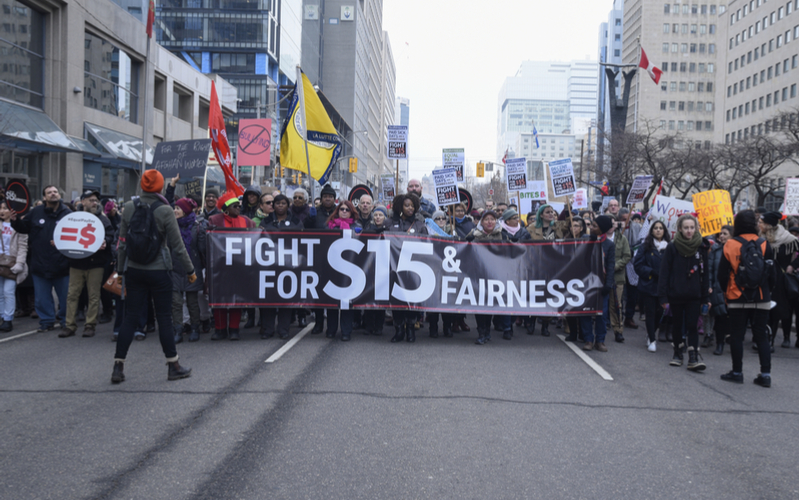
The Empirical Reality of the Minimum Wage
But even after excluding all shoddily done studies of minimum wages, we’re still left with conflict in the conclusions. Fortunately, economic theory itself supplies clues as to why.
-

•
President Trump’s Bargaining Prowess Is a Liability, Not an Asset
When aggression is military, each government attempts to protect its citizens from that which is unleashed by foreigners. But when aggression is economic, it is unleashed by each government against its own citizens.
-

•
Trade Retaliation Hurts Everyone
Whenever our government “retaliates” with trade restrictions of its own, it unfairly tilts the playing field here at home in favor of politically potent producer groups and against the rest of us.
-

•
National Defense Is Not an Exception to the Case for Free Trade
The very best system of national defense is one that reduces the prospect of war. It is one that diminishes the need to actually send into battle war machines and manpower. So anyone sincerely committed to a program of using trade policy as a means of strengthening national defense supports as an indispensable cornerstone of that…
-

•
Predatory Pricing: More Theory Than Reality
All governments and all courts everywhere would, if they were sincerely committed to keeping markets as competitive as possible, announce loudly and unconditionally that never again will they take accusations of predatory pricing seriously.
-

•
Trade Retaliation Is Unjustified and Unjust
These foreign-government interventions supply no good ethical excuse for “retaliation.” In fact, losing nothing to which they are entitled, home-country producers themselves act unethically when they demand that the home government inflict upon fellow citizens the same unjust depravations that foreign governments inflict upon their citizens.
-

•
Economists as Storytellers
In their admirable quest to be scientific, most economists not-so-admirably mistake what looks like science for actual science.
-
•
How to Destroy the Value of Work and Property
Overstating how misinformed, unrealistic, and just plain wacky are the economics that underlie these proposals of Sens. Warren and Sanders is impossible. Also impossible to overstate is the amount of damage that enactment of these proposals would inflict on the American economy.
-
•
The Great Danger of the Stakeholder Mandate
While there are imperfections in today’s economy in general and its system of corporate governance in particular, these are nowhere as extensive and threatening as Sen. Warren thinks them to be. And these imperfections are certainly not so serious as to justify any militant and wholesale restructuring of corporate law of the sort that Sen.…
-
•
What Is Mercantilism?
I do not deny that countless other modern-day politicians are also mercantilists. But this fact doesn’t mean that Trump is less of a mercantilist than he really is. He is a poster-boy for modern-day mercantilism.
-
•
The Empirical Reality of the Minimum Wage
But even after excluding all shoddily done studies of minimum wages, we’re still left with conflict in the conclusions. Fortunately, economic theory itself supplies clues as to why.
-
•
President Trump’s Bargaining Prowess Is a Liability, Not an Asset
When aggression is military, each government attempts to protect its citizens from that which is unleashed by foreigners. But when aggression is economic, it is unleashed by each government against its own citizens.
-
•
Trade Retaliation Hurts Everyone
Whenever our government “retaliates” with trade restrictions of its own, it unfairly tilts the playing field here at home in favor of politically potent producer groups and against the rest of us.
-
•
National Defense Is Not an Exception to the Case for Free Trade
The very best system of national defense is one that reduces the prospect of war. It is one that diminishes the need to actually send into battle war machines and manpower. So anyone sincerely committed to a program of using trade policy as a means of strengthening national defense supports as an indispensable cornerstone of that…
-
•
Predatory Pricing: More Theory Than Reality
All governments and all courts everywhere would, if they were sincerely committed to keeping markets as competitive as possible, announce loudly and unconditionally that never again will they take accusations of predatory pricing seriously.
-
•
Trade Retaliation Is Unjustified and Unjust
These foreign-government interventions supply no good ethical excuse for “retaliation.” In fact, losing nothing to which they are entitled, home-country producers themselves act unethically when they demand that the home government inflict upon fellow citizens the same unjust depravations that foreign governments inflict upon their citizens.
-
•
Economists as Storytellers
In their admirable quest to be scientific, most economists not-so-admirably mistake what looks like science for actual science.