Among the most useful questions to have ready at hand is “What if?” Unable to see the future — for the future isn’t yet created — we nevertheless are wise to try to carefully anticipate it so that we can prepare for it as best as possible. An especially important mental tool for doing so is to frequently ask “What if?”
- What if there’s a major stock-market crash looming? Perhaps I’d better reduce my portfolio’s holdings of corporate shares.
- What if I turn down that offer of a job with a very high salary? My life-time earnings will be lower and I’ll be unhappy, so I’d better accept the offer.
- What if, attempting to save money, I fail to have that old tree removed from my backyard and then a storm sends the thing crashing onto the roof of my house? Perhaps the wisest course is to spend the money to have the tree removed.
Asking “what if” is a healthy habit, but only if it’s done judiciously. And to judiciously ask “what if” requires, in each situation, also asking “But also what if?”
- But also what if the chances that the stock market will boom are greater than the chances that it will crash? Perhaps I should not reduce my portfolio’s holdings of corporate shares.
- But also what if that high-paying job’s hours are so long and stress level is so high that I’d be miserable working in it? Maybe it’s best that I turn that job offer down.
- But also what if the old tree in my backyard is still healthy? Perhaps the money that I’d now spend to have it removed would be better spent on replacing my old HVAC system.
We can never be certain that the choices we make will prove to be the best ones. But we can be certain that we’ll make an unusually large number of bad choices if we never ask both “What if?” and “But also what if?”
At the personal level, this lesson, although true, is rather trite. In going about our personal affairs we naturally, and without thinking about it, ask “What if?” and “But also what if?” Yet in the arena of public policy, while “What if” is often asked, this first question is too seldom followed by “But also what if?”
Protectionists, for example, are forever asking “What if we don’t protect this industry from foreign competition? We might find ourselves without access to critical war materiel!” As such, asking this question is appropriate. What’s not appropriate is failing to ask follow-up “But also what if?” questions. Such failure, however, is commonplace.
Appropriate “But also what if” questions in this case include these:
- But also what if protecting this industry diverts resources away from other domestic uses that are even more militarily crucial?
- But also what if protecting this industry makes it so dependent on government favors that it loses its innovative edge, thus causing it in the future to be a liability rather than an asset for our national defense?
- But also what if protecting this industry so angers some foreign governments that they respond with trade barriers that damage other of our industries that are important for national defense?
Protectionists also eagerly ask “What if we today fail to protect Industry Y and then discover tomorrow that, thriving abroad, that industry is a major source of excellent employment? But protectionists never follow up this question by asking “But also what if, in protecting industry Y, we deny resources to industry Z that would have turned out to be a source of even greater excellent employment in the future?”
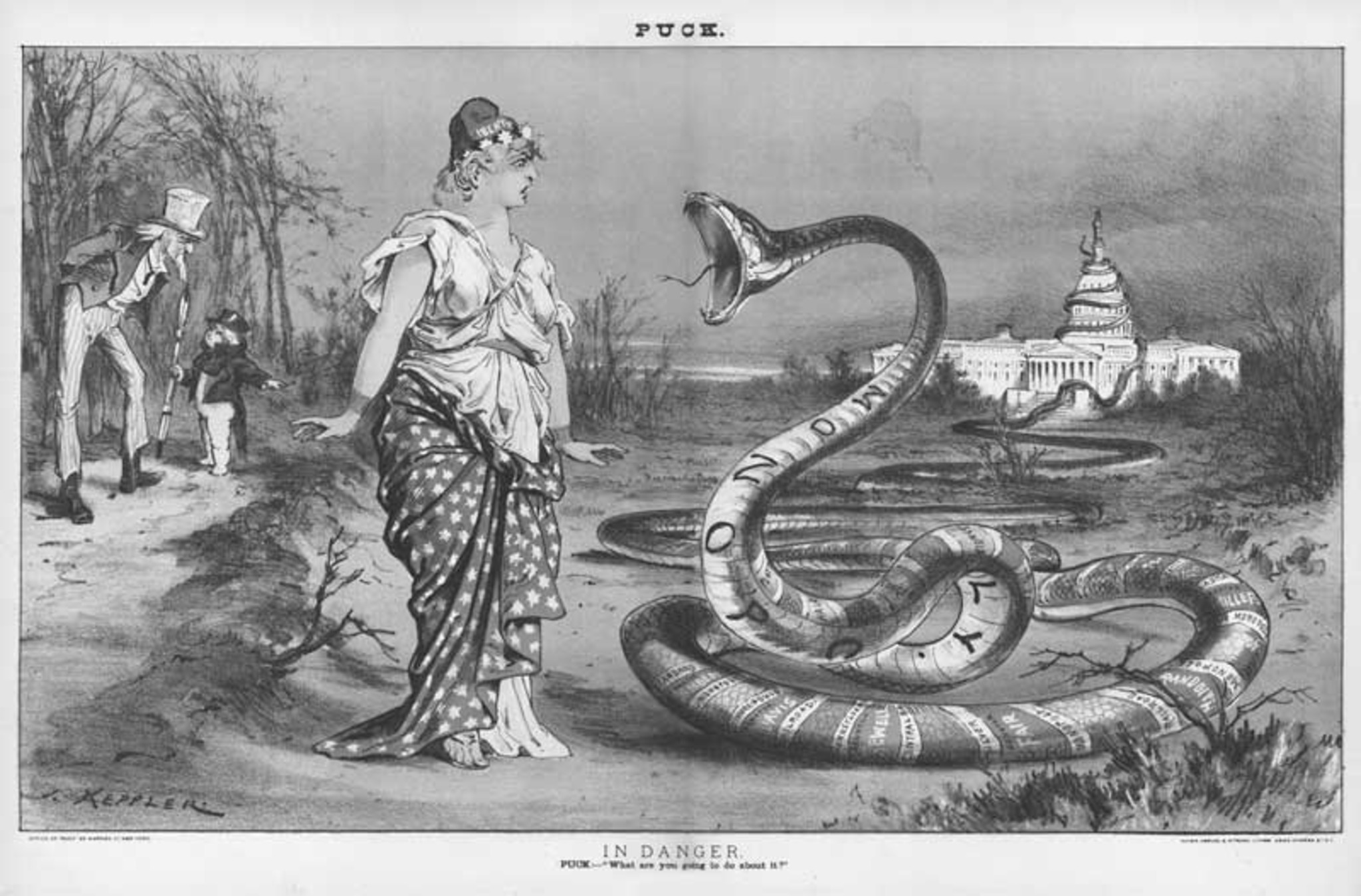
The failure to ask “But also what if?” questions is rife also among antitrust enthusiasts. Seeing the thriving today of a large, successful firm — CurrentlyDominant, Inc. — often invites the question “What if no one can ever compete against CurrentlyDominant, Inc. with enough vigor to keep prices in that industry low and product quality high?” Everyone who asks this question is someone who obviously doesn’t possess the entrepreneurial creativity to devise a means of successfully competing tomorrow for customers who are today best served by CurrentlyDominant, Inc. But, of course, all it takes is one such creative person.
There are 340 million people now living in the United States and eight billion on earth. The chances are nearly 100 percent — and history backs this claim — that CurrentlyDominant, Inc.’s high profits and large market share today will tomorrow incite at least one of these many people to devise a successful entrepreneurial response that ensures that CurrentlyDominant, Inc. does not for long, if ever, exercise monopoly power against the interests of consumers. The fact that college professors, government bureaucrats, and politicians cannot themselves conceive how competition might be successfully leveled in the market against CurrentlyDominant, Inc. testifies only to the reality that such people aren’t entrepreneurs. Unfortunately, their inability to imagine entrepreneurial, competitive possibilities is mistaken to be evidence that CurrentlyDominant, Inc. should be attacked with antitrust rather than allowed to flourish and to be disciplined only by creative market rivals.
The arrogance of those who wish to unleash the dogs of antitrust on CurrentlyDominant, Inc. prevents them from asking important follow-up questions, including:
- But also what if what appears to be this company’s dominance over consumers is really the result of this company’s unique skill and determination in serving consumers better than consumers are now being served by existing rivals?
- But also what if using antitrust against CurrentlyDominant, Inc. will dampen future entrepreneurs’ incentives to excel at pleasing consumers?
- But also what if using antitrust against CurrentlyDominant, Inc. will incite future entrepreneurs to strive for larger market share not by working as hard as possible to please consumers but, instead, by lobbying antitrust authorities to hamstring their rivals with threats of antitrust prosecutions?
Again, asking such questions does not guarantee that correct answers will be forthcoming. Errors will be made. But the chances of getting matters wrong — the likelihood of maximizing mistakes — are much higher if, after asking “What if?” we fail to ask “But also what if?”
Share This Article

Post on Facebook

Post on X

Print Article

Email Article