Some interesting news items this week on the European crisis:
A “wild week” (Financial Times)
“Fears of eurozone sovereign risk contagion to banks, tighter monetary policy in China and surprise intraday selling by electronic trading systems united to deliver the worst week for global equities since the height of the financial crisis.”
“For investors, the spectre of sovereign credit risk looms as potentially the next stage of the financial crisis, as heavily indebted governments face demands from the so-called “bond vigilantes” to start reducing their borrowing.
Volatility across equities, bonds, currencies and commodities has surged this week, as concerns about the exposure of banks to eurozone debt intensified.
On Friday, in a reprise of the financial crisis, a key barometer of banking stress, US dollar Libor, jumped 5.5 basis points to 0.428 per cent – up from 0.30 per cent in mid-April when jitters about Greece started.”
Ignorant politicians blame markets (Financial Times):
“One reason why the eurozone is sliding into ever deeper trouble is because its political and bureaucratic elites do not like, do not understand and have no wish to understand financial markets. This is an attitude embedded in European history and culture.”
“Since the world financial crisis started in summer 2007, the European Union’s authorities have tried to pin all the blame on “the markets” […] Now it’s the turn of the reviled credit ratings agencies.”
“Now there is talk – not for the first time in recent years – of setting up a European credit ratings agency.”
“Don’t Europe’s leaders get it? If a European credit ratings agency is established and there is even a hint that its decisions are influenced by political pressures, it won’t possess and it won’t deserve the slightest respect in the real world of real investors who handle real people’s money – yours and mine.”
Highest default probabilities (likelihood of default on sovereign debt):
- Greece (52 %)
- Venezuela (51 %)
- Argentina (49 %)
- Pakistan (39 %)
- Ukraine (36 %)
- Portugal (31 %)
- Dubai – (27 %)
- Latvia (25 %)
- Iraq (24 %)
Barry Eichengreen – It’s not too late for Europe
“European leaders and the IMF have badly bungled their efforts to stabilise Europe’s financial markets. They have one last chance, but success will require a radical change in mindset.”
“It’s not a pretty picture. The IMF botched its rescue. The ECB hesitates to erect the necessary ring-fence around Greece. Portuguese and Spanish policy makers underestimate the gravity of their position. German leaders are in denial. But although it may be too late for Greece, it is still not too late for Europe. That said, a solution will require everyone to wake up.”
Counterparty risk returns (Financial Times)
“The spectre of counterparty risk, last seen in dramatic form in the wake of the Lehman collapse, is returning to the European banking sector in an early warning sign that some banks may collapse in the wake of the eurozone’s sovereign debt crisis.”
“Deteriorating conditions in interbank money markets are leading some analysts to predict the next crisis will be among the banks. Even Europe’s biggest banks, such as Deutsche Bank, Barclays, BNP Paribas and Société Générale, are suffering as the costs of insuring these banks against default rises”
“These trends are similar to the height of the financial crisis following the collapse of Lehman Brothers in September 2008, although dealers stress the markets are a long way from the seizure experienced at that time.”
Mohamed El-Erian (Pimco) – The Greek aftershocks
“Given the tragic events in Greece and the financial contamination of other eurozone peripheral countries, most people now recognise that sovereign risk matters and it matters a great deal. Unfortunately, the recognition lag has already caused significant damage, including forcing the current approach to European integration to an historical juncture.”
“Most countries around the world will feel aftershocks of the Greek tragedy. The transmission mechanisms involve trade, capital flows and the very functioning of markets […]“It is certain that the Greek crisis will undermine aggregate demand and, therefore, trade flows – directly and, more importantly from a global perspective, by imparting an additional fiscal drag to other European countries. […] This will strengthen the structural headwinds that are already weakening what has been a robust global cyclical recovery.”
“Since Greece is part of a general phenomenon of bloated public finance and higher systemic risk, we should also expect a generalised and volatile step-increase in risk premia around the world. Capital will thus be more selective in terms of destination, as it opts for liquidity over returns and for safe government bonds over equities.”
“The Greek crisis has already morphed into a regional (eurozone) shock. It now stands on the verge of morphing into a more global phenomenon.”
Mohamed El-Erian (Pimco) – A critical weekend for Europe
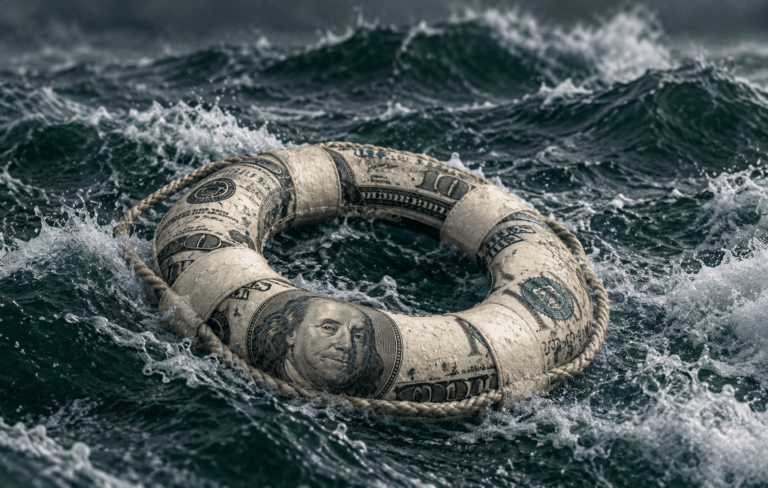
“With Greece (as well as Portugal and some other countries) now visibly drowning in a sea of debt, the question is whether the rescuer (EU/IMF) can pull off the rescue or, instead, get pulled down with all parties drowning.”
“So far, the attempts at rescue-including last Sunday’s dramatic EUR 110 billion announcement-have have been incomplete with respect to both design and implementation. They were thus viewed as insufficient and not credible by analysts and markets. As a result, the Greek crisis morphed in the following days into something much more sinister for Europe and the global economy.”
“Even with this critical uncertainty, we should not under-estimate the historical relevance of what is happening this weekend; and the stakes for Europe and the global economy are huge.
If this rescue attempt does not work, there will be a material acceleration in the process of change to Europe’s economic, financial, and institutional landscape; and the reality of the debt explosion in industrial economies will become even more of a destabilizing factor for the world economy.”
Soaring bank risk (Bloomberg Businessweek)
“The cost of insuring against losses on European bank bonds soared to a record, surpassing levels triggered by the collapse of Lehman Brothers Holdings Inc., as the sovereign debt crisis deepened.
The Markit iTraxx Financial Index of credit-default swaps on 25 banks and insurers soared as much as 40 basis points to 223, according to JPMorgan Chase & Co. […] Swaps on Greece, Portugal, Spain and Italy rose to or near all-time high levels.
Credit risk rose for a sixth day on concern the Greek debt crisis is spiraling out of control and triggering concern banks may face losses on their sovereign bond holdings. The Group of Seven plans to hold a conference call today to discuss the turmoil, after a global stock rout that briefly erased more than $1 trillion in U.S. market value.”
Paul Krugman does not see another financial crisis coming out of the European debt crisis
“So, is Greece the next Lehman? No. It isn’t either big enough or interconnected enough to cause global financial markets to freeze up the way they did in 2008. Whatever caused that brief 1,000-point swoon in the Dow, it wasn’t justified by actual events in Europe.”
“That’s the good news. The bad news is that Greece’s problems are deeper than Europe’s leaders are willing to acknowledge, even now – and they’re shared, to a lesser degree, by other European countries. Many observers now expect the Greek tragedy to end in default; I’m increasingly convinced that they’re too optimistic, that default will be accompanied or followed by departure from the euro.”
Share This Article

Post on Facebook

Post on X

Print Article

Email Article