Growing numbers of Americans are emerging, Lazarus-like, from the darkness spawned by a year of government-mandated lockdowns—and joining those of us who early on opposed this assault on our liberty and humanity. They’re finally asking hard, crucial questions: “How did this happen? Why did this happen? What were the real costs of locking down life and erasing freedom? How can we prevent this from ever happening again?”
The answers to these and other lockdown-related questions won’t be found in the state and federal governments that perpetrated this assault, or in the media outlets that aided and abetted, or in the self-styled expert class that abandoned all critical thinking and instead forced an ahistorical, counter-scientific experiment onto our world. For answers to these questions, the American people will need something more.
Power and Independence
What we need is an independent inquiry—a commission to review the what, why, who and how of the lockdown crisis.
The legislative and executive branches have created scores of these sorts of commissions over the years. To be sure, this commissionizing of government tends to let lawmakers off the hook and allow them to defer tough calls to others. But some commissions have played an important part in helping the country understand and investigate policy failures, address problems, respond to or prepare for crises, learn from mistakes, and prevent repeating mistakes.
For instance, presidential and congressional commissions realigned the U.S. military after the collapse of the Soviet Empire, unraveled the Iran-Contra affair, identified looming national-security threats (here, here, here, here, here), and dissected intelligence failures. Perhaps the most famous such commission was the 9/11 Commission. Created in 2002 by an act of Congress, the commission examined the causes of the September 11 attacks, brought to light intelligence shortfalls and institutional disconnects leading up to the attacks, and proposed numerous systemic reforms. A similar commission was created just weeks after Pearl Harbor to identify the failures leading up to that day of infamy.
This capacity for self-reflection and self-criticism—this willingness to publicly review what went wrong—is one of the strengths of the West in general and America in specific. Learning from mistakes—and in doing so, trying not to repeat them—is how individuals and nations make progress.
These sorts of commissions can’t undo what happened or repair the damage done. But they can educate and equip the American people with the sort of knowledge that, when mixed with experience, might provide the building blocks for wisdom in navigating or preventing the next crisis.
Under normal circumstances, Congress or the president would form a commission to assess the lockdown disaster. But these aren’t normal circumstances. Across every level and branch of government, the kneejerk consensus since March 2020 has been to lock down commercial, religious, economic and cultural activity.
Yes, there are green shoots of critical thinking and individual liberty now sprouting—and blessedly so—but they’re originating from the grassroots up. The Washington elites, the public health pop stars, the authoritarian governors, the producers and playwrights of mask theater, the “laptop class,” the disciples of scientism, the disgraced computer modelers, the media outlets trying to hold on to their captive audience—all these entities oppose America’s yearning for normalcy. Trapped in an echo chamber of groupthink, they either see no reason to review what happened in the past 12 months—or realize that doing so would be to admit that they made a mistake of historic proportions.
In short, the Covid-19 Lockdown Commission needs to be launched and led by what Richard Cornuelle called the “independent sector”—civic associations, research institutes, civil society organizations, houses of worship, trade guilds, business groups committed to individual liberty and its essential analogue, individual responsibility.
As Alexis de Tocqueville wrote of America’s dynamic non-government sector in the 1830s, Americans “constantly form associations…religious, moral, serious, futile, general or restricted, enormous or diminutive…associations to give entertainments, to found seminaries, to build inns, to construct churches, to diffuse books, to send missionaries to the antipodes.” Almost 200 years later, Americans and their associations, foundations, charities, houses of worship, societies and clubs continue to find a way—often in spite of the roadblocks created by government.
Tocqueville understood that America doesn’t revolve around Washington or the state capitals. “The intelligence and the power of the people are disseminated through all the parts of this vast country,” Tocqueville marveled. “Instead of radiating from a common point, they cross each other in every direction.”
Now more than ever, Washington and the state capitals need to be reminded of that.
Breakdown
Independent of the herd orthodoxy, a Covid-19 Lockdown Commission could ask those hard, crucial questions; examine and expose the lockdown’s origins (which, as readers of Jeffrey Tucker’s tireless work know, were at once childish and medieval); dig deep into the cascading consequences of the lockdowns, by economic sector, by industry, by state, by age group; detail and describe how the lockdowns deformed human lives and human rights, civil society and civil rights, culture and commerce, faith and family; and, yes, assign blame for the assault on liberty that began in March 2020.
An old maxim advises that it’s better to fix the problem than to fix the blame, but there are occasions when the former depends on the latter. This is such an occasion. The destruction wrought by the lockdowns has many fathers—not just computer modelers who terrified policymakers with guesses dressed up as certainties; not just public health officials who were given the levers of government without any sense of unintended consequences; not just governors who listened to one tiny subset of experts, ignored all the others and then ruled by executive fiat.
Also sharing in the blame are citizens lacking any historical knowledge older than yesterday’s top-trending tweet, a public education system that has failed to inculcate critical thinking for more than a generation, legislators and judges who were AWOL while the Constitution was trampled, and a media herd that lazily or purposely conflated terms and inflated tallies.
In short, this was a system-wide breakdown.
Importantly, a Covid-19 Lockdown Commission is necessary not just to look back and count the costs of the lockdowns, but to maintain the forward momentum of current efforts to end the lockdowns. Worried about new variants, some states are considering pullbacks and pauses. Some federal officials and public health experts even argue that vaccinations aren’t enough to return to normalcy.
As it arms citizens with what they need to maintain that momentum and as it addresses those hard, crucial questions, the Covid-19 Lockdown Commission would revive a spirit of individual liberty and individual responsibility in America; equip a community of free people to be vigilant against the reemergence of lockdowns; and disseminate information and knowledge, which are essential for a self-governing people. As James Madison observed, “A popular government, without popular information, or the means of acquiring it, is but a prologue to a farce or a tragedy, or perhaps both…A people who mean to be their own governors, must arm themselves with the power which knowledge gives.”
Costs
Madison’s point about arming the American people with facts and knowledge is important for at least three reasons as we limp away from the lockdowns.
First, whether due to intention or incompetence, there will be other novel viruses, other pandemics, other public health threats, other computer models that tempt government to “just do something.” Lockdowns cannot become the new-normal response to these events.
Second, once our government takes a certain action, it’s easier and more likely for it to take that action again. The first action serves as precedent for succeeding actions. After a year of government-mandated lockdowns that smothered worship, work, culture and commerce, this reality should trouble—or more accurately, terrify—conservatives and liberals alike.
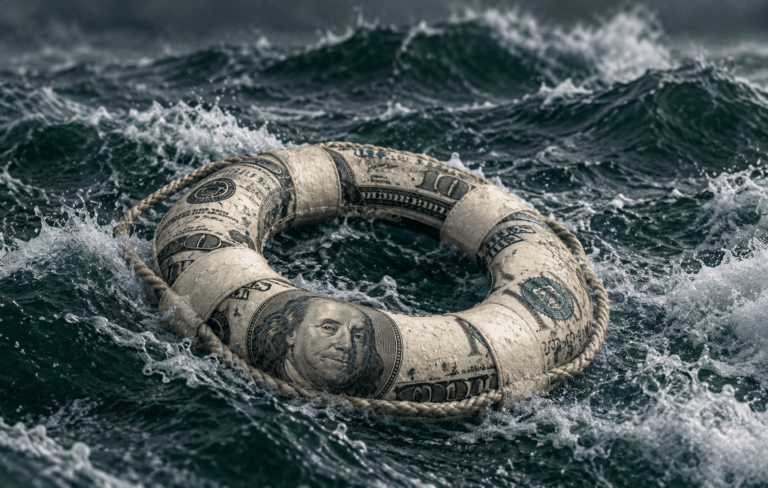
Third, government-ordered lockdowns have been unimaginably destructive, as readers of AIER’s research know. The collateral damage spreads in every direction: Heart attack death rates spiked because patients were kept away from needed care. Tens of thousands of preventable cancer deaths and cancer diagnoses will be traced to delayed treatment and screening caused by lockdowns.
The isolation, job loss and depression triggered by lockdowns will lead to 75,000 deaths from drug abuse, alcoholism and suicide. And surely there’s a correlation between the lockdowns and the 30-percent surge in homicides in 2020—the largest single-year increase in 50 years. One study estimates “mortality, morbidity, mental health conditions and direct economic losses” in America to be a staggering $16.121 trillion— “more than twice the total monetary outlay for all the wars the U.S. has fought since September 11, 2001.”
Domestic violence and childhood malnutrition exploded during the lockdowns. Hundreds of thousands of cases of child abuse have gone unreported due to the lockdowns—a consequence of kids not being in school, where abuse is often first detected. Indeed, we may never be able to quantify the costs of a year-plus without classroom instruction, but researchers are already predicting decreased life expectancy and decreased earnings for this generation of children—a generation the experts utterly and totally failed.
Speaking of children, Brookings concludes, “The COVID-19 episode will likely lead to a large, lasting baby bust…a drop of perhaps 300,000 to 500,000 births in the U.S” in 2021. Importantly, this is not a function of deaths among women of childbearing age, but rather a function of despair and uncertainty.
That despair and uncertainty was fueled by disconnection from work, family and worship. It’s during times of crisis that people most need the peace of visiting a house of worship, the social supports of work, the comfort of visiting family. The lockdowns stripped that away from us. More than 100,000 U.S. businesses were killed, millions of Americans became jobless, tens of millions were barred from gathering for worship. The “laptop class” shruggingly said that digital technologies were the answer. But the rest of us rapidly learned that the faux connections of our digital age are no substitute for real connection; that most of us cannot work from home, many of us cannot learn from home and some of us cannot worship from home; that what was true in the beginning remains true today: “It is not good for man to be alone.”
America’s independent sector and civil society associations are founded on that very premise—the notion that we can do more in community than in isolation. No segment of American life is better suited to launch and lead a Covid-19 Lockdown Commission—and shine light on this mammoth policy failure—than the independent sector.
For what it’s worth, my vote for leading this effort would be AIER, given all it has done to defend individual liberty, promote critical thinking and point the way back to normalcy. Sagamore Institute stands ready to partner with others on this important mission.
Share This Article

Post on Facebook

Post on X

Print Article

Email Article