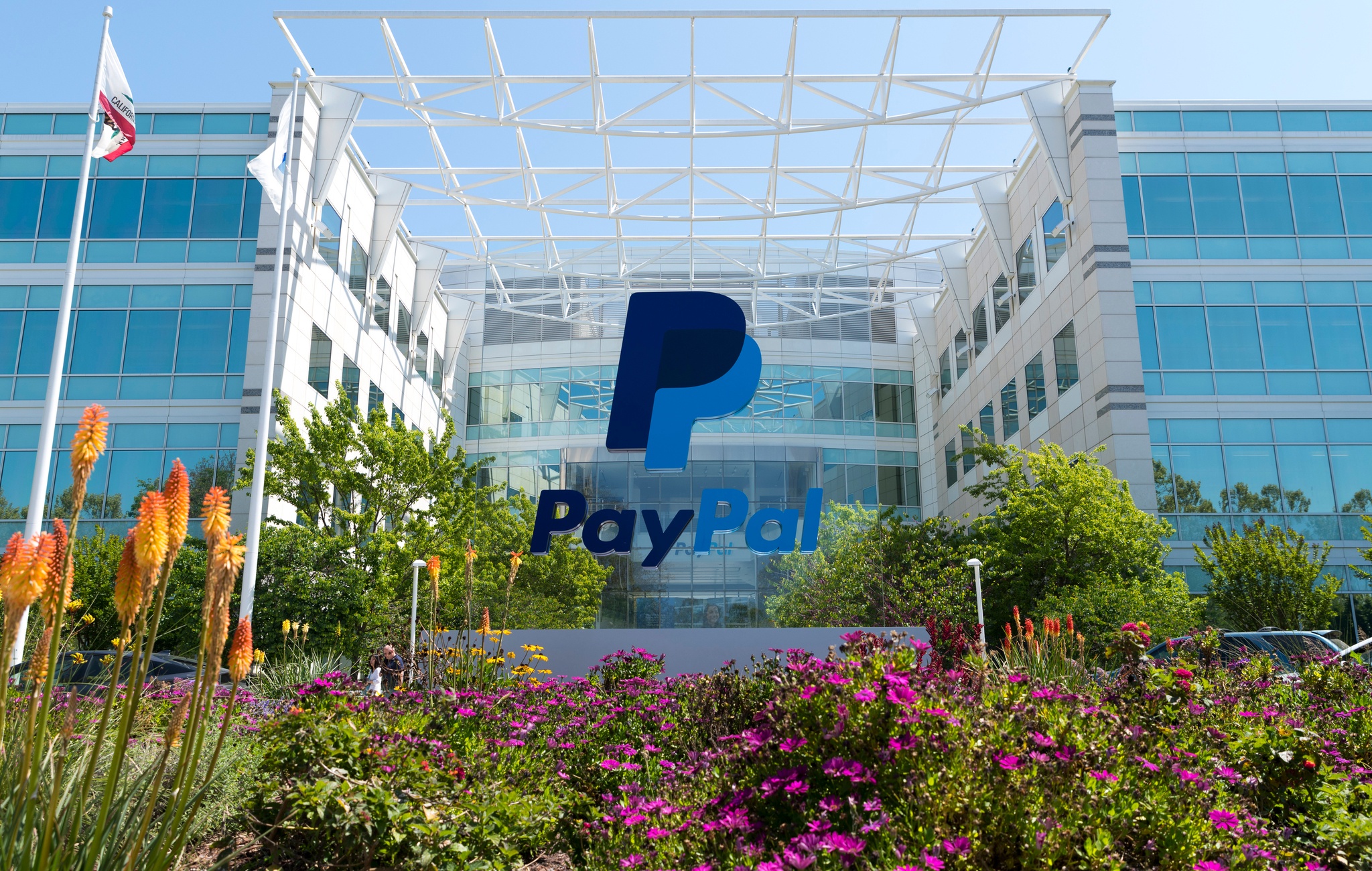
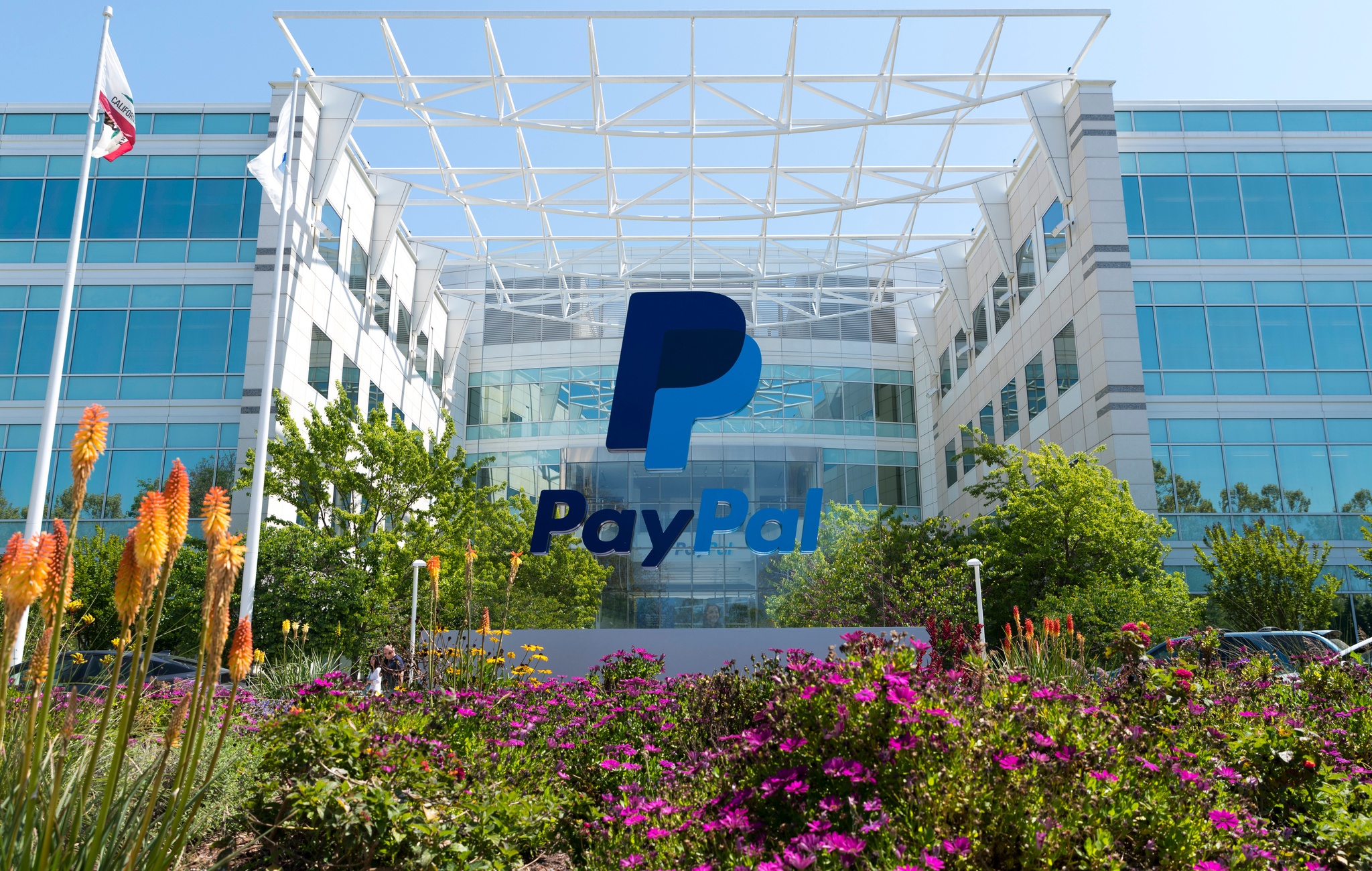
Imagine if officials at your local bank announced that they would start surveilling your public speech and messages, and would deduct money from your account if they didn’t like what you said. PayPal, the online payment services provider, unleashed a furor last week after announcing just such a scheme.
In published amendments to its Acceptable Use Policy, the company informed its customers, “You may not use the PayPal service for activities that … involve the sending, posting, or publication of any messages, content, or materials that, in PayPal’s sole discretion … promote misinformation.” PayPal claimed the right to seize $2500 from customers’ accounts for any purported violations.
Is that even legal? Probably not. PayPal’s relationship with its customers is mostly contractual, and contract law does not generally allow one party to impose fines and penalties on another. PayPal claimed that the $2500 fines would be deemed “liquidated damages” (a predetermined estimate of how much harm a breach would cause, which appears in some contracts) but judges will generally enforce such provisions only if they are a reasonable gauge of a party’s actual prospective losses. It is hard to imagine how PayPal could show that $2500 was a reasonable forecast of its own actual harm whenever any of its customers allegedly “promoted misinformation.”
But the more interesting question is what PayPal was thinking. PayPal is a financial services company whose business is handling customer funds. Customer trust is its most valuable asset. PayPal’s website boasts that “we monitor every transaction 24/7 to help prevent against fraud, email phishing and identity theft… If something seems suspicious, our dedicated team of security specialists is immediately on it to help protect you from fraudulent transactions.”
In other words, your funds are safe with us. Unless we decide, at our sole discretion, to take them.
PayPal’s bold approach prompted immediate and widespread condemnation when it was publicized, including from its own former CEO David Marcus, who tweeted on October 8 that “PayPal’s new AUP [Acceptable Use Policy] goes against everything I believe in. A private company now gets to decide to take your money if you say something they disagree with. Insanity.”
PayPal backtracked almost immediately, telling National Review later on the same day of Marcus’s tweet that the new policy was announced “in error,” that “PayPal is not fining people for misinformation” and that “this language was never intended to be inserted in our policy.” The company has now scrubbed the provision.
But claiming error seems a doubtful refuge. Shouldn’t a business that reportedly processes more than $1 trillion in transactions per year have strong checks and controls over its announced policies on the handling of customer funds? Isn’t PayPal’s backtracking a bit like a pharmaceuticals company retracting an announcement that it would put cyanide in your aspirin? And why would a publicly traded, for-profit business focused on payment processing dive into the politically charged and controversial enterprise of attempting to police “misinformation” in the first place?
A clue can perhaps be found in the company’s online bio of its CEO, Dan Schulman, who told the New York Times in 2008 that “social activism is in my DNA.” His 632-word company bio lists a string of accomplishments, the great majority in the sphere of social justice, that in an earlier age would have marked him as a successful leader of an activist nonprofit.
What’s wrong with that? Nothing, of course, if that’s what PayPal’s owners, the shareholders, want. In an influential 1970 essay in the New York Times, the Nobel laureate economist Milton Friedman criticized the notion that corporations have “social responsibilities” beyond serving the interests of their shareholders and doing business in a lawful, ethical, and profitable manner. Friedman pointed out that corporate executives are agents and fiduciaries of shareholders, and when they lavish corporate largesse on social causes, they may be buying the limelight for themselves with other people’s money.
True enough, but that’s only wrong if it’s done without consent. If PayPal’s shareholders want profit-making to be mixed with (and sometimes compromised in favor of) social justice causes, they are free to opt for that. How do we know what they want?
For a publicly traded company like PayPal, with many thousands of shareholders and a current market capitalization of about $96 billion, we can only infer what its owners want based on what was disclosed to them before they bought their shares or decided to keep holding them. Were they told that the company’s management might attempt to implement anything like the misinformation policy?
PayPal has certainly disclosed that social concerns are part of its mission. Its annual statement filed last year with the U.S. Securities and Exchange Commission stressed, for example, that “[w]e believe that effective management of environmental, social, and governance (‘ESG’) risks and opportunities is essential to deliver on our mission and strategy.”
But were current and prospective shareholders given any warning that PayPal might threaten its own customers with seizure of their funds if the company disagreed with their public comments and messages? Quite the contrary. The same annual filing assured investors that PayPal understood customer trust as its top priority: “Protecting merchants and consumers on our payments platform from financial and fraud loss is imperative to successfully competing and sustainably growing our business…Our ongoing investment in systems and processes designed to enhance the safety and security of our products reflects our goal of having PayPal recognized as one of the world’s most trusted payments brands.”
That trust is in tatters. PayPal’s stock dropped almost 15 percent in the week after the misinformation policy was publicized, and as MarketWatch reported, “BoycottPayPal” trended on Twitter and Google searches for “how to cancel PayPal” and “cancel PayPal account” exploded. Whether the damage to PayPal will be fleeting or chronic is yet to be seen. But perhaps this incident will be a cautionary tale for corporate managers. Their first job must be to mind the store.
Share This Article

Post on Facebook

Post on X

Print Article

Email Article