
Those applauding coronavirus authoritarianism ought to be introduced (or reintroduced, as the case may be) to public choice theory, which attempts to apply the economic way of thinking to state actors; it suggests that we should take incentives seriously rather than simply assuming that people in the so-called public sector must “behave morally and care only for the public good.”
The theoretical framework of public choice is decidedly not saying that we must be overly cynical, convinced beforehand that everything the state does or could possibly do is part of an evil conspiracy. It instead asks us not to be overly sanguine either—to apply our assumptions about human beings and their behavior to the state in the same way we apply those assumptions to other human institutions. It asks us not to be romantic about political power and the way it operates.
This way of thinking is a powerful analytical corrective instrument in a world that too often, indeed almost always, treats political power and state actors as unique, possessed of superhuman attributes like perfectly altruistic motivations, perfect information, and perfect knowledge as to the downstream repercussions of their positive interventions. The kind of thinking collapses upon scrutiny, for as political philosopher Christopher Freiman writes,
If we assume that people act justly, the state isn’t needed in the first place. On the other hand, if we assume that people act unjustly, then we should assume that the state itself will act unjustly, too. This means that the state is only needed in conditions where we cannot count on it being just.
Freiman explains this as an example of “self-obviating idealization:” our model of the state simply assumes away the very problem the state is supposed to solve. Not very helpful is it? After all, if we just assume away (voilà!) the trickiest philosophical questions, then we’re not being very rigorous, and importantly we needn’t bother worrying about any social problems—including those to which the state was advanced as the solution in the first place. If this insight seems obvious or trivial to the reader, then she has already made more progress in the direction of a sound (as opposed to ideological and blinkered) political philosophy than most professional political philosophers.
What we’re observing during the coronavirus timeline is that most people are making exactly these ungrounded, unjustifiable assumptions about the state and its policy tools; they are laboring under the delusion that the state is a kind of godlike actor, positioned above and outside of human beings, their societies, and their relations. This is a way to avoid the felt psychological distress that would come from confronting some of the cold facts about the situation at hand: (1) the state is made up of human beings who are no less fallible, selfish, or prone to error than anyone else; and (2) we actually know very little about the attributes of the virus.
Indeed, as David Henderson observed in his debate with Justin Wolfers (results here — spoiler alert: Henderson won handily) it is not as if government actors “knew what would happen” and “had good information about how bad this would be;” they have been all over the map, providing all kinds of conflicting information over the course of these past months.
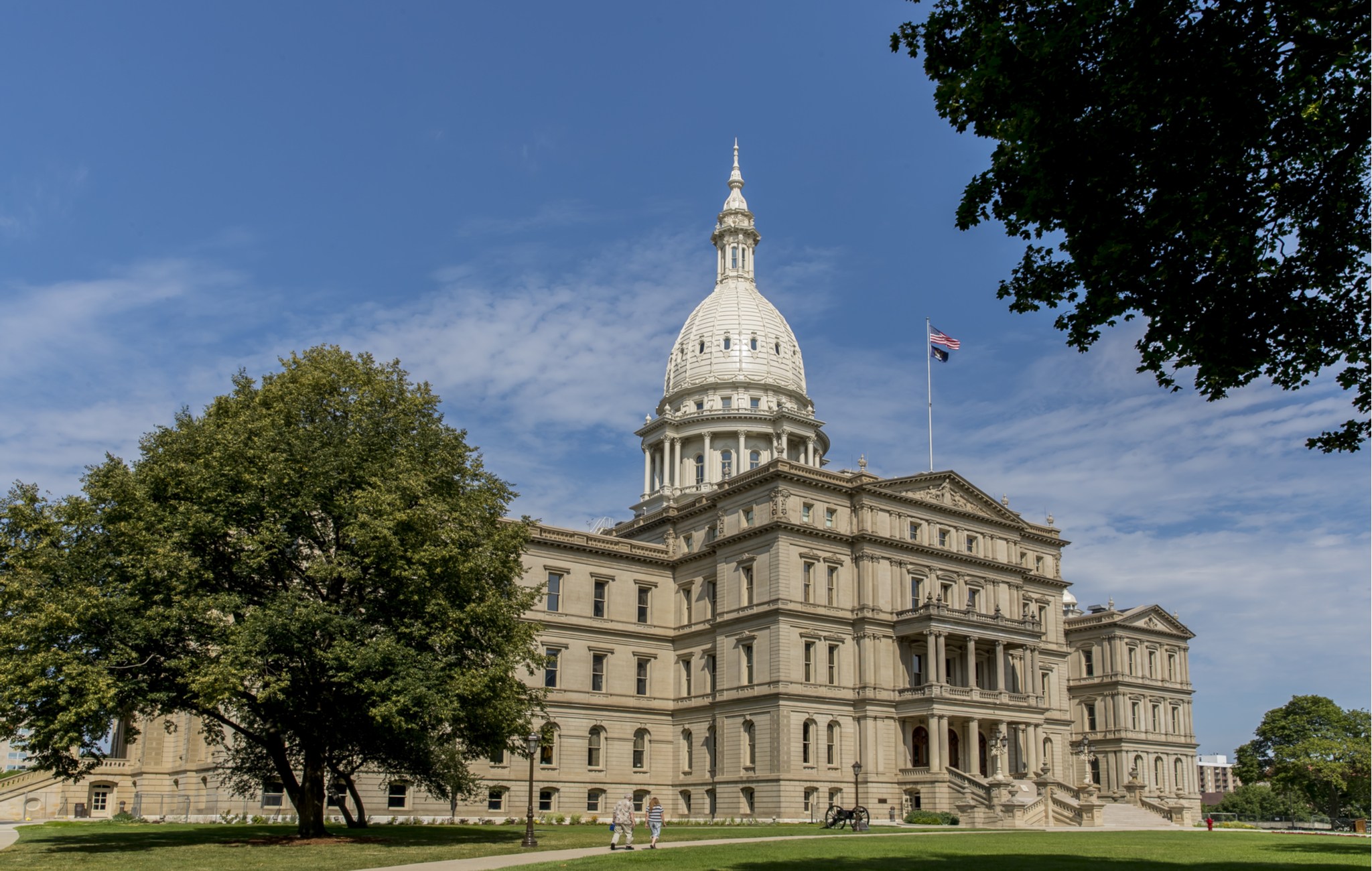
Henderson further notes that politicians’ judgments as to which activities and businesses are “essential” and which are not have reflected not some impartial, perfect platonic form of the idea of essentiality, but their own arbitrary priorities—which are in turn shaped by their own backgrounds and worldviews. He points to Michigan Governor Whitmer’s background as a prosecutor as an example.
We simply have no good reason to think that such government officials will act wisely or responsibly with the power they’ve taken to undertake authoritarian central planning through these lockdowns. As Henderson and others have argued, for the lockdowns to be worthwhile under a cost-benefit analysis, the marginal benefits (that is, the additional benefits, over and above closings and social distancing that were voluntarily undertaken) would have to be tremendous.
We have to compare actually-existing, real-life voluntary solutions to actually-existing, real-life government actions—not the idealized actions of a hypothetical government-as-unicorn. Public choice theory acts like an antidote to this kind of idealistic formulation of politics, political power, and the state. It opens the way to a more careful and sophisticated way to philosophize about those things, something we could really use right now, as we watch the blunt force of the total state lay waste to civil society and our way of life.
Share This Article

Post on Facebook

Post on X

Print Article

Email Article