Last week, former President Donald Trump stirred the pot by posting a social media message praising Brittany Mahomes, the wife of Kansas City Chiefs star quarterback Patrick Mahomes, for “strongly defending” him on social media.
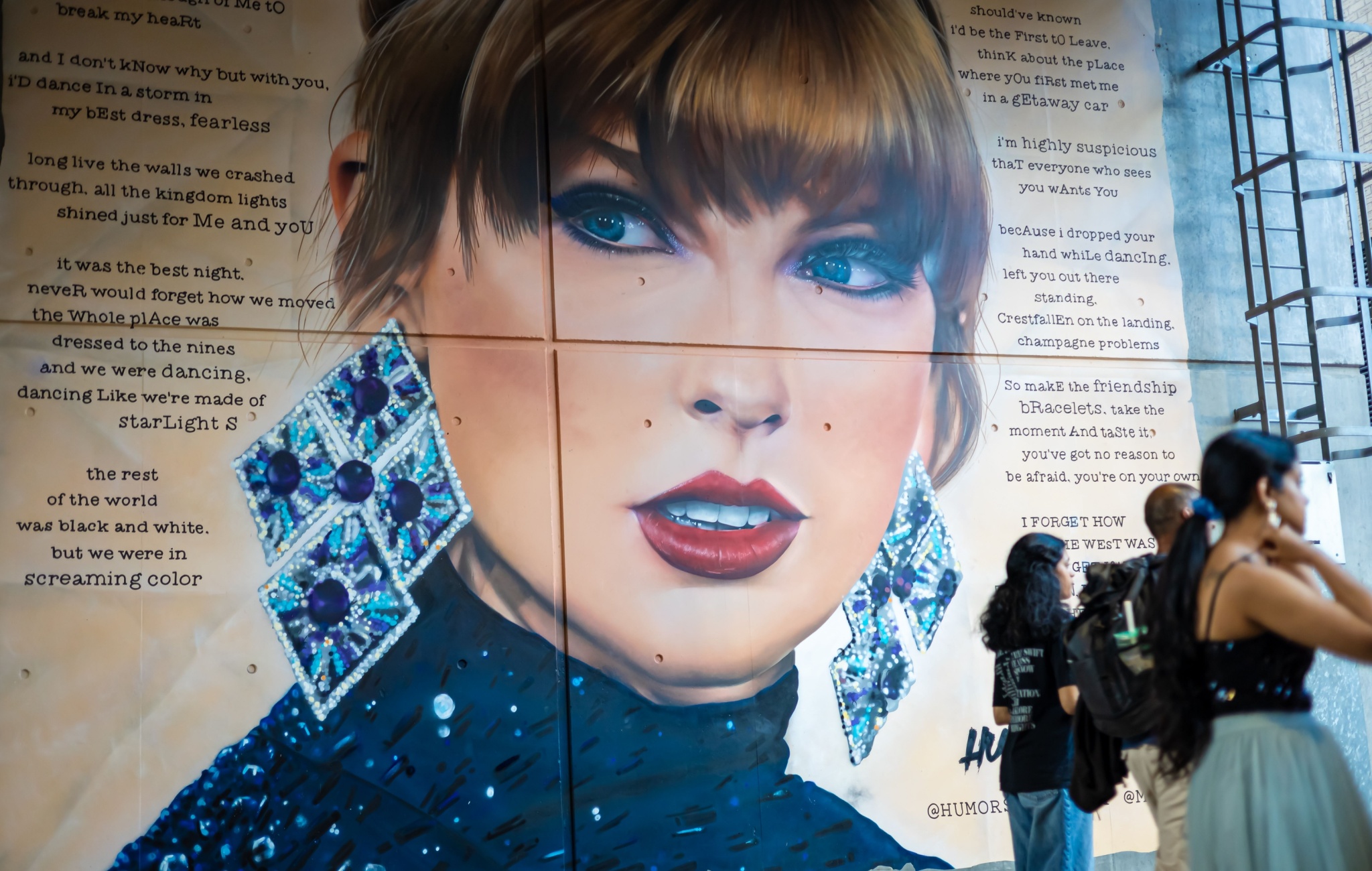
Whether liking a few social media posts constitutes a strong defense of the GOP presidential contender is debatable. Regardless, rumors quickly erupted that Taylor Swift, who dates Chiefs All-Pro tight end Travis Kelce, might have sat in a separate suite at Arrowhead Stadium in the NFL’s season opener to distance herself from Ms. Mahomes. As snubgate rumors swirled, many egged Swift on.
“Taylor Swift Literally Distances Self From Trump-Supporting Bestie Brittany Mahomes,” the Daily Beast reported with approval.
Hopes that Swift and Mahomes were on the outs were soon dashed, however.
Sources close to Swift told The US Sun that there was no truth to the feud rumors and the two remain “very good friends.” The following day, Swift and Mahomes were reunited publicly at the US Open Men’s Final in New York City.
The story didn’t end there, however. Many fans took to Twitter to rip on “spineless” Taylor Swift for not unfriending Mahomes.
The idea that Swift, who on Tuesday endorsed Kamala Harris for president, should purge from her life people who don’t share her political beliefs is not a healthy or enlightened one. After all, the world would be a dull place if we disassociated from those who didn’t share our views. Intellectual diversity enriches our lives and sharpens us, which is why so many preeminent thinkers throughout history have embraced it.
“I never considered a difference of opinion in politics, in religion, in philosophy, as cause for withdrawing from a friend,” Thomas Jefferson famously observed.
This is the proper sentiment, and many will tell you the ability to disagree is essential to a healthy constitutional democratic system, especially a pluralistic one like the United States, where people have vastly different life experiences, faiths, ethnicities, cultural identities, and ideas. They are right, but the ability to disagree is essential to something even more important: friendship.
Some might find the claim that friendship is more important than politics strange, but I believe it’s true. Ideas matter. Policy matters. But the older I get, the more I’m convinced that few things in life matter more than relationships, and friendships are near the top of the human relationship hierarchy.
While few may realize it, our closest family members and friends are likely to have a far deeper and more meaningful impact on our lives than policies emanating from Washington, D.C. I think most of us understand this. Value is subjective, but my hunch is that, if asked, few people would give up a cherished friend for a government program. I know I wouldn’t.
Unfortunately, for a variety of reasons, the number of Americans who don’t have friends is growing. Over the last 35 years, the percentage of Americans who report having “no close friends” has increased 500 percent, for both men and women. During the same period of time, the percentage of men and women who say they have ten or more friends has collapsed, according to a 2021 American Perspectives Survey.
This “friendship recession” has only grown worse the last few years. Earlier this year, PBS reported that 20 percent of American men don’t have a single close friend, up from just 3 percent in 1990.
The reasons behind this friendship recession are no doubt varied, but they likely stem from increased social isolation and the decades-long decline in community associations that Harvard scholar Robert Putnam chronicled in his best-selling book Bowling Alone.
This is a concerning trend. We saw the perils of social isolation during the pandemic when substance abuse, mental illness, self-harm, and extremism spiked during government lockdowns. This surge was no accident.
Social interaction is a key ingredient to positive mental health, and friendship is a foundational human need.
The fact that Swift and Mahomes aren’t willing to let their differing views on politics ruin an otherwise healthy friendship is a good thing. It’s a celebrity version of the late Justices Ruth Bader Ginsburg and Antonin Scalia, who famously became best friends even though they represented the polar opposites of the Supreme Court.
“We were best buddies,” Ginsburg said of her SCOTUS colleague, following his unexpected death in 2016.
During the silly season of presidential elections, which often brings out the worst in us, it’s important to remember that true friendship is worth more than political pride.
To give presidential candidates, who don’t even know who we are, power over our most intimate relationships is to bestow them with one more power of which they are not worthy.
Share This Article

Post on Facebook

Post on X

Print Article

Email Article