Howard Marks has long made the point that the seeds of bad economic times are planted during the good times, and the seeds of good during bad. Marks’s correct vision of recession and recovery needs to be discussed in the here and now.
Considering good or booming economic times, it’s not unreasonable to suggest that the individuals who comprise any economy sometimes develop bad personal and work habits. At the same time, companies reach in terms of how they expand, the individuals they hire, along with how many they hire.
Banks and investment banks similarly are forced to reach somewhat. Precisely because there’s more competition to make loans, and to finance new and existing companies, capital allocators reach too. So do they with investments. That they do is somewhat logical. Money flows and lending may be denominated in dollars, but they signal the movement of goods, services and labor. During good times production of goods and services grows, as frequently do labor forces, and all of this is revealed through credit expansion.
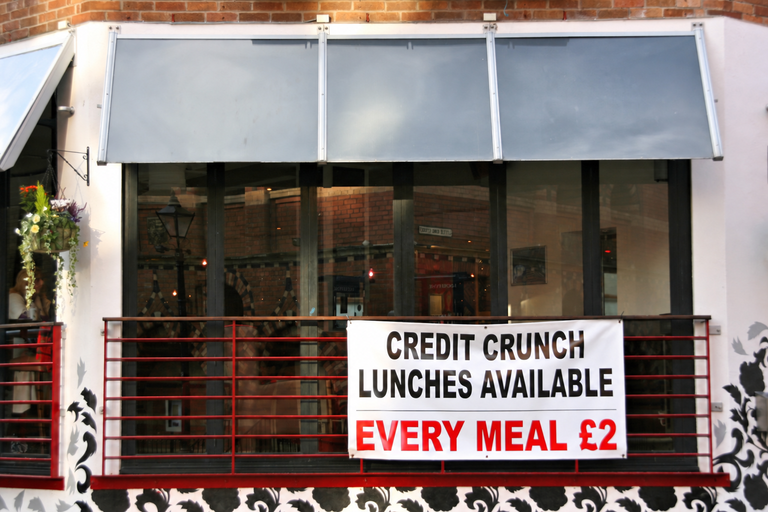
Recessions, far from a terrifying sign, actually just signal a broad realization of errors by individuals and corporations. Recessions signal recovery precisely because they signal the correction of the mistakes made during the good times.
That they do explains the corollary to Marks’s point: during troubled times we lay the groundwork for better. Yet again errors are corrected of the expansion, hiring, investment and lending variety, bad personal habits are nipped, bad hires that don’t fit for companies and individuals alike are released into the market economy in search of better matches, plus individuals and businesses shore up their personal financial situations.
Some Keynesian thinkers in the economics profession believe consumption powers economic growth, but as the mildly sentient among us know well, investment is the true driver of growth. Crucial about investment is that it’s a logical consequence of savings, which explains why good times emerge from the bad. As individuals and corporations shrink their outgoings, capital formation grows, thus setting the stage for growing amounts of investment that puts an economy once again on a growth path.
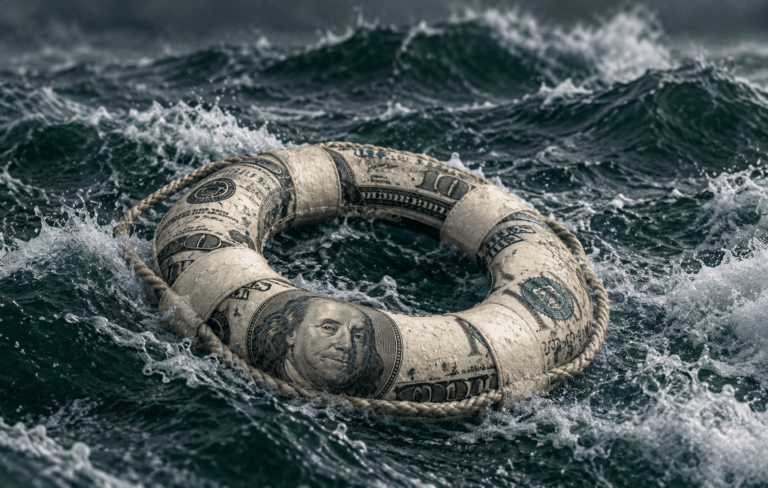
All of the above requires saying in consideration of the enormous amounts of ink being spilled by economists and pundits about the looming “recession.” As usual, they know not of what they speak. Recessions signal recovery. This will not be that kind of recession. It won’t be simply because it’s not reasonable to suggest that what’s taking place right now is in a broad sense a realization of individual and corporate error, a cessation of individual and companywide bad habits, and individual/corporate rebuilding of balance sheets.
It’s not simply because what we’re experiencing is the asphyxiation of economic activity on the local, state and national level. Though the Wall Street Journal’s editorial page oddly supports the Fed and federal government as a major capital allocator to businesses wrecked by asphyxiation, the same page makes the correct point that the U.S. economy of March 19th is very different from the one of, say, February 19th. That one was largely free, while this one, per the Journal’s editorialists, is the stuff of “command and control.”
Translated for those who need translation of the obvious, this won’t be a recession. Recessions are yet again painful, but always healthy periods of error realization when free individuals and businesses fix what’s wrong.
In 2020, matchlessly foolish politicians are to varying degrees not allowing individuals and businesses to work and produce. Good times didn’t bring on this horror show we’re being forced to endure; rather this contraction is and will be a consequence of way-too-powerful politicians decreeing the work of all too many illegal.
To be clear, what’s ahead is a contraction born of monumental political error. Good history, Benjamin Anderson-style history, will make this screamingly apparent. There was never in 2020 an economic crisis born of a spreading virus; rather a spreading virus proved oxygen for politicians on all levels on the way to them forcing contraction on an economy that, if large and growing larger, would be most capable of slaying the virus.
Indeed, it’s fascinating in these times to see even rhetorically-friendly-to-market conservatives calling for a muscular governmental response to what is a political problem. The very central planning that conservatives decry in normal times apparently makes sense during crisis, thus resulting in Kevin Warsh as the spokesman for conservatives lurching to government as their savior.
The joke is on them. It seems they missed the simple truth that government spending is a consequence of private sector economic activity, yet the private sector is presently being suffocated by the very politicians conservatives seek to empower right now. To witness what’s happening is to wish it were a bad dream. Except that bad dreams aren’t this awful.
Which brings us to the last certain aspect of recessions; this aspect always and everywhere a major driver of the economic recovery that recession signals. During downturns individuals and businesses yet again pull back, they become more careful, they save. And their savings set the stage for a rebound. The problem, in 2020, is that what savings many Americans have will be consumed just to make sure the eviction notices don’t come, the lights stay on, that food is around to be eaten.
It’s all a reminder that what we’re about to endure has nothing to do with recession. Let’s please not insult what’s happening with a word that has everything to do with recovery. Recessions signal something better on the way. Command and control economies designed by hapless politicians and central bankers signal agonizing economic decline.
Previously ran on RealClearMarkets
Share This Article

Post on Facebook

Post on X

Print Article

Email Article