I regret it, but George Santayana’s famous statement, “Those who cannot remember the past are condemned to repeat it,” is misleading at best.
The statement implies that if we do remember the past, we will not repeat it. But, based on the history I’ve learned, that’s not true.
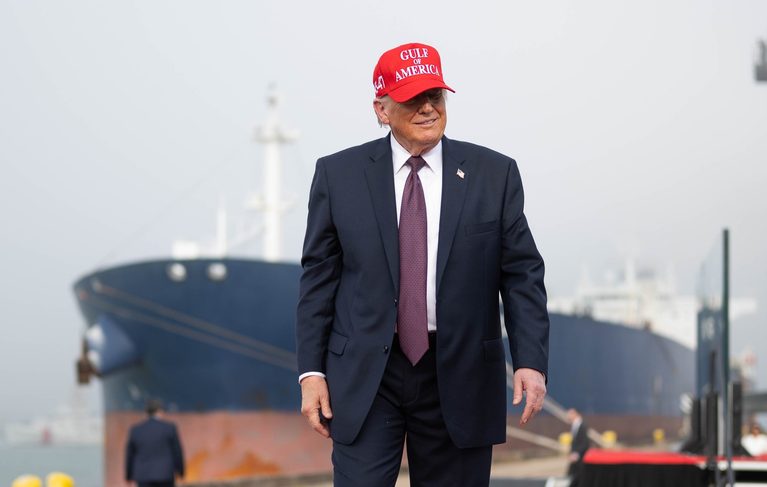
We see a regrettable repetition right now: In 1930, more than a thousand economists signed a statement opposing the Smoot-Hawley Tariff bill, warning it would lead to a destructive trade war. Congress passed high tariffs anyway, and they contributed to the Great Depression. This year, nearly two thousand experts, also led by economists, warned against raising tariffs. Yet our president is slapping on tariffs right and left, and Congress is silent.
There are three major reasons why historical remembrance does not bring enlightenment.
First, do we even know the causes of historical events?
Thousands of books have been written about World War I, yet there is no consensus on what caused it. The events preceding it were “intricate enough to accommodate any number of hypotheses,” historian Christopher Clark wrote in The Sleepwalkers: How Europe Went to War in 1914.
Was it the rigid alliances and treaties? Miscommunication? Ignorance? Serbian nationalism? Did everyone expect it to be another self-limited Balkan altercation? (There had been two.) Were leaders “sleepwalking”?
Similarly, we don’t fully know why the US had a civil war. Was it inevitable? Could it have been avoided by reimbursing plantation owners for freeing slaves? Or cracking down on the expansion of slavery to other states? Possibly. But if so, how would slavery have ended? Avoiding one tragedy might have perpetuated another. Have we learned anything about the Civil War that can possibly guide us in the future? I don’t think so.
True, some lessons can be learned. After World War II, the Allies must have reflected on the consequences of the punitive Versailles Treaty after the First World War. (One of those consequences was World War II.) So they helped rebuild their former European enemies through the Marshall Plan. As the war ended, though, they also handed over millions of eastern Europeans to the tyrannical control of Joseph Stalin. Surely they “remembered” what the Soviet Union had become.
The failure to learn doesn’t just happen in war. Mysteriously, the Federal Reserve seems to chronically misunderstand history. As Allan Meltzer wrote in 2016, the Fed’s tight money policy contributed to the Depression, and its easy money policy after the 2007–2009 recession financed the large budget deficits that continue.
Second, suppose someone does understand and remember the causes. Who is that someone?
Chances are, it’s not the president of the United States. Yet the president can wield enormous, even disastrous power, based on whatever he happens or chooses to know.
George W. Bush was “untutored in foreign policy and ignorant of the Middle East,” writes Jeffrey Record, yet he initiated a war in Iraq. Even his father’s closest aides could not persuade him that this was reckless. Somehow, the tragic lesson of Vietnam did not register — that warring against a politically complicated, divided country with minimal importance to the United States leads to disaster.
Third, the president is only one force among many:
Special interests like the military-industrial-academic complex, democratic socialists, national conservatives, and uninformed voters all pull in different directions. Even if the president or his aides have learned the lesson, how can the inevitable compromise retain it?
In 1970, Daniel Moynihan, then a counselor to President Richard Nixon, wrote a famous memo. He stressed that black families were progressing economically, and the best policy would be a period of “benign neglect” — rather than more welfare programs. Moynihan’s use of the term “benign neglect” echoed Edmund Burke’s 1775 recommendation that the British Crown engage in “wise and salutary neglect” of the American colonies rather than interfere. In 1970, however, the term aroused such a negative emotional response that it poisoned whatever chances Moynihan’s policy might have had. (And in 1775, Burke didn’t have much luck, either.)
My graduate adviser in history responded to these thoughts by saying that history does not repeat, but it instructs. Yes, it instructs us about how and why we have come to where we are, and that’s why I love it. But hopes that remembering the past can guide domestic or world politics have been dashed again and again.
Share This Article

Post on Facebook

Post on X

Print Article

Email Article