
Education
-

•
The Intellectual Harm of Safe Spaces
Colleges and universities (and, increasingly, high schools) are prescribing exactly the wrong kind of treatment for students confronted with ideas they don’t like.
-

•
The Unacknowledged Logic of Radical Environmentalism
A common fantasy is that the internet would survive and keep us all together but is exactly that – a total fantasy. Already the internet produces as much carbon emissions as the airline industry.
-

•
After the Virus, Universities Will Survive
Attracting students to a bricks-and-mortar campus requires a mix, or bundle, of services that cannot be easily replicated, even piecemeal, and which nowhere are available as a bundle with such convenience.
-

•
It’s Not Capitalism Bringing Us Deaths of Despair
In recent years, authors left and right have tried to draw our attention towards the ills of the white working class, the “losers” of globalization. Here is a look at the latest work of Princeton professors Anne Case and Angus Deaton: Deaths of Despair.
-

•
The Future of Academic Publishing
Given the extent of the competition in modern academics for publication space, and the breakdown of the process of physical publication and dissemination on paper, we are nearing a state of crisis.
-

•
What It Means to Have a Teachable Spirit
Unleashing fury upon those who express views with which you disagree will only jeopardize your credibility, and might just empower the ideas you’re seeking to discredit. Ideas that appear taboo or transgressive often spread when powerful forces seek to suppress them.
-
•
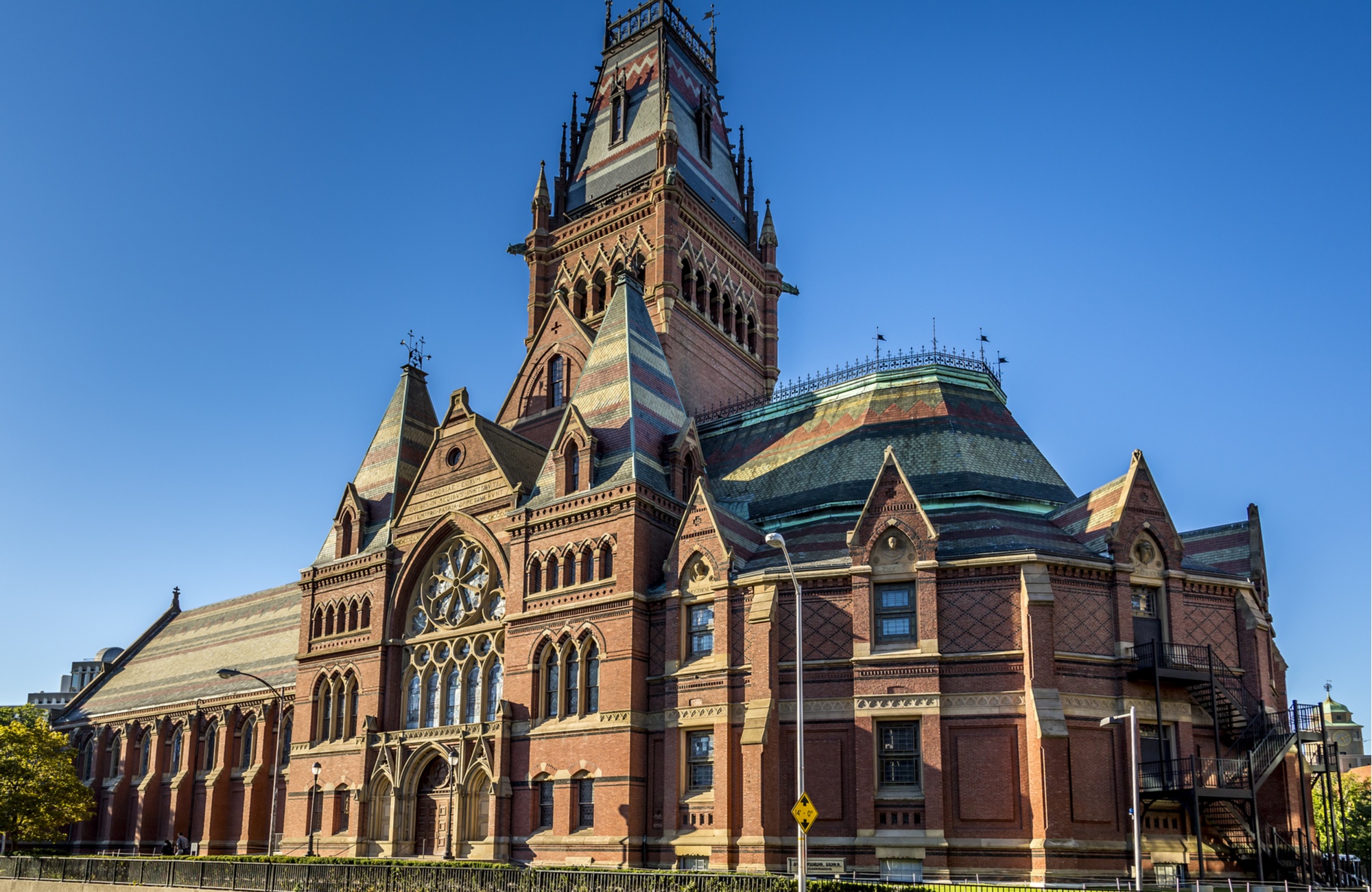
Harvard Finally Stands Up to Academic Duplicity
A new profile of Berkeley economists Emmanuel Saez and Gabriel Zucman in the New York Times contained a fascinating revelation about the ongoing academic reception of their work. Late last year, Zucman was being courted for a faculty appointment by Harvard University’s Kennedy School of Government. Although the department voted to approve the hire, Harvard’s…
-

•
The Academic Truce Has Crumbled
In the late 1960s academia, and particularly the humanities, began to embrace a variety of political causes and incorporate them more overtly into their scholarship. This shift coincided with curricular and intellectual developments that re-envisioned the educator as an activist and tasked him with the pursuit of normative scholarship, typically in service of progressive causes…
-

•
There Need Not Be a Great Confrontation with China
American businesses plainly see in China what the chattering classes don’t.
-

•
Favoritism Trumps Scholarship in Academic Hiring
My friend’s letter captures the essential reason why higher education today provides students with relatively low value, i.e., high cost for the minimal skills created: many colleges and universities reward conformity instead of productivity, and collegiality over competition.
-
•
The Intellectual Harm of Safe Spaces
Colleges and universities (and, increasingly, high schools) are prescribing exactly the wrong kind of treatment for students confronted with ideas they don’t like.
-
•
The Unacknowledged Logic of Radical Environmentalism
A common fantasy is that the internet would survive and keep us all together but is exactly that – a total fantasy. Already the internet produces as much carbon emissions as the airline industry.
-
•
After the Virus, Universities Will Survive
Attracting students to a bricks-and-mortar campus requires a mix, or bundle, of services that cannot be easily replicated, even piecemeal, and which nowhere are available as a bundle with such convenience.
-
•
It’s Not Capitalism Bringing Us Deaths of Despair
In recent years, authors left and right have tried to draw our attention towards the ills of the white working class, the “losers” of globalization. Here is a look at the latest work of Princeton professors Anne Case and Angus Deaton: Deaths of Despair.
-
•
The Future of Academic Publishing
Given the extent of the competition in modern academics for publication space, and the breakdown of the process of physical publication and dissemination on paper, we are nearing a state of crisis.
-
•
What It Means to Have a Teachable Spirit
Unleashing fury upon those who express views with which you disagree will only jeopardize your credibility, and might just empower the ideas you’re seeking to discredit. Ideas that appear taboo or transgressive often spread when powerful forces seek to suppress them.
-
•
Harvard Finally Stands Up to Academic Duplicity
A new profile of Berkeley economists Emmanuel Saez and Gabriel Zucman in the New York Times contained a fascinating revelation about the ongoing academic reception of their work. Late last year, Zucman was being courted for a faculty appointment by Harvard University’s Kennedy School of Government. Although the department voted to approve the hire, Harvard’s…
-
•
The Academic Truce Has Crumbled
In the late 1960s academia, and particularly the humanities, began to embrace a variety of political causes and incorporate them more overtly into their scholarship. This shift coincided with curricular and intellectual developments that re-envisioned the educator as an activist and tasked him with the pursuit of normative scholarship, typically in service of progressive causes…
-
•
There Need Not Be a Great Confrontation with China
American businesses plainly see in China what the chattering classes don’t.
-
•
Favoritism Trumps Scholarship in Academic Hiring
My friend’s letter captures the essential reason why higher education today provides students with relatively low value, i.e., high cost for the minimal skills created: many colleges and universities reward conformity instead of productivity, and collegiality over competition.