The recent release of Disney’s Frozen II brings up a lot of very good memories from the last several years. My daughter is nine, which means I know pretty much every line to every song in Disney’s runaway mega-hit Frozen. A few years ago, she was in her grandparents’ living room with her step-cousin Anna. It was as if they looked at each other with an unspoken understanding:
I see that you are a little girl. I too am a little girl. Let us lift our voices and sing the song of our people. The snow glows white on the mountain tonight, not a footprint to be seen…
In 2015, I took her to see Disney on Ice’s production of Frozen and got to experience the wonder of hearing an arena filled with little girls singing along — and the wonder of spending a sum I don’t want to admit on a stuffed Elsa doll and some lemonade. Most of the girls there were dressed as Anna or Elsa, as were (from what I can gather) most of the girls who went trick-or-treating this past Halloween. Googling “Frozen cosplay” gives you image after image of Anna and Elsa with the occasional Kristoff, Olaf, or Hans.
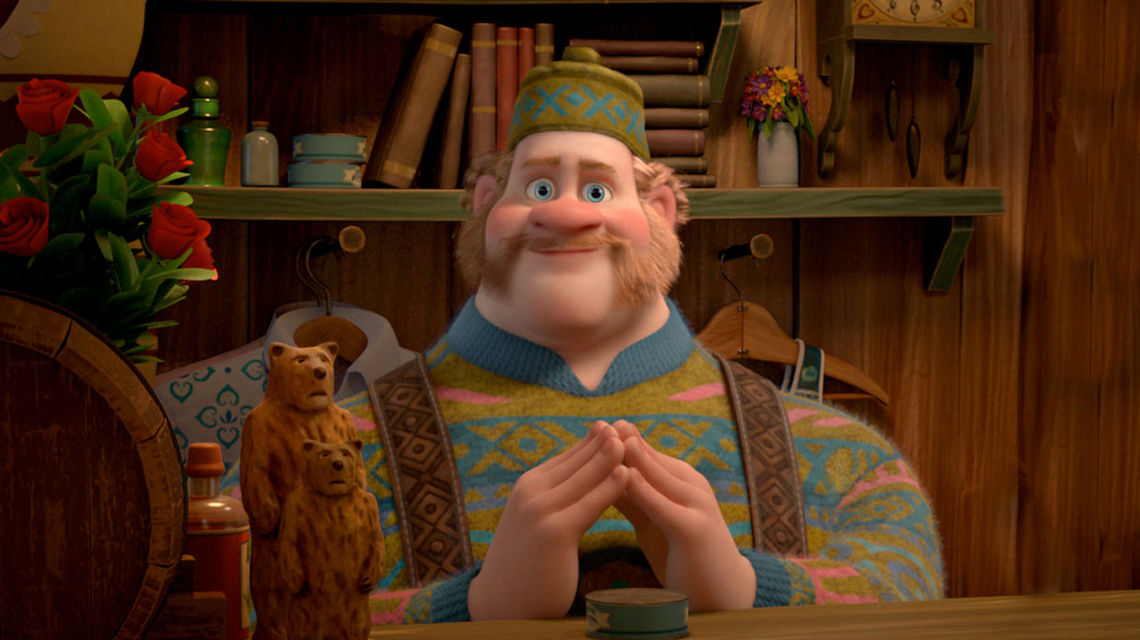
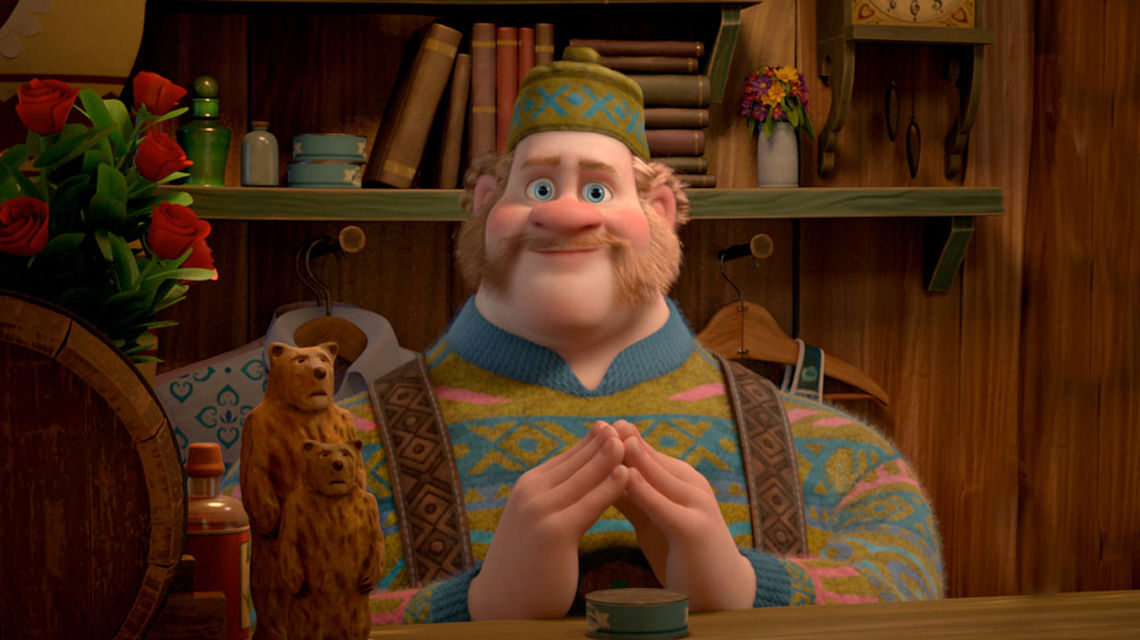
If you’re going to dress up as a character from Frozen, though, don’t pick any of the major characters. I suggest dressing as Oaken, the proprietor of Wandering Oaken’s Trading Post and Sauna (in the French version, it’s Chez Oaken Commerce et Sauna). He’s one of the best characters in the movie.
For most of history, people like Oaken who bought low and sold high were dishonored and disdained. That began to change in the 18th century, and the sympathetic treatment of Oaken in Frozen is an interesting illustration of the rise of economic liberty and social honor for inventors, merchants, and manufacturers that explains why 1 percent of history has 99 percent of the wealth.
He is only in Frozen for a few minutes and doesn’t have much to do in Frozen II, but it’s clear Oaken is an irrepressible optimist and a family man who views buying and selling as an honorable profession. In the first movie, Anna comes upon his establishment while traversing the frozen landscape to find her sister Elsa. She enters, and a smiling Oaken advises her of his “big summer blowout” sale with “half off swimming suits, clogs, and a sun balm of my own invention, ja?!”
Oaken is treated sympathetically. He tells a practically frozen Kristoff that the carrots, rope, and pickaxe he wants to buy “will be 40.” Kristoff objects and offers 10, to which Oaken replies by explaining that the rope and pickaxe are from their “winter stock, where supply and demand have a big problem” (the sudden winter-in-July implies a big spike in demand with a lot of uncertainty about future supply). Kristoff replies with his own “supply and demand problem — I sell ice for a living.” Oaken holds firm at 40, offering to throw in “a visit to Oaken’s sauna,” where his family is currently enjoying the heat. He still holds firm, noting that 10 will get Kristoff the carrots “and no more.”
Kristoff rebuffs a prying Anna, saying, “Back up, while I deal with this crook here.” Oaken, a mountain of a man, will not endure such an insult and throws Kristoff out on his face. He returns to Anna, tells her he is “sorry about this violence,” and says, “I will add a quart of lutefisk so we have good feelings.” The whole scene — just a few minutes long — depicts Oaken the trader as a good guy who isn’t doing anything wrong by holding firm.
The Frozen franchise is going to be a gold mine for Disney for a very long time. This became even more evident for me in the checkout line at Target when I saw a kids’ book about Oaken inventing The Great Ice Engine.
In the book, Oaken is honorable because he has invented a machine that raises the ice cutters’ productivity.
Oaken and the ice cutters disappear, and the ice cutters miss a delivery. Someone suggests that Oaken has been kidnapped by the ice cutters because he has invented a machine that might take their jobs — but this possibility is dismissed out of hand. It is discovered that they have gone to the next town to visit a blacksmith so they can replace a gear and find ways to make the machine better. They have an innovation-and-ideas jamboree and return to the frozen lake with a better ice-cutting engine. At the end of the book — and this is important — they talk about how the ice-cutting engine doesn’t render the ice cutters useless. Rather, it makes them more productive.
Disney isn’t trying to teach a morality tale about the glories of bourgeois life, just as the scene at the end of the movie where a royal proclamation cuts off trade between Arendelle and Weaseltown Weselton isn’t a hidden commentary on international trade (if anything, it might resemble the early modern law merchant, where the duke is cast out of the ring of honorable traders despite his noble rank because it is clear he’s a scoundrel — and there’s a sense in which my critique of the movie is all wet). It’s a commentary on what’s in the air, so to speak. Innovation raises productivity. Oaken was not trading deceitfully or doing anything wrong by asking a high price, and intemperate Kristoff was wrong to call him a crook. At the end of the movie, Anna doesn’t fall in love with and marry a prince, riding off into the sunset forever. She falls in love with … an ice cutter.
In a sense it’s just a kids’ movie and in a sense, it’s just a kids’ book aimed at capitalizing on the movie’s roaring popularity. I think the movie and the book are more than that. They are part of the Great Conversation in a commercial society, and the sympathetic treatment of a character like Oaken in English, en Francais, en Espanol, in Mandarin, and in a lot of other languages illustrates the point Deirdre McCloskey is making in her three-volume series on what she calls the bourgeois era. Economic liberty and social honor for merchants and innovators (like Oaken) made the modern world.
Share This Article

Post on Facebook

Post on X

Print Article

Email Article