Reprinted from Law & Liberty
In his first annual message to Congress in December 1825, President John Quincy Adams unveiled an ambitious agenda that included a broad federal role in building roads and canals, a national university, and even the building of a national astronomical observatory, which he grandiosely called “light-houses of the sky.”
Adams knew he was going where no president had gone before. He envisioned an expanded role for the federal government that most Americans had never imagined, and many considered constitutional heresy. Accordingly, he urged the members of Congress who would have to appropriate money for his schemes not to be “palsied by the will of our constituents.”
Put another way, Adams, who got about 30 percent of the popular vote in the 1824 election, knew better than the people what was good for them, and Congress should pay no attention to those rubes out in the hinterlands. The Jacksonian era was defined by the response to Adams’ arrogance.
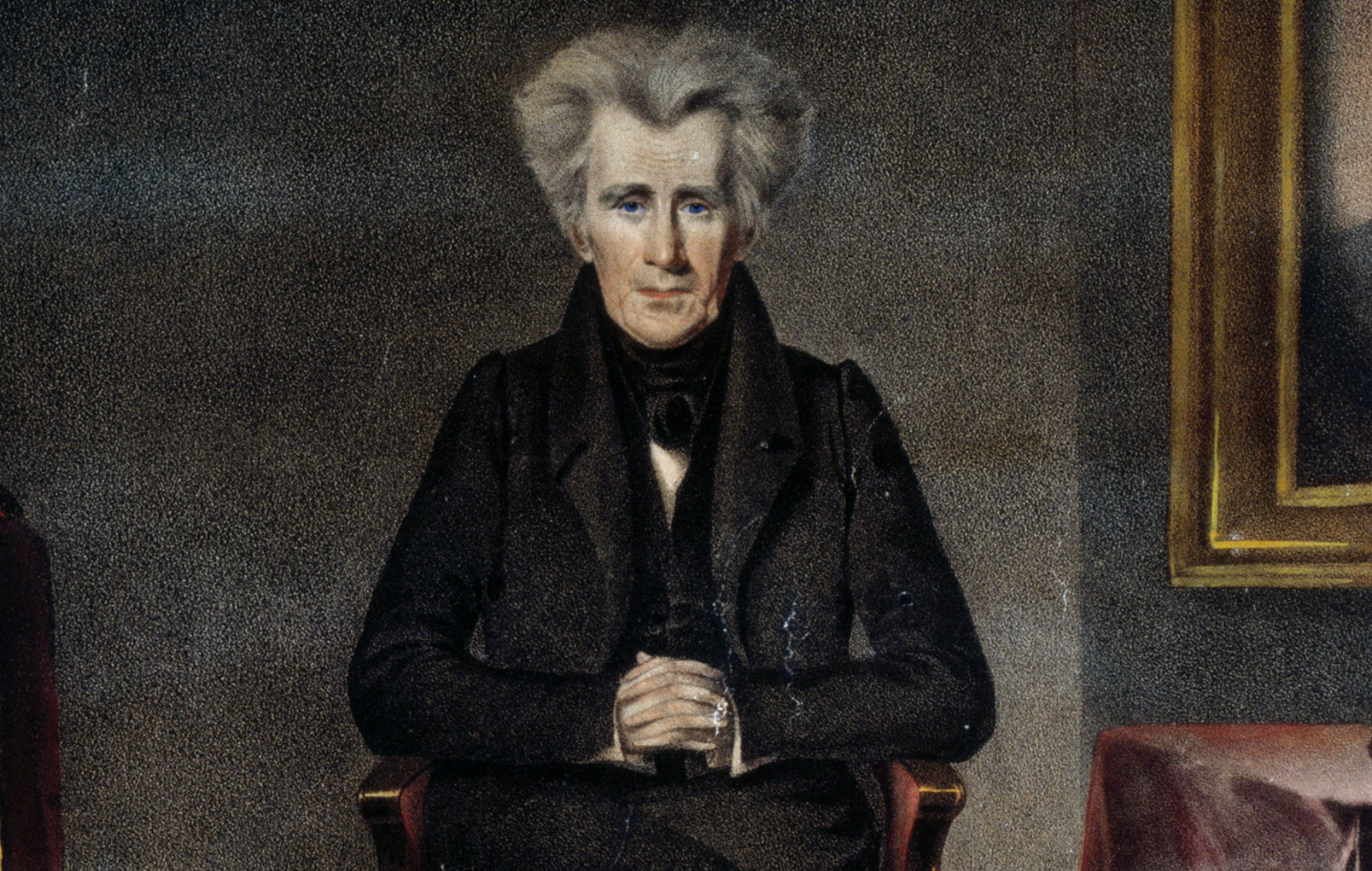
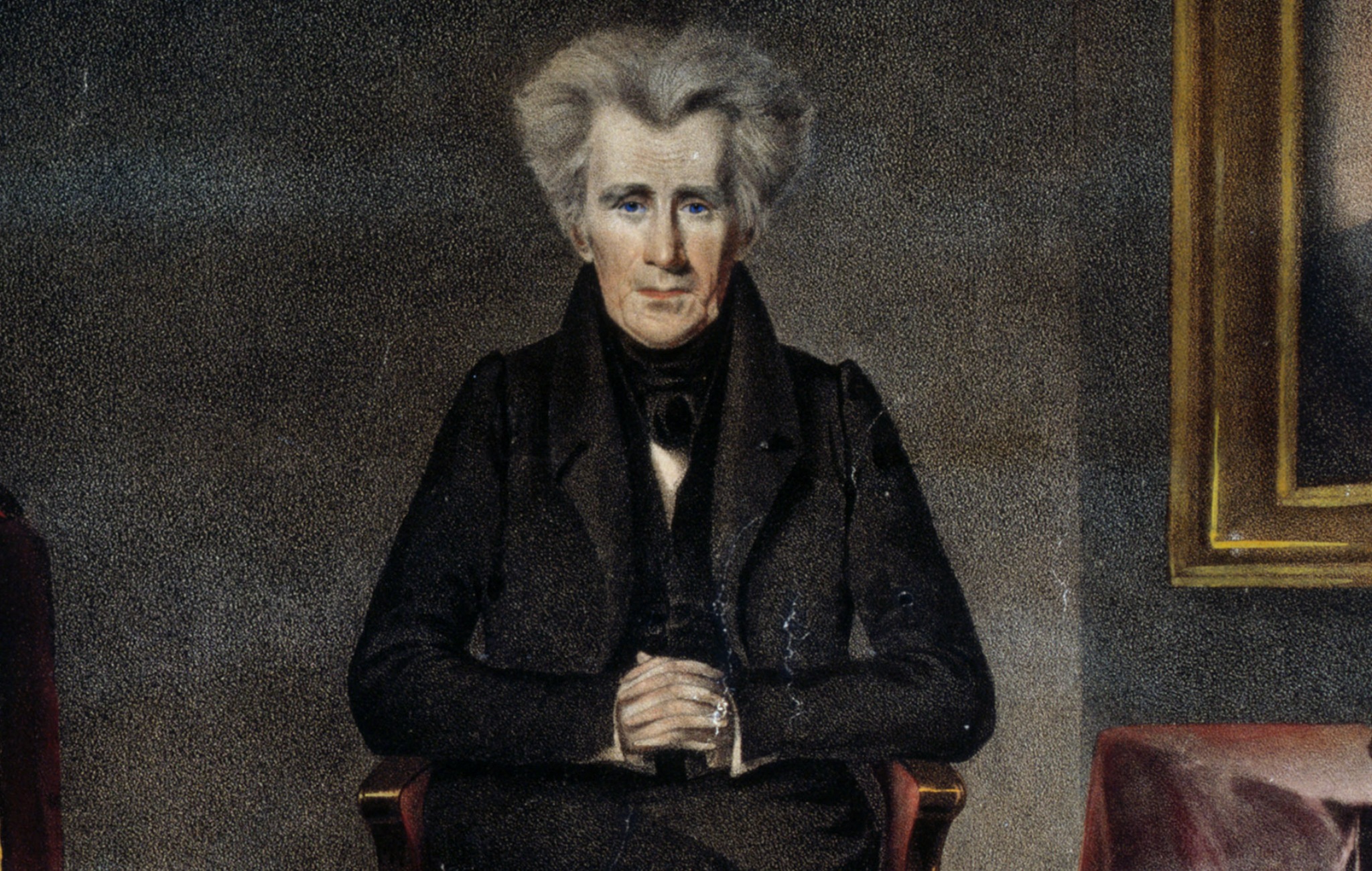
In The First Populist: The Defiant Life of Andrew Jackson, David S. Brown argues that this 19th-century populism was the animating force behind not just Old Hickory’s presidency, but his entire political and military career. Brown is largely successful in challenging the image of Jackson as simply a “military chieftain” and “man of the West.” Like Mark Cheathem’s Andrew Jackson, Southerner, Brown shifts the focus to other aspects of Jackson’s character, presenting a briskly paced portrait of Jackson as a man of the people, or at least some of them.
Not that Brown ignores Jackson’s military life. On the contrary, he writes convincingly that the Creek War and the First Seminole War revealed Jackson’s authoritarian and populist tendencies while defining his future, shifting political power west and south in a way that would benefit Jackson and redefine the American polity.
There’s no doubt that Jackson’s image as the Hero of New Orleans is what first brought him to national prominence. His victories over the Red Sticks and Seminoles, though, opened land for settlement in what is now the southeast that would eventually be populated by his bedrock political constituency. Like modern gerrymanderers, Jackson created his own voters.
But it was Jackson’s deeply held belief that entrenched eastern elites had carved out special privileges for themselves at the expense of ordinary Americans that informed his ideology and connected him so closely to the masses, making him, in Alexis de Tocqueville’s phrase, “the spokesman of provincial jealousies.” In a word, a populist.
Court versus Country
Jackson’s task, as his supporters saw it, was to be “a curative to the corrupt politics cankering Washington.” He was sent there to drain the swamp.
For the first 36 years of the early republic, a Virginian had served as either president or vice president, what Brown calls “the long train of coastal executive aristocrats.” A vice president or secretary of state had succeeded the sitting president in each change of administration. Only once, in the 1800 election between John Adams and Thomas Jefferson, was there anything like a hard-fought contest. When James Monroe was re-elected without opposition in 1820, some hoped that partisan strife had vanished.
That was a mirage. While the Federalists had effectively committed suicide as a national party in opposing the War of 1812, cracks of an even wider nature were already forming in the Jeffersonian consensus. The Panic of 1819, America’s first great depression, and the slavery-driven controversy over the admission of Missouri that began the following year made plain that new alignments were forming. “Nothing that Monroe or Adams might do,” Brown writes, “could apparently suppress the timeless struggle in America between power and liberty, aristocrats and agrarians.”
The transitional election of 1824 was contested outside the old rules, but before new ones had formed. Jackson won a plurality of both the popular and electoral votes, but three other candidates—Adams, William H. Crawford, and Henry Clay—split the vote, sending the election to the House of Representatives.
Clay, who had finished fourth, was out. He cast his lot with Adams, enraging Jackson’s supporters. When Adams subsequently tapped Clay to be secretary of state, Jackson saw a “corrupt bargain” that confirmed everything he already believed about the governing elites. He immediately began plotting his electoral revenge.
There was no corrupt bargain. Clay was the logical choice for the State Department, and there was no chance he was going to support Jackson, a rival Westerner and a man he had derided as a potential Caesar. But Jackson was able to parlay the impression of corruption into victory over Adams four years later and, more significantly, the creation of the Democratic Party, ably driven by Martin Van Buren.
The emerging opposition, led by Henry Clay, became the Whig Party. This Second Party System would last barely a generation. It would possess many of the classic Court v. Country elements of the old British system (and of many such systems since, pitting the will of the people—however defined—against the will of the governing class). Whigs generally supported Clay’s American System, in which the federal government acted as an engine of economic development by making the building of roads and canals a national enterprise. Democrats typically opposed such projects. Whigs also developed an ideology in opposition to strong executive power, although that was largely in response to Jackson. It’s difficult to imagine Clay deferring to Congress had he become president.
Chief Justice John Marshall might opine, anticipating Adlai Stevenson, that “a great portion of the intelligent” class favored Adams, “but they constitute a decided minority.” Others of Marshall’s class had similarly unfavorable things to say about Jackson and his deplorable supporters.
Of course, Jackson was himself an elite—a senior general, a large landowner and slaveholder, and a member of the planter aristocracy—who had played the system in Tennessee to get ahead. From that lofty western perch, he could see more clearly how he and other westerners were excluded from the halls of national power.
The great dilemma of populism is that when populists gain power, they become the governing elite. To his opponents, Jackson quickly became “King Andrew,” using executive power in ways no president had done before. His vetoes outnumbered all the vetoes employed by the first six presidents combined. He ignored the Supreme Court’s ruling in Worcester v. Georgia, clearing the way for the state to seize Cherokee land.
“Jackson, and indeed much of the political movement he headed, believed the country too confined by treaties and technicalities, the kind of formalities and piddling points that easterners presumably used to maintain hegemony over westerners,” writes Brown.
The First Populist?
While the modern Left views Jackson as a populist oligarch, that’s not why he is out of favor with today’s cultural elites. They certainly have no problem with an imperial presidency, so long as the imperiousness serves their ends. It is Jackson the slave master and slave seller, the agent of Indian removal, who draws modernity’s ire.
Jackson’s “greatness,” once assumed by every schoolboy who sat at a desk beneath the Currier and Ives print of a young Jackson defending himself against a sword-wielding British officer, has shifted to middling in the opinion of many historians. But that is largely an ideological judgment informed by current political fad. A truer guide for rating presidents is provided by Robert W. Merry’s objective standards outlined in Where They Stand: American Presidents in the Eyes of Voters and Historians. Jackson’s re-election and succession by a member of his party keeps Jackson squarely in the top category, according to Merry. Ranking presidents from great to near great to failure is a game, not history, as historian David Head has noted. But Merry’s system adds a populist touch to the exercise.
Was Jackson the first populist? Brown makes a pretty good case that Aaron Burr, with whom Jackson had some dealings, might have been the first populist national figure. But without a doubt, Jackson was the first populist president. And so the latest populist president naturally tried to attach his star to Jackson’s.
However, Donald Trump is not the only president to claim Jackson’s mantle. Brown cites three others—Lyndon Johnson, Richard Nixon, and Bill Clinton—who hung Jackson’s portrait in the Oval Office. Others, including Theodore Roosevelt, invoked Jackson as a model. Even Abraham Lincoln, echoing Jackson’s call for union during the Nullification Crisis, borrowed ideas and phrases from Jackson.[1]
Jackson scholar Cheathem has made a well-reasoned argument about why that attachment between Trump and Jackson doesn’t hold up. As Cheathem noted, in 2016 Trump was “outside of the bounds of traditional American political culture.” In the 1820s, Jackson—while hated by the same sort of elitist snobs who despise Trump—was not. He had served in Congress and the military and had been a long participant in the public affairs of his state and nation.
Brown mostly sides with Cheathem but cites enough examples of similarities—“Jackson had a knack for making coastal constituencies nervous”—to justify the comparison. Jacksonian populism focused on issues such as the Bank of the United States, which he rightly saw as a cronyist tool of the moneyed class. Its attacks on the entrenched class of government employees were echoed by Trumpists’ concerns about the “Deep State.” In both instances, the presidents viewed the permanent bureaucracy as an obstacle to their agendas.
Populism Today
Later populist strains arose on the Left in response to the excesses of the Gilded Age and on the Right in response to the excesses of Progressivism, exemplified by the politics of William Jennings Bryan, Huey Long, and Trump.
Today’s populism exists on both the Left and Right, but the right-wing version is ascendant in the U.S. because the governing and cultural elite—not just in government but in media, academia, and entertainment—are dominated by the Left. It’s difficult for progressive politicians to gain standing against The Man when The Man does pretty much whatever you want him to.
For example, safeguards against the tyranny of the majority—the Senate and the Electoral College—were once targeted by populists. Jackson’s ally, Senator Thomas Hart Benton of Missouri was among the first to propose abolishing the Electoral College and electing presidents through a direct popular vote. Now these institutions are targeted by the elites, who see them as impediments to their collection of even more power.
In The First Populist, we see a Jackson who justifies himself through the popular will, in opposition to norms and rules established by elites whom he believes have betrayed their duty. Brown tries to pass off the populism of Jackson (and others) as a mere “politics of resentment.” But it was, and is, more than that. It is a resentment, to be sure: of unearned fruit; of national leaders who are supposed to be tending to the nation’s welfare but are mostly looking out for their own; of a governing class whose first priority is to ensure that they remain the governing class.
Populists, long seen as fighting against the old way of doing things, now often find themselves defending tradition and ordered liberty against the cultural onslaught of the dominant elites who show little desire to defend the culture, as they feel certain they’ll be able to protect their privilege come what may.
The fates of the Adamses and the Virginia dynasty should serve as a warning to their certainty.
Share This Article

Post on Facebook

Post on X

Print Article

Email Article