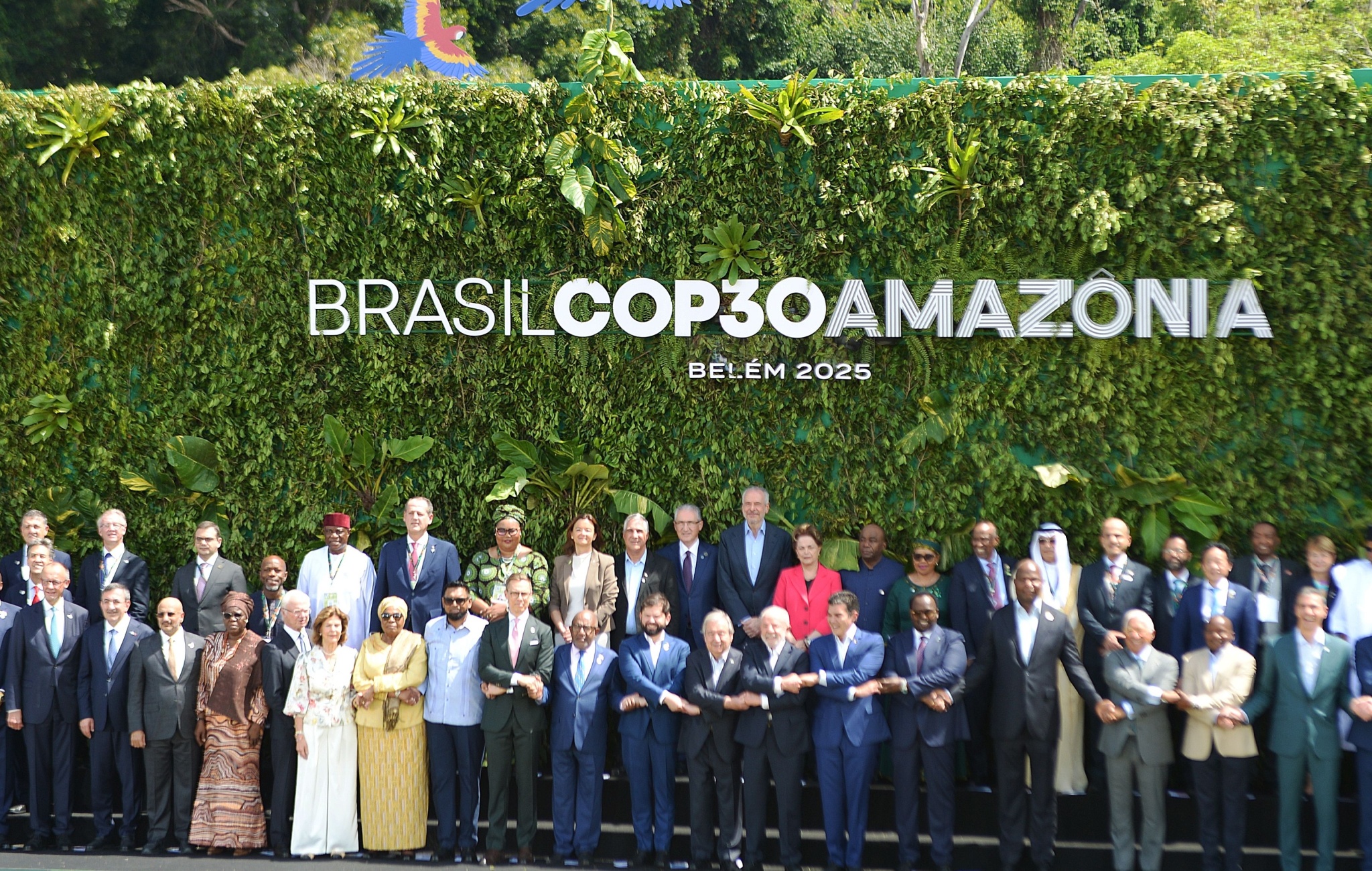
Central planners just can’t help themselves. They feel obligated to solve the world’s problems. Consider this year’s Orwellianly-named “Conference of the Parties” (COP-30), the thirtieth annual climate conference sponsored by the United Nations Framework Convention on Climate Change (UNFCCC).
Thousands of government officials and members of international non-government organizations (which, of course, get millions of dollars from governments) have descended on Belem, Brazil for their annual COP-30 gathering. The past two gatherings, COP-29 in Azerbaijan and COP-28 in the United Arab Emirates, were rough to say the least.
They failed to get big commitments from wealthy countries, they didn’t win over many less-developed countries, and increasingly the conference looked co-opted by fossil fuel interests. That low bar means this year’s conference may hit a brighter note – although less than half-way through the conference, protestors tried to force their way in and harmed several security personnel. So maybe we’ll see a new low in the war to “save” the planet.
As an advocate for freedom, these annual COP meetings can be disheartening. They are an annual reminder of the immense resources and machinery for coercion and central planning that keep grinding relentlessly on (with taxpayer funds) no matter how unhappy the people of the world are with their “benevolent” planning. As with most centralized solutions, the proposals put forward at COP-30 will do little to help or to empower those who are really at risk.
The Amazon rainforest figures prominently in the climate agenda this year. In fact, the indigenous protestors at this year’s climate conference live in and near that rainforest. COP attendees busily work away at hammering out agreements for wealthy countries to compensate poorer countries for “environmental damages.” These billions of dollars that attendees hope to extort from guilt-ridden governments and wealthy corporate managers will enrich themselves and their cronies by funding more travel, more conferences, and more studies. The money will also grease the palms of government officials in recipient countries. And then, whatever crumbs are left, might make their way into the hands of those most harmed by environmental problems.
But that’s not what these protestors want. As one protestor said “We can’t eat money….We want our lands free from agribusiness, oil exploration, illegal miners and illegal loggers.” Brazil’s left-leaning President Luiz Lula da Silva (known as “Lula”) has said that this year’s conference and the government of Brazil is committed to working with indigenous communities. Unfortunately, for Lula and the COP-30 attendees, paternalism does not seem to be what these indigenous communities want.
There is a much better and simpler solution: protect the rights of the vulnerable. The indigenous peoples in Brazil don’t want a handout orchestrated by the global elite, they should have the property rights to their land defined and protected. Ironically, a better regime of property rights and contract will benefit the rainforest more than carbon offset schemes.
Clear cutting and deforestation happen because of deficiencies in property rights and the rule of law. People rush in to get as much wood as they can because if they don’t, someone else will. Logging companies that own their own land, on the other hand, rarely engage in clear-cutting because it will reduce the value of their land. Instead, they manage their land with an eye towards the future. They plant new trees. They protect their trees from fire and other calamities.
There is no reason to think the indigenous peoples in and around the Amazon rainforest will act differently if they are given real ownership of their land. They will have the best knowledge of how to manage the rainforest – how to protect it, how to harvest its resources, and how to maintain its value.
They should not live under the whims or the hubris of lawyers in Brussels or The Hague, do-gooder corporate management, or small armies of government bureaucrats around the world. Instead, they should have autonomy and the right to determine their own future – to decide what is best for themselves and their families – not to become clients in a perverse environmental patronage system.
And this lesson from indigenous peoples in the Amazon rainforest applies in dozens of other ways to people around the globe. The UN/Davos/NGO elites want to regulate every part of our lives in their quixotic quest to prevent the planet from warming “too much.” We will lose the right to decide how to ship goods, grow crops, generate electricity, travel, and otherwise govern ourselves.
Unfortunately, the global environmental machinery will continue grinding unless those in power are replaced by champions of freedom and innovation.
Share This Article

Post on Facebook

Post on X

Print Article

Email Article