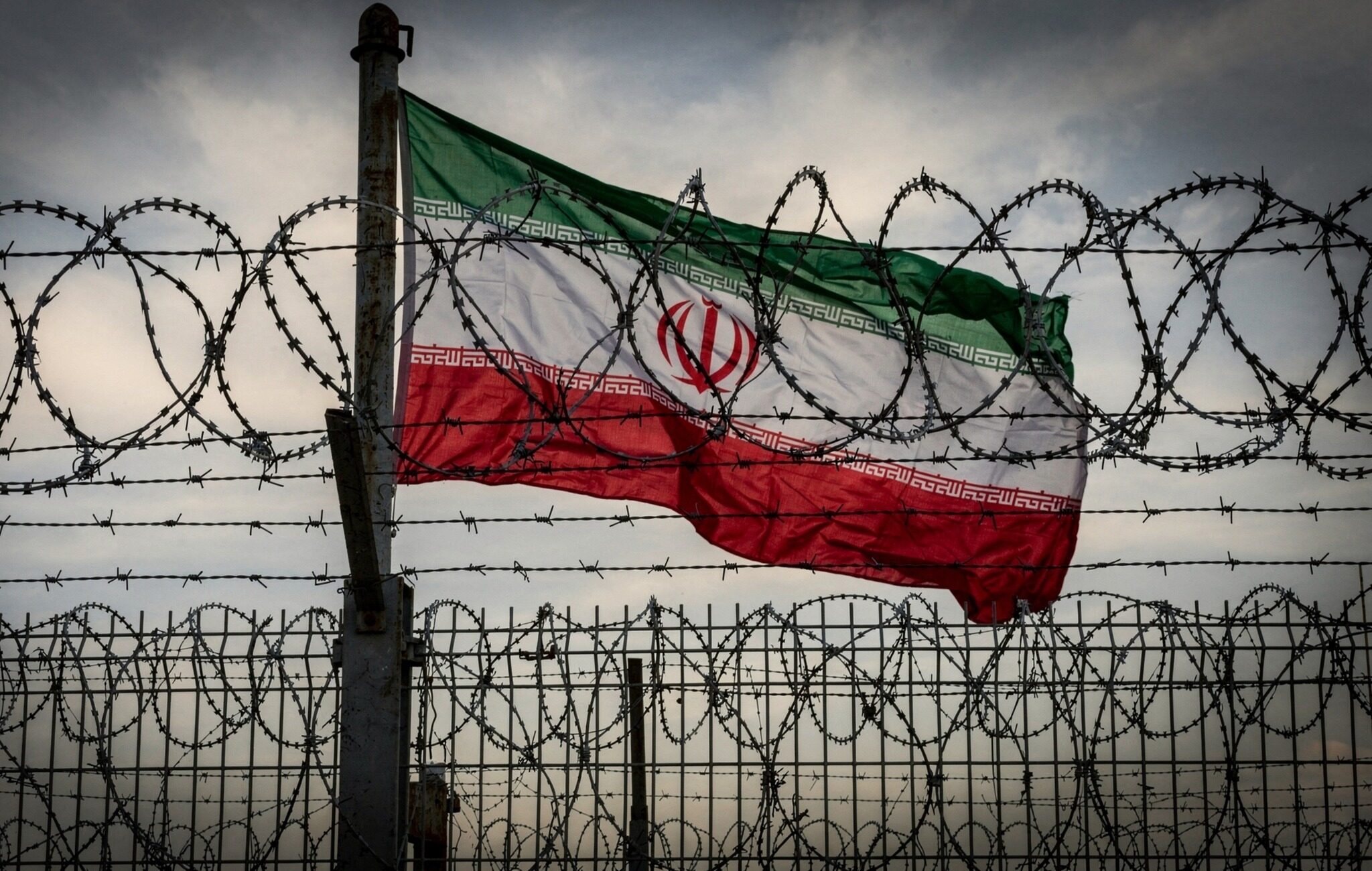
On August 19, President Trump declared “Economic D-Day” against Iran. “Today, I am announcing the MOST CRUSHING ECONOMIC OPERATION EVER TAKEN AGAINST ANY COUNTRY,” Trump posted on Truth Social. Five days later, Treasury Secretary Bessent formally unveiled “Operation Economic Outcast,” effectively imposing a blockade on Iran.
Just as Trump launched “Economic D-Day” on Iran, he doubled down on his signature economic agenda at home: protectionism. On August 24, the same day Bessent unveiled Operation Economic Outcast, Trump escalated his trade war with Canada, threatening to raise tariffs on Canadian automobiles to 50 percent. “WE DON’T NEED CANADA,” he posted on Truth Social. The confrontation has since escalated beyond tariffs to outright bans on certain Canadian imports. Weeks earlier, Trump floated the idea of cutting off trade with Canada and Mexico, our two largest trading partners. “I’d rather be independent,” he said. “We don’t need them.”
Discerning readers might notice a striking contradiction. Trump’s “Economic D-Day” against Iran bears an uncanny resemblance to his “Liberation Day” strategy for America. Both rely on the same basic mechanism: restricting trade. Yet Trump assures us they will produce opposite results. For Americans, trade restrictions will bring economic revival; for Iran, they will bring economic ruin.
You don’t need a PhD in economics — or any degree at all — to spot the contradiction.
The renowned American economist Henry George — a middle school dropout who taught himself economics — exposed the paradox of protectionism in 1886: “What protection teaches us is to do to ourselves in time of peace what enemies seek to do to us in time of war.” Trump clearly believes that imposing a blockade will crush Iran’s economy and topple its regime. So why has he been fighting tooth and claw to impose a de facto blockade on Americans since “Liberation Day”? Trade wars can’t be both “crushing” and “liberating.”
We aren’t psychiatrists, so we won’t speculate what might lead Trump to hold such contradictory beliefs. But the cognitive dissonance is hard to miss. Evidently, trade restrictions are the Shimmer of geopolitics: they can serve as both a floor wax and a dessert topping.
Let’s consider some of Trump and Bessent’s recent claims.
On August 19, Trump threatened Iran with “Economic Warfare and Isolation on an unprecedented scale.” On August 24, Bessent added, “Now is a time for world leaders to make a decision between prosperity and isolation.”
Interesting. When did they start seeing economic “isolation” as something to fear? Trump has long maintained that isolation is the key to prosperity. If the president believes his own protectionist rhetoric, why is he handing the mullahs a weapon of mass protection?
Trump also vowed that any country providing “any type of lifeline to Iran will itself face TREMENDOUS Economic Consequences.”
Again, his word choice is revealing: “lifeline.” What, pray tell, constitutes a “lifeline” to Iran? Trading with them. For Iranians, foreign trade is a life raft keeping their economy afloat. For Americans, it’s an anchor dragging us down.
Bessent echoed Trump’s remarks: “Our objective is to sever every economic lifeline that sustains this tyrannical regime until Tehran stands alone.”
Let’s unpack that last phrase: “Until Tehran stands alone.” Trump and Bessent see no problem telling Americans our economy is stronger when the United States “stands alone.” Trump often insists we should be economically “independent” and “self-sufficient.” Bessent likewise argues that our “dangerous dependence” on foreign trade is “unacceptable.” Yet in his press conference, Bessent warned Tehran that it faces “a very clear choice: Complete global isolation and a subsistence economy, or a path back to normalcy, with an opportunity to rejoin the global economy.”
A “very clear choice?” Tell that to your boss. Trump’s entire trade policy is predicated on the notion that “global isolation” is desirable. If restricting trade is a path to prosperity for the United States, then why must it lead to a “subsistence economy” for Iran? Also, “rejoining the global economy” is a path to ruin for the United States, but a “path to normalcy” for Iran? Color us confused.
Before Trump hits the midterm campaign trail, he might pause to consider how the messaging for his signature foreign policy undermines his signature domestic agenda.
Perhaps Trump and Bessent are smarter than we lowly economists. Maybe they’ve discovered that trade exists in a quantum realm where it can be both enriching and impoverishing at once. “Schrödinger’s shipping container,” if you will. Or maybe — just maybe — they’re economic grifters, peddling long-debunked fallacies and saying whatever they need to survive a hostile news cycle.
Regardless, reporters should ask Trump and Bessent how the same tactics meant to “liberate” the US economy can “asphyxiate” Iran’s. Inquiring economists would love to know.
Until they can answer that riddle, Trump and Bessent will have to sell voters a tale of two trade wars — one of which promises “the best of times” for Americans while the other portends “the worst of times” for Iranians.
Economists already know this story doesn’t add up. Come November, ordinary Americans might catch on, too. Regime change may, in fact, be imminent. It just might not be the one in Tehran.
These themes are explored further in the authors’ forthcoming book from the Independent Institute. Trade Wars: Why Freedom Trumps Tariffs.
Share This Article

Post on Facebook

Post on X

Print Article

Email Article