My first thought when I read the headline “I Support Trump’s Tariffs but Need an Exemption” was wow, McSweeney’s Internet Tendency is really going to knock this one out of the park. I love good satire.
Then I realized it wasn’t McSweeney’s. Or The Onion. Or the Babylon Bee. It was an actual headline from an op-ed in the Wall Street Journal.
I half expected to look at the byline and see Orren Boyle, a steel executive and one of the villains of Ayn Rand’s Atlas Shrugged, listed as the author. Throughout Atlas Shrugged, Boyle enriches himself by pulling political strings and (successfully) seeking special privileges.Today In: Business
And that’s exactly what Allegheny Technologies CEO Robert S. Wetherbee is asking for: special privileges. He wants one set of rules for everyone else—abiding by the Trump tariffs, which he says rescued one of his idled plants—but a special set of rules for him and his company.
Economists and people who paid close attention in their classes understand the basic economics and politics of tariffs: they waste resources, and to infer, as Wetherbee does, that it’s an unalloyed good that “domestic production has risen and companies have restarted idle mills” is to ignore the unseen costs of the tariffs. Those resources—the labor, capital, and so on we’re using to produce steel—are being wasted because they could be more advantageously deployed doing something else (with apologies to Billy Joel, here’s an explanation of what it means to be a “Tariff Man”).
There’s a deeper point here in Wetherbee’s claim that his company needs an exemption. One of the (literal) textbook conditions for long-run economic growth is the rule of law—a “dependable legal system” that applies the same rules to everyone. Allowing carve-outs and exemptions via an especially opaque process does a few things.
First, it interferes with people’s expectations by adding additional uncertainty to the policy environment. Firms have to add more political calculations to their long-range strategic planning at the expense of commercial calculations. Instead of satisfying customers, they have to focus on satisfying and appeasing regulators and those in a position to grant or deny exemptions.
Second, it encourages firms to hire more lobbyists and lawyers. As Eric Boehm notes for Reason, the process of applying for and getting exemptions from tariffs “is, unsurprisingly, a bureaucratic mess.” It’s a make-work program for lawyers and lobbyists who are helping their employers navigate the regulatory jungle when they could be doing something productive.
Third, opaque bureaucratic messes create opportunities for corruption. There are undoubtedly a lot of places where regulators and others could essentially extract bribes because they have veto power over the exemption request—and a lot of places where firms might move the paperwork along with a few well-placed donations.
Tariffs waste resources and, contra the Tariff Man in the White House, make Americans poorer, not richer. Robert S. Wetherbee’s special pleading in the Wall Street Journal illustrates yet another way in which interventionism can be the enemy of economic progress.
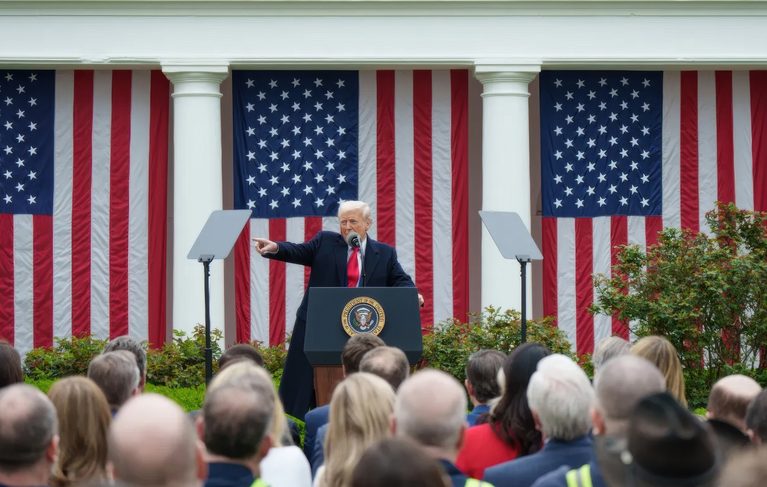
But let’s not hate the player. Mr. Wetherbee’s op-ed is simply an illustration of a larger systemic problem—after all, he’s not alone (see the caption on the picture that accompanies this). Let’s hate the game. Let’s help executives like Mr. Wetherbee get back to running their companies productively instead of begging for special privileges. Instead of granting firms exemptions from the tariffs on a case-by-case basis, let’s grant everyone an exemption and get rid of the tariffs altogether.
This initially ran on Forbes
Share This Article

Post on Facebook

Post on X

Print Article

Email Article