
I used to be a progress man.
I have written something like 25 articles for HumanProgress.org, the first of which had the title “Worldviews Are Pessimistic Because They Are Outdated.” I used to breathe Matt Ridley’s The Rational Optimist, and I’ve forced more than one unwilling family member to take Hans Rosling’s Gapminder test on global development.
These days, I find that article’s subheading the most important bit: “When making sense of the world, we operate on decades-old information.” I’m gradually coming around to the view that I didn’t do my homework the first time around, and that that article was based “on decades-old information.”
The two pieces spurring me to pen this confession were Chelsea Follett’s new book The Grim Old Days, based on the excellent series she’s written for Cato’s Human Progress series of what everyday life was like without the comforts of modernity; and a Substack piece by Adam Omary, a psychology PhD student and research fellow at Human Progress, discussing the recently concluded Progress Conference in the techno-obsessed heart of Berkeley, California. Asking “Why Do People Fear Progress?” seems a little tone-deaf and in need of a reality update.
Why Paper Prosperity Doesn’t Feel Like Progress
The most obvious and direct answer to that puzzling question is that most people haven’t seen much progress in a while. We’re not irrational, blind, or technophobic; we legitimately have not enjoyed the promised progress.
The Survey of Consumers put out by the University of Michigan has recorded near-record-low consumer sentiment for months, in an ostensibly thriving economy with lots of technological progress and trillion-dollar AI investments.
If the map and the territory disagree, one option is to follow the map, blame reality, and call the consumers fearful or irrational. The more serious avenue would be to consider that maybe, just maybe, the irrational subjects know something you don’t.
“Consumers tend to think of interest costs as part of the cost of living, regardless of what economic theory or a particular price index has to say,” wrote Josh Hendrickson for these pages about a Larry Summers-affiliated NBER paper a few years ago, a version of which ran in Economics Letters this year. And interest expenses have been pretty bad for most American households in recent years — so bad that Americans have largely stopped buying new homes, preferring to sit comfortably (trapped?) in comparatively low mortgage rates from years ago. New 30-year fixed mortgages run close to their highest interest rates in a generation. “Existing owners do not want to sell, since moving would mean swapping a cheap mortgage for a dearer one,” concluded The Economist last week.
In a series of articles for The Daily Economy, economist Karl-Friedrich Israel showed that official CPI adjustments obscure the negative impact of government services, overstating the long-run change in real wages. Even the unadjusted FRED series has basically not moved since before the pandemic. Accounting for Armen Alchian and Benjamin Klein’s old insight about asset prices, the long-run trend for most Americans is shrinking real wages.
In fact, admitting that there has been no progress for years would clear up these supposed puzzles at once: both the surveys that show Americans so surprisingly sour on the economy when headline figures (growth, unemployment, investments) seem positive, and Omary’s conundrum of why we “fear” progress.
The Best Progress Stories Happened Long Ago
Most of the measures on which the progress movement has made its intellectual and popular reputation have stayed high, but stopped moving.
On child mortality, the incredible fall from double digits about a century ago to hugging zero percent in the Nordic welfare states is an astonishing development worthy of all praise. (Even a generation ago, the US posted an inexcusable one percent child mortality.) The downside is that once you’re at 0.2 percent there’s hardly any more progress available — diminishing returns and all that. Also, zoom in on that celebrated downward-sloping graph: the richest European countries have seen no change in the last twenty years.
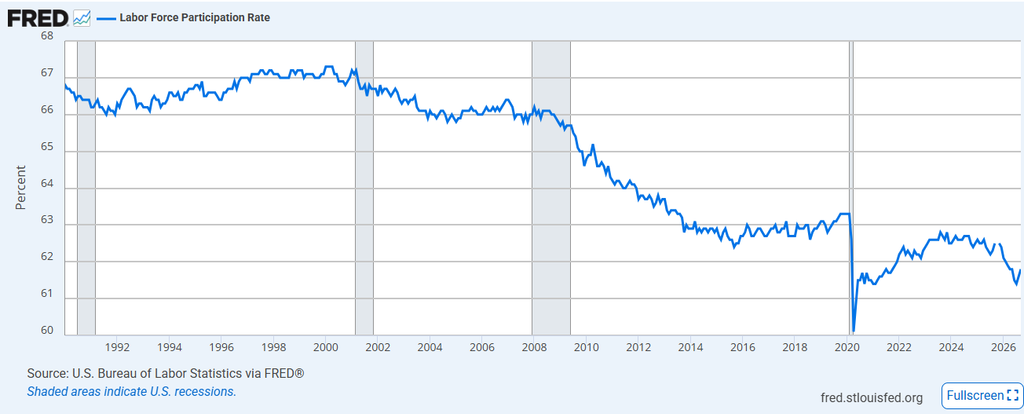
Another standard and oft-invoked example is the decline of working hours. John Maynard Keynes famously projected as much in “Economic Possibilities for Our Grandchildren” in the 1930s. Indeed, if real income rose enough that we chose to take some of our newfound productivity in leisure (“buy back” our time), that would be a good indication of material progress and improvement to our standards of living. But the countries with the most eye-popping declines in working hours are South Korea and Germany, and they are not (as we might hope) the world’s richest, most thriving workers reclaiming their productive and valuable time. On the contrary, their workers are exiting the labor market or cutting down on hours because of stagnation. Deliberate and accidental government policy in taxation and labor markets — and overwhelmingly, a political obsession with green energy — have turned value-adding work into a precious luxury. Better to live off sickness and disability benefits, which over seven million Brits — about one in five adults — now do. And don’t even mention America’s ever-declining labor force participation rate.
What’s worse, and what Follett’s own graph posted in April showed, is that in most countries there has been no progress in working hours over the last twenty-odd years; all the improvements come from the 1960s, ’70s, and ’80s.
Even Gale Pooley, who co-authored (with Marian Tupy of Human Progress) the excellent book Superabundance, says in a TDE article titled “Why Oil Keeps Getting More Abundant” that “the time price [of oil] is barely over two hours, nearly half the 2011 peak,” while his own graph shows that oil was comparatively cheaper in the 1980s and 1990s than in the 2010s and 2020s.
The improvements of modernity are real; the timing just isn’t.
Most of the grim old days that Follett writes about in her book with that title are from centuries ago. Yes, compared to my ancestors who eked out a subsistence life from farming the harsh, unforgiving, and disastrously poor Nordic nature, I am miles better off. But so were my parents’ generation; and it’s not obvious that compared to them, my peers and I are doing much better.
With the obvious exception of communication tech and screens, we have the same appliances, yet can afford fewer or, at best, the same amount of stuff they could.
Physicist and popular intellectual Eric Weinstein made an observation on Joe Rogan’s show a few years ago that’s stuck with me ever since: “Take away styles and fashion — and the computer screens, how do you know you’re not in 1973?”
Household adoption curves of major technologies (running water, refrigerators, radios, microwaves, and computers) all shot up rapidly during the decades they were commercially launched — where they stayed. Once your house is populated with all these gadgets, what then? The washing machine was quite possibly “the most liberating technology ever invented” but that was decades ago, and nearly every American household already has one.
If anything, the dumber our devices, the better our lives might become. We live such safe lives now that seeking out danger might be good for us, mentally and physically.
Progress in Reverse?
In political governance and my own domains of monetary and fiscal matters, we have definitely regressed: the out-of-control fiscal deficits in every major country, bond yields exploding, and the very awkward, botched, post-pandemic double-digit inflation are just the most obvious misdoings. Depending only a little on your ideological stance, the ratchet effect and relentless expansion in government spending as a share of GDP are a poor stand-in for “progress.” Britain, ever the role model for decline, is hitting tax extraction levels (north of 35 percent) not seen since fighting a literal world war.
No matter what AI-fueled productivity growth may be forecast going forward, America cannot outgrow its $40 trillion government debt, as Pete Earle demonstrated in a fiscal arithmetic piece for CiVL — to say nothing of the stagnating, struggling, and literally burning European countries stuck in a bond yield-fiscal deficit spiral.
Almost all the improvements in human welfare in the last thirty years happened in digital gadgets and communication — and the jury is still out on whether Netflix to the masses and social media to teenagers (let alone adults) were, on net, good or bad. We’re paying for it dearly in mental health epidemics, broken societies, and a viciously divided polity.
Where, I repeat, is this human progress?
As France is burning and fertility is in freefall, we’re running wartime deficits in what the experts tell us are growing, prosperous post-pandemic times, I’m not sure why those of us worried by the horrors and unconvinced by decades-old improvements are being gaslit into thinking that there’s something psychologically broken with us.
Surely, the intellectuals of the progress movement can also, amid their fascination for the shiny new AI tools dangled before them, see all the ways progress has stalled.
Writes Omary, almost with a snicker: “one of the criticisms of the Progress Movement is that it seems to outsiders almost a cult, or a secular religion talking in moralizing terms about a techno-optimist vision for the good life and threats to the sacred order of economic and technological progress.”
True, in the world the rest of us inhabit, material progress — always with the very obvious and necessary caveat, “in the West” — is stagnating, probably falling, and the tech wonders fall somewhere between invisible and detrimental for our lives.
I don’t think it’s an accident that progress-minded people end up at Silicon Valley tech events chanting the wonders of AI: they are the only novel gadgets that are visibly growing.
Everywhere else, human progress has stalled.
Share This Article

Post on Facebook

Post on X

Print Article

Email Article