“The Austrian theory is not a theory of recessions per se; it is a theory of the unsustainable boom. As such, it has a much stronger link to the underlying microeconomics than does much of today’s mainstream theorizing. The Austrians focus broadly on credit markets and ask what happens when the price of credit, i.e., the interest rate, is held below its market-clearing level. If interest rates were held too low by legislation (interest-rate caps), there would follow an immediate credit crunch. This “if–then” proposition is a direct analogue to the proposition that rent control causes a housing shortage and, more generally, that price ceilings cause quantities demanded to exceed quantities supplied. But what if the central bank papers over the shortage with newly created money? Would this way of bridging the gap between credit supplied and credit demanded transform the would-be credit crunch into sustainable economic growth? Hardly. It would simply insert a time delay between the “if” and the “then.” In effect, the credit crunch is transformed into a boom and then a bust. The extent of the resource misallocations during the boom have a direct bearing on one aspect of the downturn. The necessary reallocations are roughly proportional to the prior misallocations. It is in this context that we can say, “the bigger the boom, the bigger the bust.” But for both theoretical reasons and historical reasons, busts can and often do dwarf the preceding boom.” Read more.
“The Austrian Theory: One More Time
A Rejoinder to Brad DeLong”
Roger W. Garrison
May 11, 2009
Original Freeman article by Garrison “Mainstream Macro in an Austrian Nutshell”
Response by Brad DeLong found in comments section of the above Freeman article.
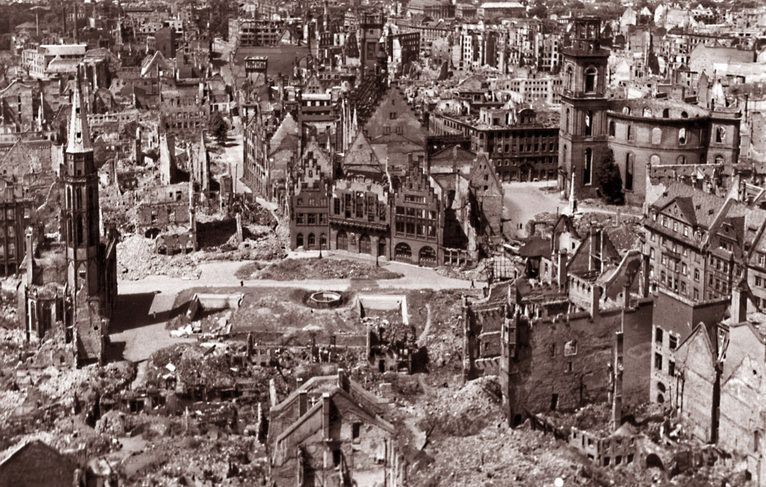
Image by m_bartosch / FreeDigitalPhotos.net.
Share This Article

Post on Facebook

Post on X

Print Article

Email Article