
When Jimmy Lai was a child working the streets of Canton (Guangzhou), China, in the 1950s, he received a bar of chocolate as a tip for carrying a man’s bags at a train station.
Poor and hungry, he immediately bit into the treat. He had never tasted anything like it, and he asked the traveler where he was from.
“Hong Kong,” the man replied.
Lai had never heard of Hong Kong, but he knew it was a place he wanted to be. So a few years later, at age 12, he stowed away on a fishing vessel and escaped mainland China for Hong Kong.
Lai immediately realized there was something different about the territory. He had never seen so much food or wealth before, and he quickly found work at a factory. Over several years, he worked, saved, and invested, and eventually as a young man Lai scraped up enough money to purchase a bankrupt clothing company and started manufacturing sweaters.
Lai’s entrepreneurship paid off. He prospered and diversified. He bought properties in Canada, and in the early 1980s launched the popular clothing brand Giordano (a name he picked up from a napkin from a New York City pizza joint). He later started newspapers, including the popular Next Magazine, which he founded in 1990, and the Apple Daily, which for years was the only pro-democracy daily newspaper printed in Chinese.
By 2008, Lai had become a billionaire and was on Forbes’s list of the wealthiest entrepreneurs. But at some point in his rags-to-riches story, Lai realized that wealth was not his ultimate goal.
Preserving the freedom of Hong Kong had become his life’s mission. “Without freedom, we have nothing,” Lai has often said.
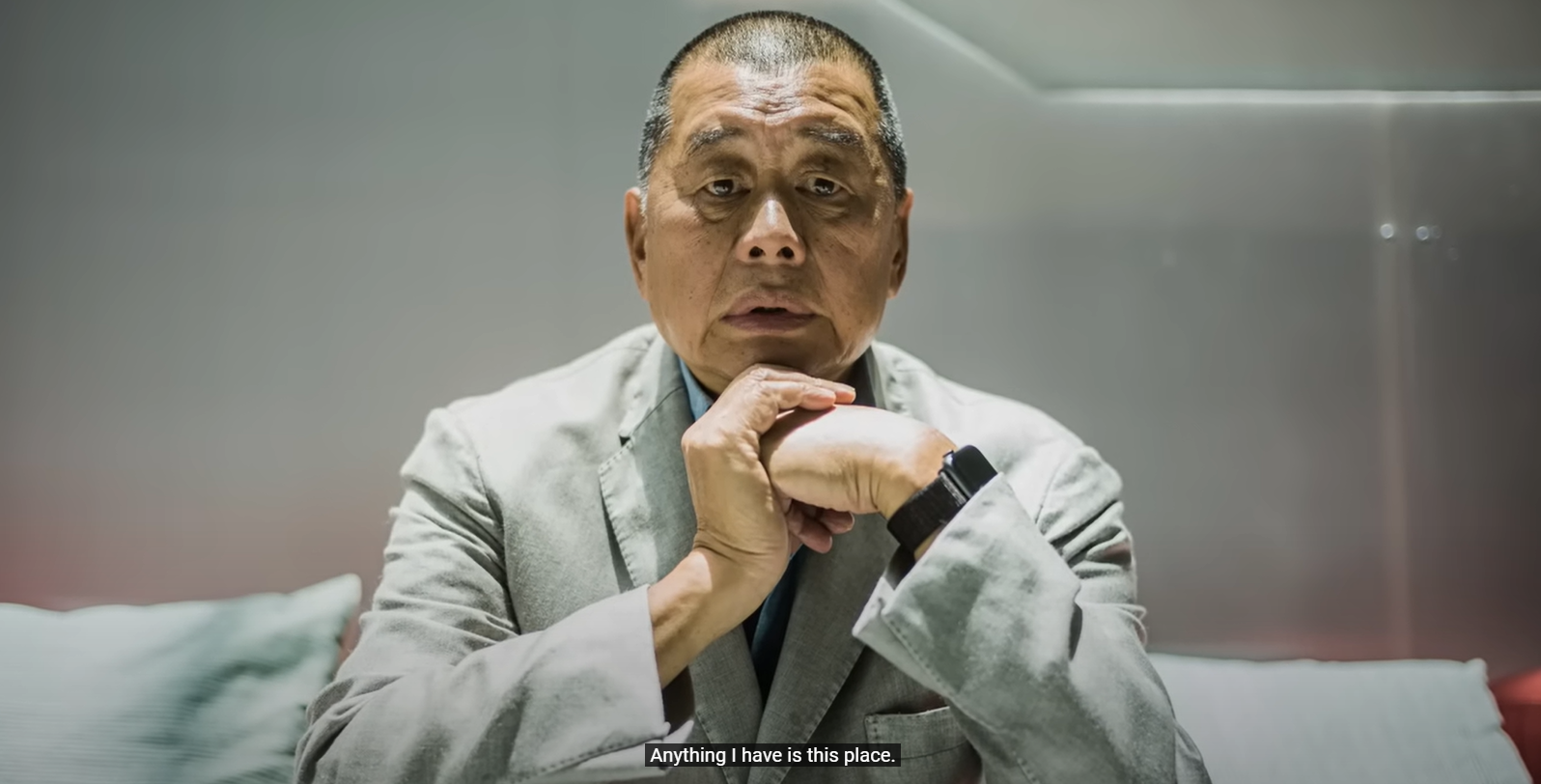
In his quest to save Hong Kong’s rapidly fading freedom, however, Lai has sacrificed his own. The entrepreneur and media mogul currently sits in a Chinese prison, charged with “conspiracy to collude with foreign forces” and “conspiracy to publish seditious publications.”
Lai’s story was the subject of a 2023 documentary produced by the Acton Institute. How it will end remains unclear.
A Brief History of Hong Kong
To understand the political persecution of Jimmy Lai, one must first understand the history of Hong Kong.
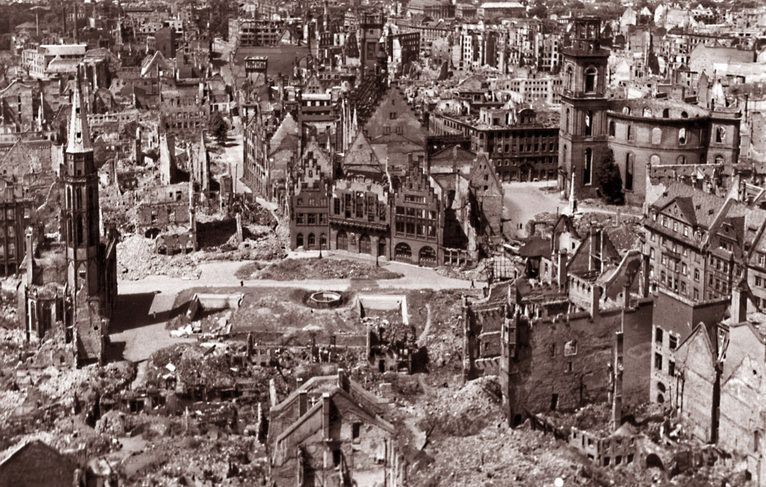
In 1898, following years of colonial rule under the British Empire that began after the First Opium War (1839–1842), China leased Hong Kong to Great Britain for 99 years. For the next century, the small peninsula and islands that jutted into the South China Sea operated under British rule.
This changed in 1997, when the United Kingdom’s claim on the territory came to an end. But during its 156 years under British rule, Hong Kong developed a distinctly Western character. Property rights, free speech, and free markets helped turn Hong Kong into one of the most prosperous places on earth, a land far wealthier than neighboring Communist China.
“In 1987, Hong Kong…had a per capita income of $8,260,” author Robert A. Peterson observed prior to the handover. “Just a few miles away, across the Sham Chun River — in Communist China — people of the same racial stock, living in the same subtropical climate on shores washed by the same South China Sea, were able to produce a per capita income of only $300.”
As Jimmy Lai would say, the British didn’t give Hong Kong democracy. But they did give Hong Kongers valuable institutions of freedom: free markets, the rule of law, free speech, and other human rights. And much like West Germany became a destination for immigrants seeking to flee the yoke of socialism following World War II, Hong Kong became a destination for Chinese immigrants following Mao’s takeover of China in 1949.
From Freedom to Authoritarianism
Because of how diametrically different these two systems were, there was always some uncertainty about what would happen to Hong Kong when the British handed it back over to China. Technically, the agreement made Hong Kong a special administrative region (SAR) of China, which came with certain guarantees, including a democratically elected legislative system, constitutional rights, and the promise of Hong Kong autonomy for the next 50 years.
The idea was “One country, two systems,” a concept that stretched back to the 1980s, that granted Hong Kong would its own economic and administrative system separate from Communist China. But even as the ink on the handover agreement dried, China began to encroach on Hong Kong’s autonomy. And in 2012, following the rise of Xi Jinping, Communist officials began to secretly circulate a policy known as Document No. 9 (the Communiqué on the Current State of the Ideological Sphere), which said the Chinese government must wage war against “Western values,” including free speech, media freedom, and judicial independence.
This did not bode well for Hong Kongers.
“Hong Kong’s bad luck was that it exemplifies all those Western values in a Chinese form,” said Chris Patten, the last British governor of Hong Kong.
As if to demonstrate its commitment to this war on “Western values,” the government in Beijing soon arrested Gao Yu, a female journalist who was accused of publishing Document No. 9. She was found guilty in a secret trial and sentenced to seven years in prison for “leaking state secrets” to a Hong Kong media organization.
The crackdown on freedom in Hong Kong continued, eventually prompting the Umbrella Protests of 2014. Further protests in 2019–2020 were sparked by a bill that would allow Beijing to extradite to mainland China Hong Kongers accused of crimes.
The state’s violent crackdown on the 2019 protests garnered international attention and spawned the National Security Law that criminalized what the Chinese government defined as secession, subversion, and collusion. This included “subversive” messages suggesting that Hong Kong is a separate system from China that should be ruled democratically.
“The law was really about ensuring Beijing’s authority over Hong Kong and making sure it wasn’t subject to the same threats it was during the 2019 protests,” Michael Cunningham, a Research Fellow in the Heritage Foundation’s Asian Studies Center who lived in mainland China when the 2019 protests erupted, told me.
‘Hong Kong Is Dying’
As Hong Kong slipped slowly into authoritarianism, Jimmy Lai did something extraordinary: he continued to resist Beijing.
Wealthy and politically connected, Lai could have continued to speak out against Communist tyranny from London or New York or some other city with strong free speech protections. But he refused to abandon his fellow Hong Kongers, and remained committed to peaceful resistance.
“If we use violence, we’ll lose the moral authority we have,” Lai said.
While many Hong Kongers were scrubbing their online profiles of pro-democracy sentiments, Lai and journalists at the Chinese-language Apple Daily continued to publish and speak out against the Chinese government’s encroachments.
“He did all this knowing he was in the crosshairs,” said Cunningham.
Amid the global chaos of the COVID-19 pandemic, the Chinese Communist Party saw its opportunity to take down the face of Hong Kong’s freedom movement.
On August 10, 2020, Hong Kong Police raided the headquarters of the Apple Daily. Some 200 officers wearing masks searched the offices of the popular pro-democracy tabloid, collecting journalists’ documents, and arresting several people, including Lai.
Lai, whose arrest was live-streamed, was frog-marched out of the office by police in plain clothes. He was charged with colluding with a foreign country and then released on bail. Several months later, he was arrested again.
Even with Lai behind bars, the Apple Daily continued to print, and the newspapers flew off newsstands. In response, Beijing seized the newspaper’s funds (and Lai’s), and on June 23, 2021, the Apple Daily printed its last newspaper.
There’s no question that Lai’s imprisonment and the collapse of a free press in Hong Kong mark a turning point in a territory once noteworthy for its prosperity and commitment to classical liberalism.
“It feels like Hong Kong is dying,” one anonymous Hong Kong resident says in the documentary.
To make matters worse, many of the leaders who might help lead resistance against Beijing have fled, since they are now targets of the state.
“I was wanted by the Hong Kong court for joining the June 4 candlelight vigil,” said Sunny Cheung, a Hong Kong activist now in exile.
Cheung has no intention of returning. If found guilty, he would face a maximum sentence of life in prison for attending that vigil.
“This isn’t a legal system in any sense that we understand,” said David Alton, a member of the British House of Lords and human rights advocate, “because it’s a foregone conclusion you’re going to be convicted.”
‘The Rest of His Life in Prison’?
Jimmy Lai’s future is unknown.
The 76-year-old freedom fighter remains in solitary confinement in a Chinese prison after receiving a nearly 6-year sentence in December 2022 on various charges. But he is still awaiting trial on charges related to China’s National Security Law, and a Hong Kong appellate court recently upheld a ban that prevents his British counsel from participating in the trial.
As I watched the Acton Institute’s incredible documentary on Lai — first once and then a second time — I felt a wave of emotions. And the same thought kept hitting me. How hadn’t I heard about this before?
Lai’s life and sacrifice is one of the most powerful stories I’ve watched in years, yet somehow it was a story I knew nothing about. The lack of international outcry over Lai’s political persecution is something I can’t get my mind around, and I’m not the only one. Many of Lai’s supporters expressed similar sentiments.
“Why haven’t the United Kingdom and the United States tabled resolutions in the United Nations?” asked Alton.
George Weigel, a senior fellow of Washington’s Ethics and Public Policy Center, was also perplexed.
“It’s a great puzzle to me why the Vatican, which is constantly emphasizing the rule of law in international affairs, is not more vocally concerned,” said Weigel.
The lack of attention Lai’s imprisonment is receiving is troubling. Lai’s words make it clear that he is risking his life to save Hong Kong based at least in part on his belief that others care as much about liberty as he does, and they would be spurred to action by his persecution.
“[Hong Kong] gave me freedom. I owe freedom my life,” says Lai. “The more pressure I have, the greater the voice I should have so the world will pay notice.”
Lai has done his part. After suffering years of intimidation, state spies, and attacks that included a Molotov cocktail thrown at his home, he is currently a political prisoner in a Chinese cell. But the world is not doing its part. We are not doing our part.
No groundswell movement demanding freedom for Jimmy has managed to take hold. No social media campaign has gone viral. As someone who follows the news and works for an organization dedicated to economic freedom, I feel embarrassed and convicted that I knew so little of Lai, who in 2021 received the Truman-Reagan Medal of Freedom from the Victims of Communism Memorial Foundation.
Cunningham told me that Lai’s imprisonment is receiving more international attention than it is in the US, but there are some doubts about what exactly the international community can do regarding China’s Lai’s imprisonment and encroachment on the rule of law in Hong Kong.
“They need to be held to account for violating the British sign-over agreement,” he said.
Whatever political leverage or groundswell movement that can bemustered to influence China must be found quickly. If not, Jimmy Lai could end up paying the ultimate price for the West’s ambivalence.
“He may very well spend the rest of his life in prison,” says Benedict Rogers, the founder of Hong Kong Watch.
‘The Book Changed My Life’
Anyone who watches the documentary on Lai’s life is likely to find himself asking a question: Would I have the courage to do what Jimmy Lai is doing?
The answer is likely no, if we’re being honest. This is not so much an indictment of our own courage, but the recognition that the world is witnessing martyr-like bravery from Lai, who became a Christian in 1997.
The Bible was not the only book that shaped Lai, however. He credits another: F. A. Hayek’s The Road to Serfdom.
“The book changed my life,” Lai says of the Nobel Prize-winning author’s magnum opus.
This should perhaps come as no surprise. In a sense, Lai didn’t just read The Road to Serfdom. He lived it.
As a child, Lai saw the poverty and cruelty of the Communist system that took everything from his once-wealthy father after Mao claimed power in October 1949. Lai was able to flee that system and prosper in a free-market economy, only to watch, in a cruel twist, the CCP usher in its policies of serfdom into his adopted land.
This, I think, is what fortified Lai with such rare courage. He isn’t just fighting for freedom in an abstract sense. He’s fighting for freedom in the most practical of senses, the freedom that allows a poor child in China to reach a nearby land of opportunity — just like Lai did when he escaped to Hong Kong aboard a fishing boat after tasting a bar of chocolate.
“By saving Hong Kong, you are saving the value of the free world,” Lai says.
Lai doesn’t just believe these words are true. He knows them to be true. This is why he’s risking his life for freedom. And his remarkable life shows that heroes still walk among us.
The world right now isn’t paying attention to his sacrifice. But I believe it will. And CCP officials who think they can lock Jimmy Lai up and throw away the key would do well to remember a bit of wisdom the Apple Daily shared in its final printing:
“When an apple is buried beneath the soil, its seeds will become a tree filled with bigger and more beautiful apples.”
Share This Article

Post on Facebook

Post on X

Print Article

Email Article