
The French economist, statesman, and economic journalist Frederic Bastiat would have turned 218 years old today; unfortunately, he died of tuberculosis in 1850 at the age of 49. Unfortunately, he died young of a disease that afflicts far fewer people now—but he left an enduring intellectual legacy reflected in organizations and fellowships that bear his name and perhaps most notably in the “one lesson” at the root of Henry Hazlitt’s classic Economics in One Lesson.

A few years ago, Matthew Yglesias asked “what’s the big deal?” about Bastiat because so much of what he writes is stuff that a lot of commentators and analysts already know. Bryan Caplan replied that Bastiat’s contribution comes from exploding economic fallacies and highlighting their absurdity. These fallacies, after all, are at the root of popular support of all kinds of terrible ideas. To be sure, there are sophisticated arguments to be made for price ceilings, price floors, tariffs, and all sorts of other interventions. Politicians, pundits, and people on the street rarely make those arguments, however, and instead support these policies enthusiastically on the grounds that they are free lunches. For evidence, look no further than this 2012 article by a Florida Congressman making “a conservative case for sugar tariffs” and my reply, which draws on Bastiat to highlight the ways in which the argument doesn’t work.
In honor of his birthday, I’d like to invite you to explore what are, in my humble estimation, his most important works.
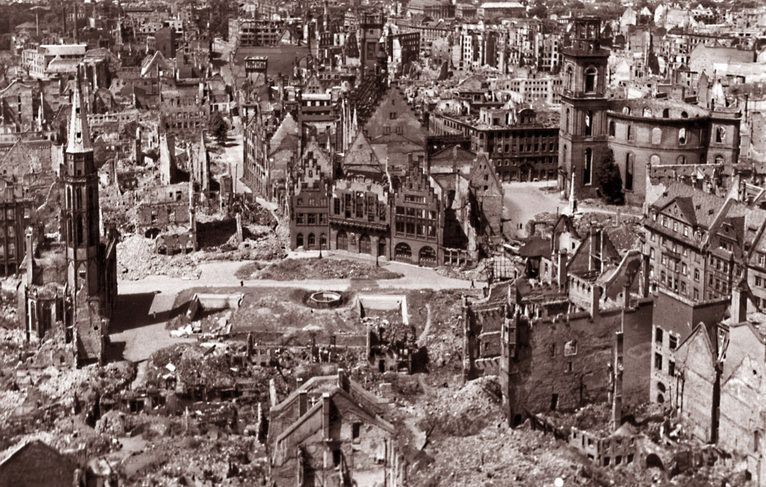
What is Seen and What is Not Seen. If You’ve ever heard anyone invoke something called “the broken window fallacy,” this is where it started. If you’ve ever heard anyone say that war is good for the economy or that a natural disaster is to be welcomed because it will stimulate gross domestic product, this essay explains why that’s wrong. The lesson is simple—and again, it’s at the root of Hazlitt’s Economics on One Lesson—the kid who breaks Jacques Bonhomme’s window isn’t stimulating the economy because Jacques could have used the money he spent replacing the window on literally anything else. The window-smasher hasn’t made the world any richer. He has made it poorer to the tune of one window. Bastiat then applies the argument to a host of other examples and explains how things like subsidies for the arts, trade restrictions, and prodigality don’t actually make societies richer while things like disbanding the army, middlemen, machines, and thrift don’t make societies poorer. In this video, my younger self explains the broken window fallacy:
The Petition of the Manufacturers of Candles. In a brilliant and brief bit of satire, Bastiat destroys protectionist arguments by reducing them to their absurd essence. He offers a petition from the candlemakers asking the French government to protect them from competition from…the sun. After all, what part of the national labor, he asks, wouldn’t be encouraged by a booming trade in candles?
The State. What is the state? I like Douglass North’s definition of a state as an organization with a comparative advantage in violence extending over a geographic area with boundaries determined by its power to tax. Bastiat goes a step further and lays bare the essence of the state as it would later be analyzed by scholars working in the public choice tradition like Mancur Olson and James M. Buchanan: “The state is the great fiction by which everyone endeavors to live at the expense of everyone else.” With candidates for the Democratic nomination for president trying to outdo one another in promising better lives at the expense of everyone else, it’s an essay worth reading and taking to heart.
The Law. Notice the difference between Bastiat’s definition of the state and his definition of the law as “the collective organization of the individual right of legitimate defense.” It is because individuals have rights, Bastiat argues, that people can organize for the collective defense of these rights and, importantly, it is because individuals have rights that “force cannot legitimately be used collectively to destroy the person, freedom, or property of either individuals or classes.”
Bastiat was one of the nineteenth century’s most eloquent defenders of liberty and dignity, and Joseph Schumpeter was clearly right to describe him as “the most brilliant economic journalist who ever lived.” He has heirs, but no equals.
Reprinted from Forbes
Share This Article

Post on Facebook

Post on X

Print Article

Email Article