For the longest time American conservatives have properly venerated Hong Kong’s wholly free market ways, along with what protects its economy from the grasping hands of politicians. The wealth there is of the mind. The wealth is people. Hong Kong has no physical wealth like oil, which means what makes the city great can’t be taken. If ever politicians overreach (are you listening, Beijing?), the people who make Hong Kong amazingly prosperous will take their talents, as in what’s inside their heads, elsewhere.
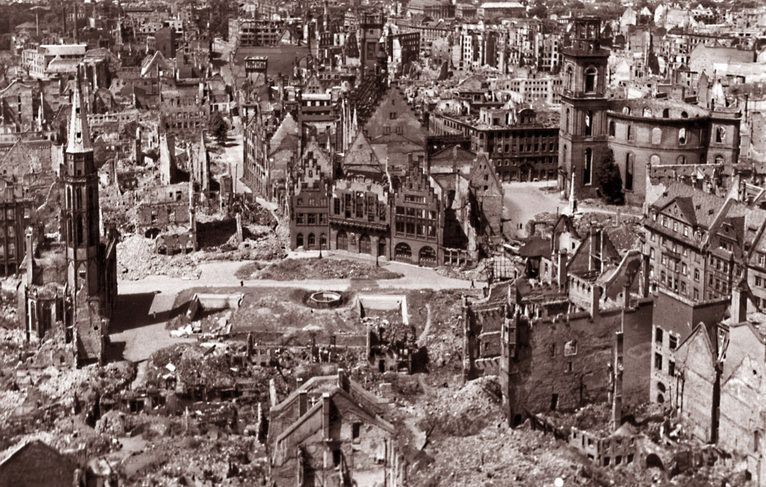
Lest we forget, a major driver of Hong Kong’s brilliant post-WWII ascendance was the tragic rise of Mao and communism in China. As Jonathan Kaufman explained it in his new book The Last Kings of Shanghai, in response to Mao’s rise “100,000 people from Shanghai would arrive in Hong Kong, providing – along with the local Cantonese – the skills and economic infrastructure that would bring the city forward.” Translated, Shanghai’s brilliant capitalists moved their genius to where it wouldn’t be suffocated. Mao and his murderous cronies thieved billions worth of wealth, including $500 million worth of properties and businesses amassed by Victor Sassoon alone, only for the wealth taken to vanish. Stating what should be obvious, wealth disintegrates when it’s forcibly ripped from the hands of those who created it. Politicians destroy things, which explains why a regime of light taxation is always best when it comes to economic progress.
That wealth taken by force rarely grows in the hands of the takers has long been an article of faith among American conservatives. So properly convinced were they of this truth that they actually took to lamenting countries “rich” in natural resources like oil, gold, land, or anything else with physical qualities. They referred to tangible wealth as the “resource curse.” If the wealth just exists it theoretically saps innovation, but more important is that physical wealth can be taken. See Venezuela with its oil. See countless African countries. Hong Kong will never go the route of confiscated wealth simply because what makes it staggeringly rich is its people. Take them out of the equation via confiscation, and Hong Kong would be poor.
Which brings us to the shameful theft of Chinese company TikTok by the political class in the U.S. Yes, that’s what’s happening. Let’s not hide from this embarrassing truth. Though the greatest technological innovations of the internet age have largely been hatched stateside, with TikTok the Chinese happened on a globally popular concept ahead of American technologists.
With China’s economy increasingly free, it’s only natural to assume that there are more than a few Steve Jobs and Jeff Bezos equivalents in this country in a hurry. Let’s hope! Just as Apple AAPL +0.1% Inc.’s growth has been hugely bolstered by sales in China (1/5th of Apple’s iPhone sales happen there), and to the betterment of the Chinese people, let’s hope Chinese innovators now and in the future match Jobs when it comes to creating goods and services that massively increase living standards stateside. The only closed economy is the world economy, so if the Chinese prove skilled at rushing the future into the present via remarkable innovations, Americans will benefit as though the technology had been hatched right next door.
With TikTok, the Chinese created something that Americans fell in love with, only for conservatives to disappointingly cheer the Trump administration’s threat to ban the app unless its U.S. operations were sold to a U.S. technology company. One conservative editorial oddly claimed that the shameful mugging of TikTok was an example of the “market increasing business competition and solving a political problem at the same time.” No, that’s not right. Conservatives used to be clear that the politicization of commerce was an example of market forces being pushed aside to the detriment of wealth creation and progress.
Worse, this embarrassing conservative embrace of thievery plainly ignores what conservatives have long believed about the source of Hong Kong’s genius. It’s once again the people. Embarrassing as the theft of TikTok is, what’s happening with it supports this very point.
Indeed, as Wall Street Journal reporters Liza Lin, Aaron Tilley and Georgia Wells reported last week, the forced sale of TikTok by the allegedly market-friendly Trump administration is proving a bit of a challenge. The reasonably aware surely know why.
As the Journal reporters explained it, those interested in bidding on TikTok “believe a large portion of the value of TikTok is in the suggestion algorithms that keep users glued on the app.” As they went on to write, “A person close to the talks likened TikTok without its algorithms to a fancy car with a cheap engine.” Bingo! When it comes to technological wealth, it’s not physical, rather it’s metaphysical. What makes TikTok great is the people. American politicians whom we shouldn’t expect to know better, but cheered on by conservative pundits who should know better, have forgotten that wealth taken from others isn’t terribly valuable absent the brilliant minds who made what’s been taken valuable to begin with. Translated for conservatives, TikTok isn’t TikTok minus those who made it TikTok.
That the forced taking of what’s someone else’s is proving a bit of a challenge has implications beyond just the theft of TikTok. In particular, it eviscerates the modern conservative obsession with the Chinese and their alleged “theft” of intellectual property. The embarrassing American attempt to take TikTok is a reminder of how overdone such paranoia is. The value of technology is yet again a consequence of those operating it. In short, if U.S. technology is brilliant, which it is, politicians needn’t fear its theft. Like TikTok, the value is in the people who created it. The Chinese can’t steal American genius, and the American political class can’t steal Chinese genius.
Which is why this whole episode has been so thoroughly awkward. Come on Americans, the whole world is watching. We know better. History is clear that when governments take things from private hands by force, what’s taken usually loses its value. What applies to the rest of the world also applies to us. Let’s please free TikTok from the U.S.’s odd and economy-sapping flirtation with industrial policy.
Reprinted from RealClearMarkets
Share This Article

Post on Facebook

Post on X

Print Article

Email Article