
Robert Hughes

Senior Research Faculty
Robert Hughes joined AIER in 2013 following more than 25 years in economic and financial markets research on Wall Street. Bob was formerly the head of Global Equity Strategy for Brown Brothers Harriman, where he developed equity investment strategy combining top-down macro analysis with bottom-up fundamentals. Prior to BBH, Bob was a Senior Equity Strategist for State Street Global Markets, Senior Economic Strategist with Prudential Equity Group and Senior Economist and Financial Markets Analyst for Citicorp Investment Services. Bob has a MA in economics from Fordham University and a BS in business from Lehigh University.
-

•
Amid a Slow Recovery, Housing Affordability Stays High
New housing starts came in this week at 1.189 million units at an annual rate in June, while housing permits rose to 1.153 million. Both were increases over the May figures, and are well above the lows following the Great Recession.
-

•
Brexit’s Complex Impact on the Economy
The United Kingdom’s surprising June 23 referendum vote to leave the European Union caused dramatic short-term moves in global capital markets. Yet, less than a month after the historic vote on what we know as “Brexit,” much of the initial reaction across capital markets has reversed.
-

•
2Q Sales Expected to Show Improvement
Alcoa will report second quarter sales and profits after the close of U.S. trading today, marking the unofficial start of earnings season. Actually, 23 companies in the S&P 500 have already reported second-quarter results. When we blend those actual results with consensus expectations for those companies that have not yet reported, we find that topline…
-
•
After the Brexit Vote: Take a Deep Breath
The results of the referendum in the United Kingdom to leave the European Union have come as a shock to many, especially investors. While we have no greater insight into what the future holds, there are some things that are known.
-
•
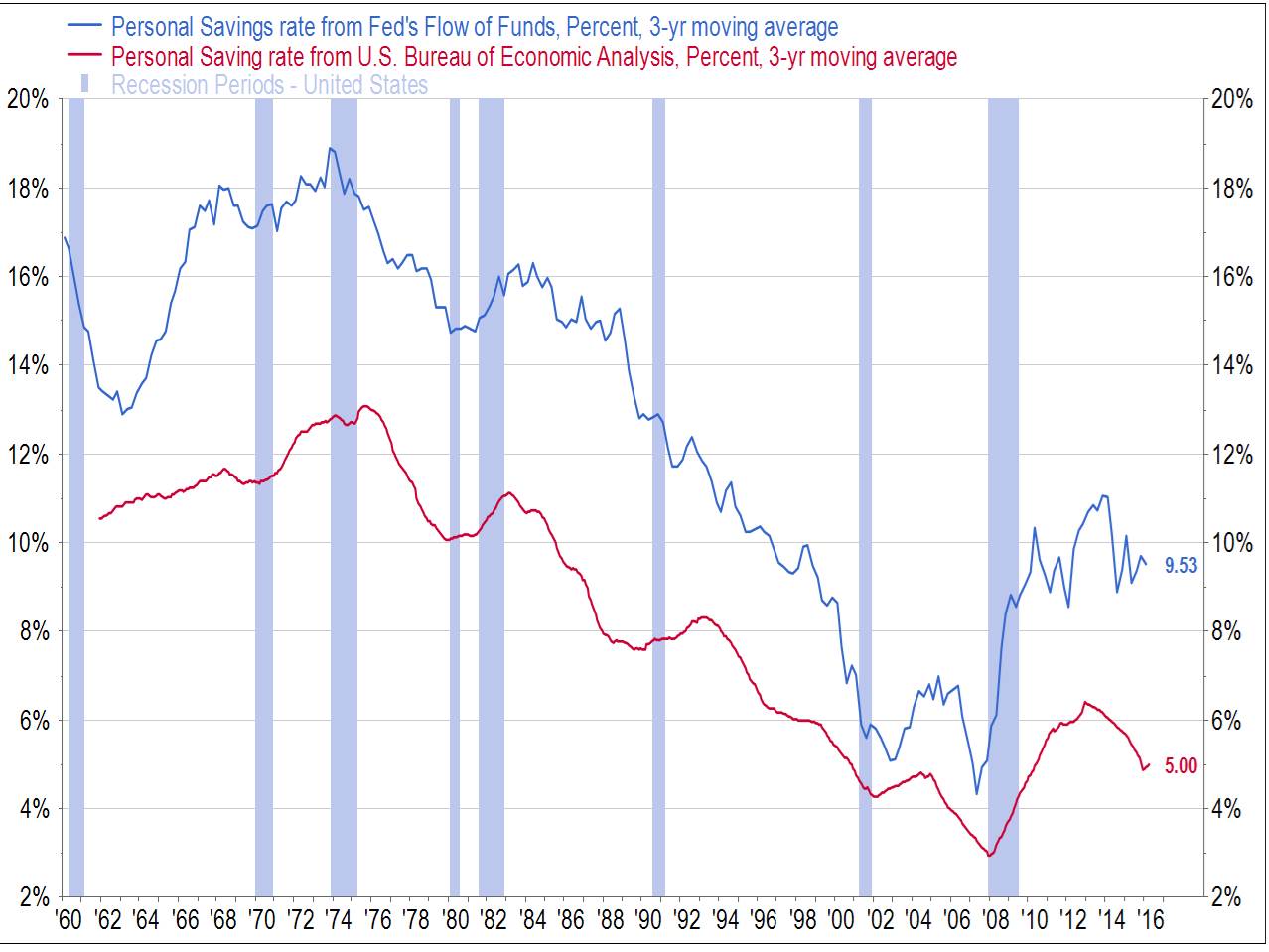
Americans Are Worth More, and Saving More Money
We are seeing two additional indications that are positive signs for the economy. First, household balance sheets are improving.
-

•
Economic Outlook Brightens
AIER’s Leading Indicators model rebounded in May to the neutral level of 50, following two months at 38, which had indicated a somewhat higher risk of recession.
-

•
Help (Still) Wanted, Despite Weak Jobs Report
Shock and disappointment from the weak May jobs report lingers, but data today from the Bureau of Labor statistics offsets a bit of the uneasiness.
-

•
Our Economic Model Shows Weakness, Stability
Here at AIER, we use our data-driven Business-Cycle Conditions model as a barometer of the health of the economy, and the risk of recession. Last month, we saw quite a shift downward, as our index of leading indicators fell below the neutral level of 50 for the first time in 110 months. Today we are…
-

•
What We’ve Learned From Earnings Season
According to data from FactSet, more than 80 percent of the companies in the S&P 500 have reported first quarter earnings through this morning. Overall, earnings reports have been better than expected, with almost 72 percent beating analyst expectations. Despite the beats, earnings growth overall remains negative, with reported earnings per share down about 7.8…
-
•
Amid a Slow Recovery, Housing Affordability Stays High
New housing starts came in this week at 1.189 million units at an annual rate in June, while housing permits rose to 1.153 million. Both were increases over the May figures, and are well above the lows following the Great Recession.
-
•
Brexit’s Complex Impact on the Economy
The United Kingdom’s surprising June 23 referendum vote to leave the European Union caused dramatic short-term moves in global capital markets. Yet, less than a month after the historic vote on what we know as “Brexit,” much of the initial reaction across capital markets has reversed.
-
•
2Q Sales Expected to Show Improvement
Alcoa will report second quarter sales and profits after the close of U.S. trading today, marking the unofficial start of earnings season. Actually, 23 companies in the S&P 500 have already reported second-quarter results. When we blend those actual results with consensus expectations for those companies that have not yet reported, we find that topline…
-
•
After the Brexit Vote: Take a Deep Breath
The results of the referendum in the United Kingdom to leave the European Union have come as a shock to many, especially investors. While we have no greater insight into what the future holds, there are some things that are known.
-
•
Americans Are Worth More, and Saving More Money
We are seeing two additional indications that are positive signs for the economy. First, household balance sheets are improving.
-
•
Economic Outlook Brightens
AIER’s Leading Indicators model rebounded in May to the neutral level of 50, following two months at 38, which had indicated a somewhat higher risk of recession.
-
•
Help (Still) Wanted, Despite Weak Jobs Report
Shock and disappointment from the weak May jobs report lingers, but data today from the Bureau of Labor statistics offsets a bit of the uneasiness.
-
•
Our Economic Model Shows Weakness, Stability
Here at AIER, we use our data-driven Business-Cycle Conditions model as a barometer of the health of the economy, and the risk of recession. Last month, we saw quite a shift downward, as our index of leading indicators fell below the neutral level of 50 for the first time in 110 months. Today we are…
-
•
What We’ve Learned From Earnings Season
According to data from FactSet, more than 80 percent of the companies in the S&P 500 have reported first quarter earnings through this morning. Overall, earnings reports have been better than expected, with almost 72 percent beating analyst expectations. Despite the beats, earnings growth overall remains negative, with reported earnings per share down about 7.8…