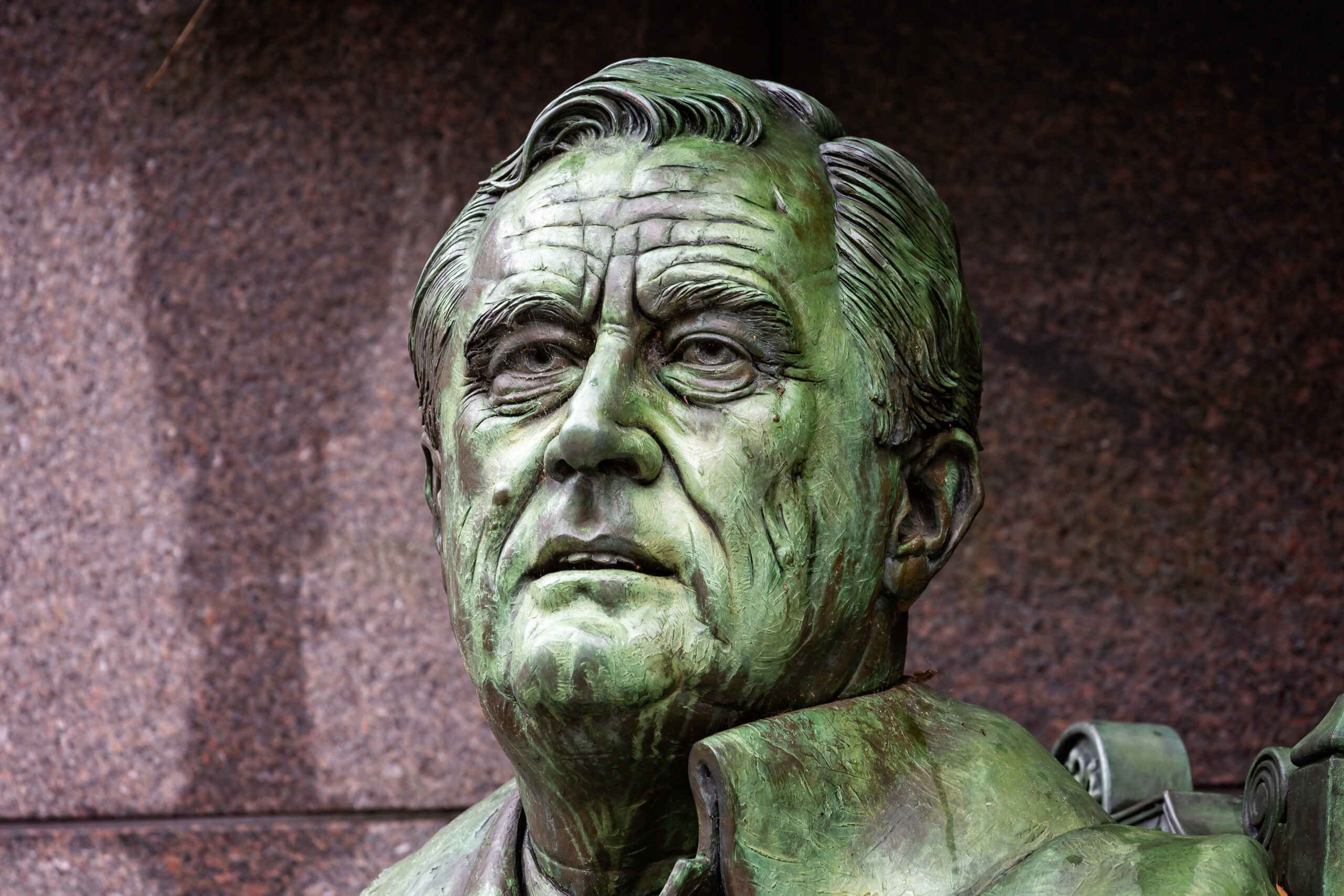
David Beito argues that Franklin Delano Roosevelt was a self-serving politician who cared very little for the civil liberties of Americans. In FDR: A New Political Life, Beito challenges historians who explain away Roosevelt’s horrid record on civil rights as politically strategic (in the case of black Americans) or as an exception (in the case of Japanese internment).
Instead, Beito contends that FDR’s glib view of civil liberties was core to his worldview. Additionally, Beito emphasizes that Roosevelt’s economic policies were ineffective and at times counterproductive, and that his reliance on top-down solutions to the Great Depression violated the economic liberties of Americans. In short, FDR was the worst president on individual liberty since Woodrow Wilson, and he might have been even worse.
Beito begins by recounting Roosevelt’s actions as Assistant Secretary of the Navy under Wilson. FDR “gave unquestioning support” to Wilson’s attack on free speech and expression during the conflict and demonstrated no “strong ideological commitments to the Bill of Rights.” During the notorious white violence against black Americans during the “Red Summer” of 1919, Roosevelt did nothing as white sailors attacked black streetcar passengers. The violence spread to 26 cities and when the NAACP demanded that the sailors and marines be arrested, FDR and the rest of the Wilson administration initially did nothing. Writing to a Harvard classmate, FDR joked, “With your experience in handling Africans in Arkansas, I think you had better come here and take charge of the police force.”
In addition to his lack of a response to the racial violence of 1919, Roosevelt also played an active role in the Newport Sex Scandal. There were reports that there were “perverts” at the Newport Naval base and Ervin Arnold, a chief petty officer, began an investigation using entrapment as a tool to root out homosexual activity. Lacking funds, Arnold’s violation of the sailors’ dignity and civil liberties might have ended, but Roosevelt “almost single-handedly saved the investigation” by pushing his superiors to create Section A (nicknamed the Newport Sex Squad) to continue looking into the matter.
Roosevelt believed that “homosexuality was immoral and he would expend every effort to ferret out offenders.” Section A used “heavy-handed tactics” that “soon backfired” and led to “public backlash.” FDR ultimately had to testify and defend the methods of the investigation. On the stand, he “denied any knowledge that his investigators had engaged in same-sex acts to obtain evidence.” To which the judge skeptically inquired, “How did you think evidence of unnatural crimes could be obtained?” Humiliated, Roosevelt responded simply, “I didn’t think.”
Beito uses FDR’s time in the Wilson administration to demonstrate that his indifference to the plight of black Americans and his support for mass internment of Japanese Americans were not aberrations but rather the fulfillment of Roosevelt’s worldview. He did not care about American civil liberties. The Senate Committee of Naval Affairs issued a stunning rebuke of FDR following its investigation of the Newport scandal. It asserted that Roosevelt’s office had violated “the moral code of the American citizen, and the rights of every American boy who enlisted in the Navy to fight for his country.” Further, it found FDR “morally responsible” for entrapment and the other “immoral acts” and came to the conclusion that he “must have known” the methods that were being used by the investigation.
Beito also demonstrates how Roosevelt came of age and was influenced by an intellectual climate that was sympathetic to central planning and social control. His later penchant for top-down economic solutions was a product of “the spread of progressive ideas all around him.” Drawing on the work of historian Daniel T. Rodgers, Beito explains that much of this progressivism was coming from Germany where Bismarck’s emphasis on “paternalism and military-style efficiency” had captured the imaginations of American students who studied abroad. They brought back with them “German-inspired policies” such as “compulsory insurance, public housing, and zoning.” For his part, Roosevelt praised Germany because it had moved “beyond the liberty of the individual to do as he pleased with his own property and found it was necessary to check this liberty for the benefit of the freedom of the whole people.” Far from being the pragmatist that most historians cast Roosevelt as, Beito argues that he bathed in progressive waters and concluded early in his political career that American society needed to be “centered on cooperation rather than excessive competition.”
Beito shows that FDR harbored racist views of both Jews and Japanese Americans and infers that these contributed to the president’s poor treatment of both groups. The story of Japanese internment is well documented, and Roosevelt is beginning to get the blame that he deserves for that gross violation of justice. Beito’s discussion of FDR’s treatment of potential Jewish refugees, however, is newer and demonstrates a further dimension of his bigotry. As Nazi atrocities against German Jews began to surface in the mid-1930s, Roosevelt did nothing to help them migrate to the United States. Following Kristallnacht, his State Department rejected the United Kingdom’s willingness “to donate the unused capacity of its quota so the US could admit sixty thousand more German Jews.”
Further, FDR rejected calls from Secretary of Labor Frances Perkins “to admit the maximum combined quota for the next three years (82,000 in all).” Most tragically, when the German liner, the SS St. Louis, arrived off the coast of Florida carrying over 900 Jewish refugees, the administration not only did not admit them, the Coast Guard ensured that none of the refugees would be able to swim to freedom. Even after evidence of mass genocide in Europe reached Roosevelt, “the administration’s stance toward refugees showed no sign of shifting.” Beito concludes that “while FDR and his advisors certainly viewed the Nazis as international gangsters, the plight of the Jews was never a priority.”
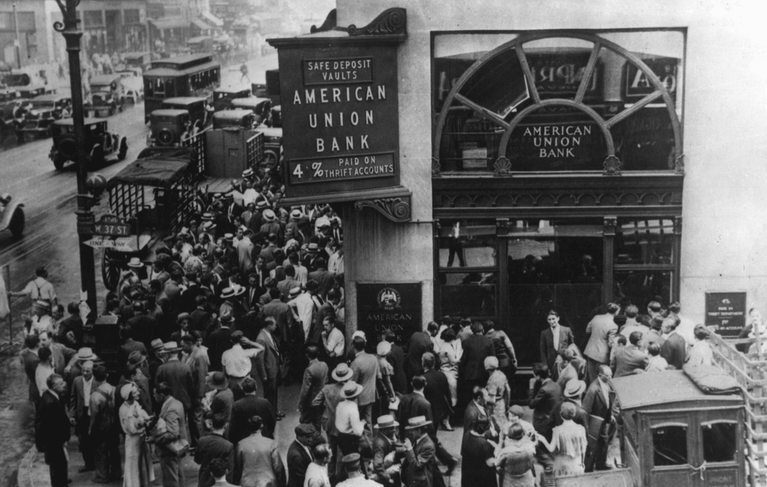
For those focused on FDR’s economic policy, Beito agrees that the New Deal was ineffective and even counterproductive for bringing about economic recovery. He condemns the National Recovery Administration, the Federal Housing Administration, the Wagner Act, and the Agricultural Adjustment Administration for harming black Americans. Beito argues that Roosevelt created massive amounts of uncertainty that prevented economic recovery and did so by embracing a corporatism that emulated fascist Italy and Nazi Germany. Even in areas where FDR is sometimes praised, such as his emphasis in encouraging more international trade, Beito demonstrates how progress sometimes came in spite of the president rather than because of him. In fact, Beito details how Roosevelt undermined the efforts of Cordell Hull to expand trade and reduce tariffs.
Finally, Beito challenges the narrative that FDR was a great wartime leader. In contrast, he depicts Roosevelt as prolonging the war with his insistence on “unconditional surrender.” Beito argues that the rigidity of these terms led the Nazis and the Japanese to fight on when they might have laid down their arms. He concludes that “after the US entered the war, the president’s rigid stand for unconditional surrender worsened the destructive nature of the conflict.”
In making his case against FDR, Beito marshals evidence from his numerous publications, including his previous book The New Deal’s War on the Bill of Rights. The result is a magnificently researched narrative that also serves as an introduction to numerous topics that Beito has long studied, including mutual aid societies, self-help organizations, the tax revolt of the 1920s, and more.
In a sense, FDR: A New Political Life feels like the crescendo of all the work that came before it. The book is a damning portrayal of America’s thirty-second president.
Beito ultimately concludes that “FDR was a failed president primarily because he repeatedly put his considerable abilities at the service of far less laudable goals, including a ruthless preoccupation with personal and political advancement, self-defeating economic policies, and the erection of a vast and unaccountable centralized federal bureaucracy.” This short biography is worth the read, even for those who are well acquainted with Roosevelt’s shortcomings. Beito has produced the most accessible and comprehensive critical account of FDR to date.
Share This Article

Post on Facebook

Post on X

Print Article

Email Article